
What is EDI (Electronic Data Interchange)?
Every business runs on communication.
Orders need to reach suppliers. Invoices need to reach customers. Shipping details need to reach logistics teams. Payment information needs to reach finance departments.
But when these documents move through emails, PDFs, spreadsheets, and manual data entry, things can slow down quickly. One missed email, one wrong number, or one delayed invoice can create problems across the entire business.
That is where EDI comes in.
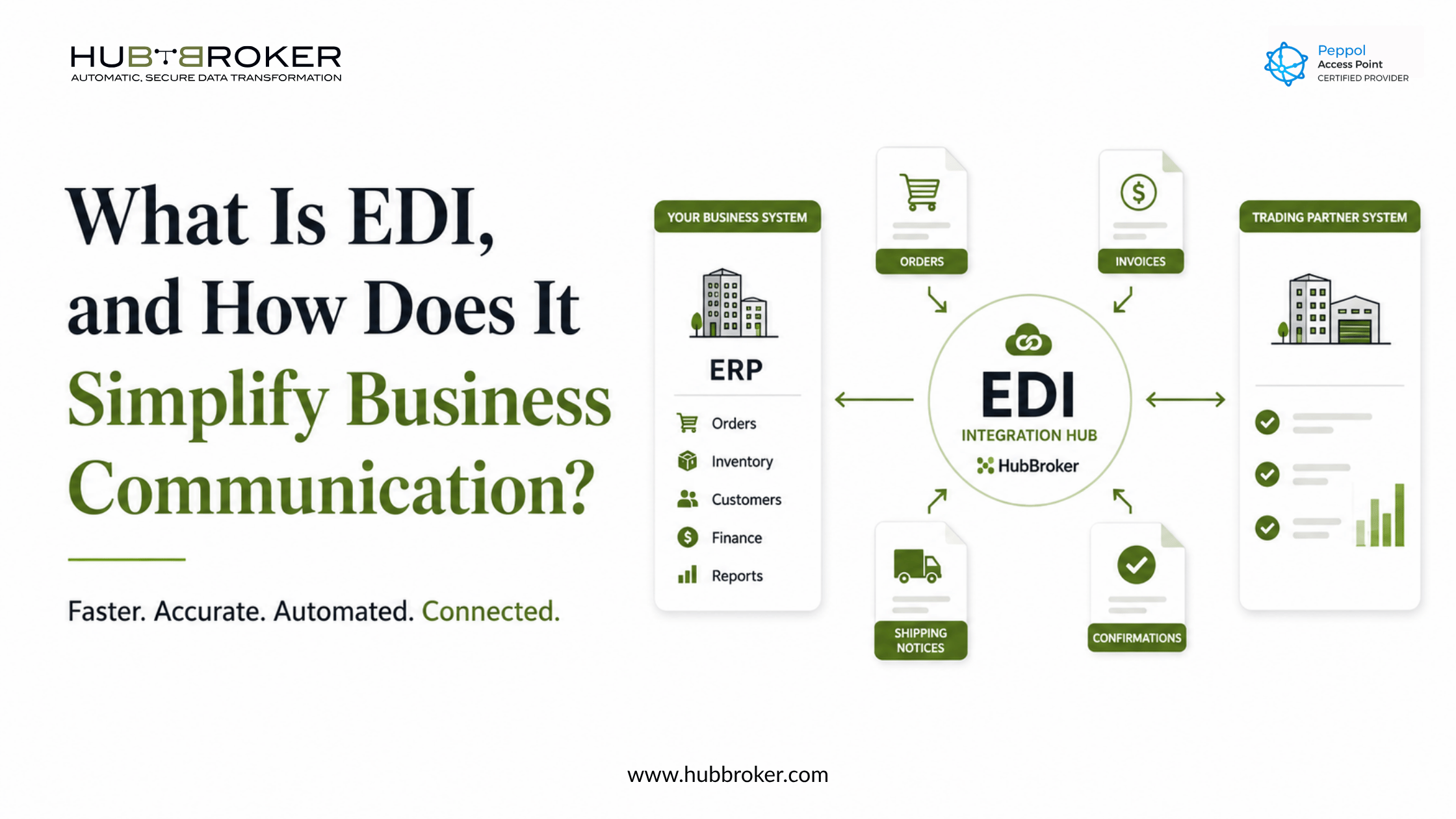
EDI, or Electronic Data Interchange, helps businesses exchange important documents directly between systems. Instead of one team sending a document and another team manually entering the same data again, EDI allows business systems to communicate automatically.
For companies that want faster, cleaner, and more reliable communication, EDI for business is not just a technical upgrade. It is a smarter way to reduce manual work, avoid errors, and improve daily operations.
What Is EDI?
EDI stands for Electronic Data Interchange. In simple words, it is a way for businesses to exchange documents electronically in a structured format.
Instead of sending a purchase order by email as a PDF, the buyer’s system can send the order directly to the supplier’s system. The supplier can then receive, process, and respond to that document automatically.
Common EDI documents include purchase orders, invoices, order confirmations, shipping notices, delivery notes, inventory updates, and payment remittance advice.
The main idea is simple: EDI removes the need for people to manually move business data from one system to another.
How Does EDI Work in Business Communication?
EDI works by connecting business systems and allowing them to exchange documents in a format both sides can understand.
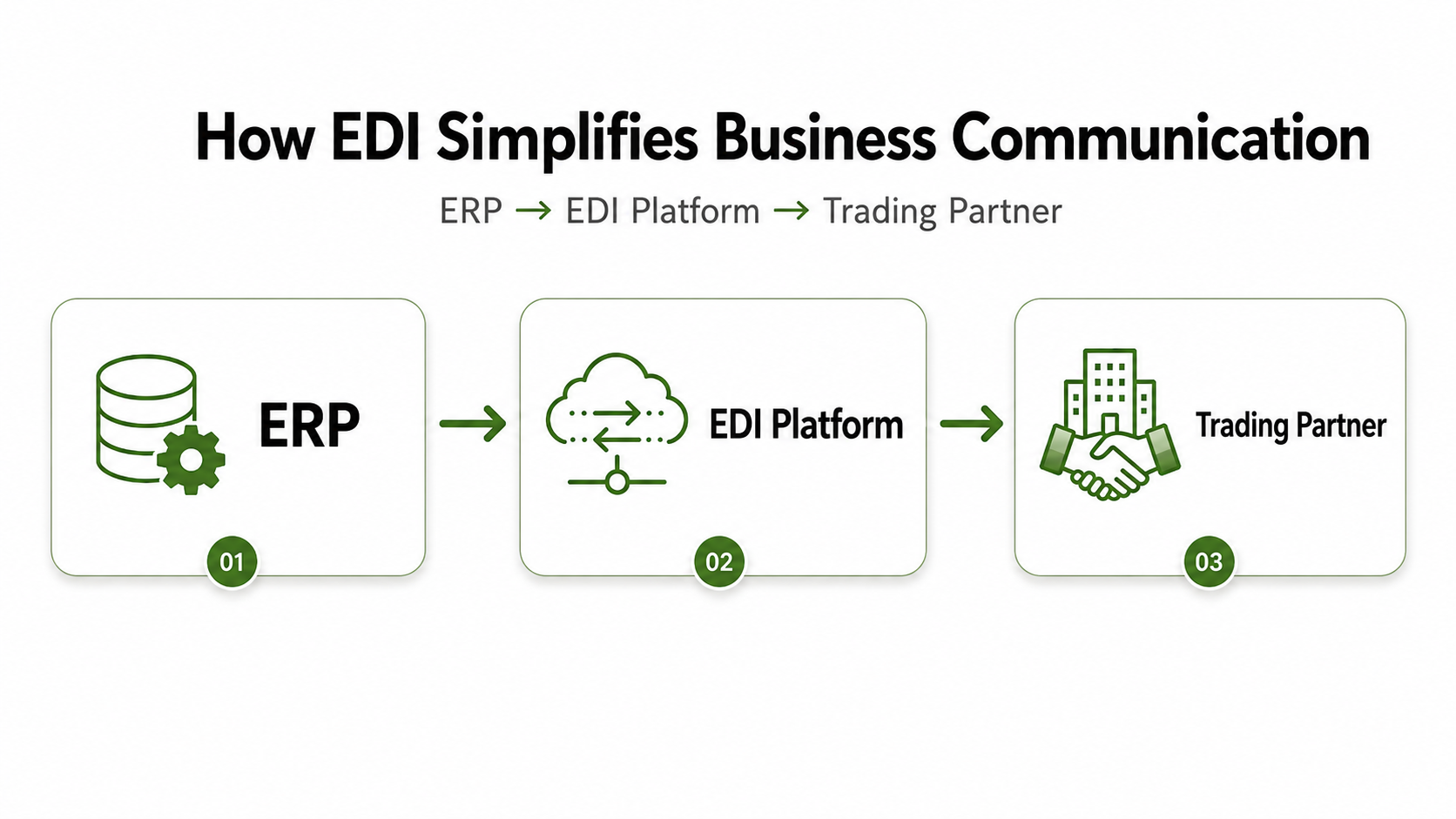
A typical EDI flow looks like this:
A company creates a document in its ERP or business system.
The EDI solution converts it into the required format.
The document is sent securely to the trading partner.
The partner’s system receives and processes it automatically.
A confirmation or response can be sent back.
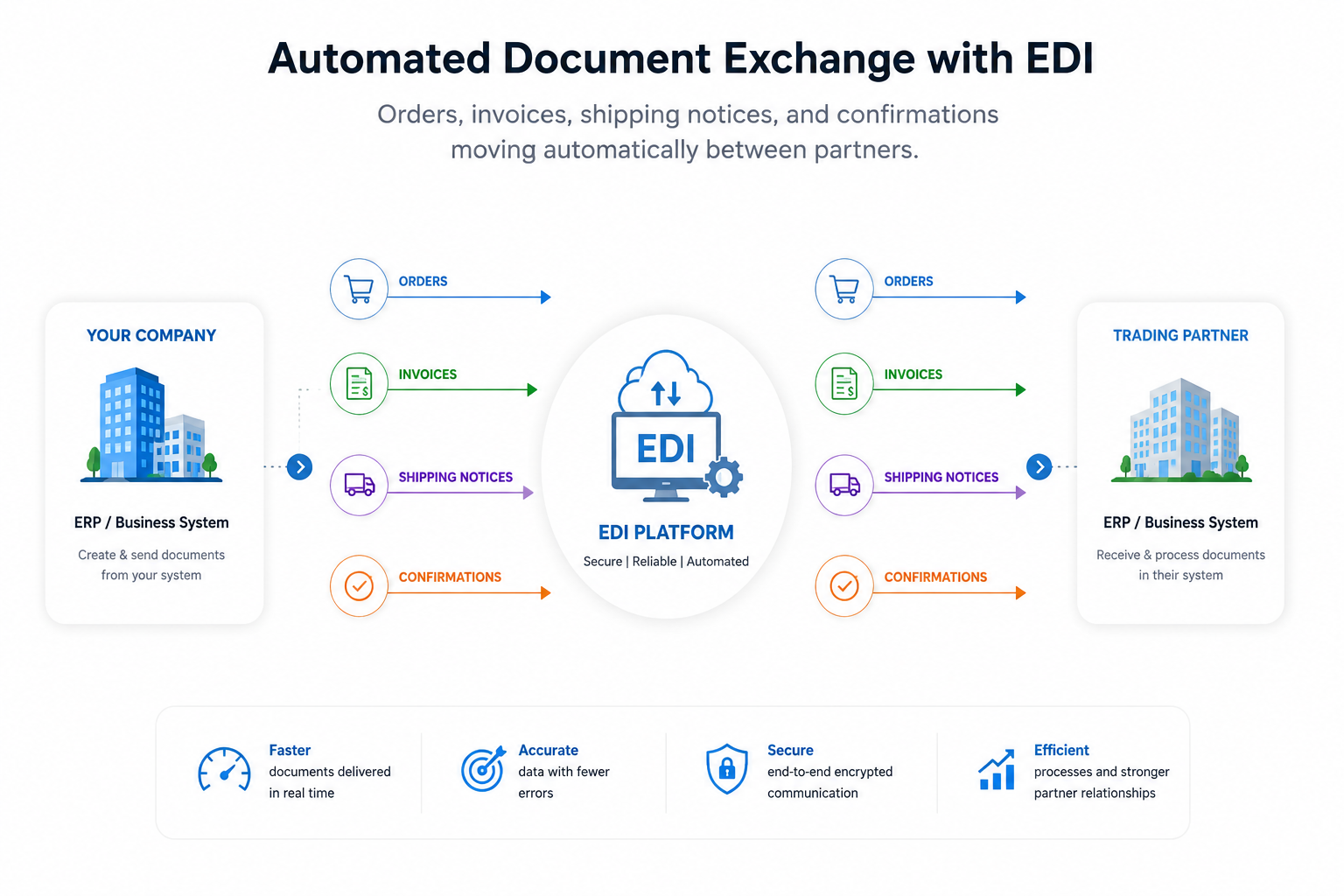
For example, a retailer can send a purchase order to a supplier through EDI. The supplier receives it directly in their system, confirms the order, and later sends an invoice back through the same automated flow.
This means fewer emails, fewer manual checks, and fewer delays between business partners.
Why Do Businesses Struggle Without EDI?
Many businesses still rely on manual communication for critical documents.
A customer sends an order by email. Someone downloads it. Another person enters the details into the ERP system. A finance team later creates an invoice manually. Then someone follows up to confirm whether the document was received.
This process may work when document volumes are low. But as the business grows, manual communication becomes harder to manage.
Without EDI, companies often face manual order entry, invoice processing delays, data entry mistakes, missing documents, too many email attachments, and poor visibility into document status.
The real cost is not only the time spent typing data. The bigger issue is the hidden cost of errors, delayed approvals, missed orders, and frustrated trading partners.
Simplify Business Communication with EDI
Automate the exchange of orders, invoices, shipment details, and business documents with HubBroker’s reliable EDI integration solutions.
Contact Us to Know More
How Does EDI Simplify Business Communication?
EDI simplifies business communication by turning manual document exchange into an automated workflow.
Instead of waiting for someone to open an email, download a file, and re-enter data, EDI allows the document to move directly from one system to another.
Here is how EDI helps:
Speed: Documents move faster between buyers, suppliers, logistics partners, and finance teams.
Accuracy: Less manual typing means fewer mistakes in orders, invoices, and delivery details.
Visibility: Teams can track document status instead of searching through inboxes.
Efficiency: Finance and operations teams spend less time chasing documents.
Scalability: Businesses can handle higher transaction volumes without increasing manual workload.
Compliance: Structured document exchange helps support audit trails and partner requirements.
For CFOs, this can mean better cost control and fewer invoice issues. For IT managers, it means cleaner integration between systems. For finance directors, it means faster processing and fewer manual corrections.
Who Needs EDI for Business?
EDI is useful for companies that exchange regular business documents with customers, suppliers, logistics partners, or marketplaces.
It is especially valuable in industries such as retail, eCommerce, manufacturing, logistics, wholesale, distribution, healthcare, automotive, and finance.
If your business works with multiple trading partners, handles repeat orders, or processes many invoices, EDI can help reduce manual work and improve communication.
EDI is not only for large enterprises. Growing companies can also benefit from EDI when they want to connect their ERP system, automate document exchange, and meet customer or supplier requirements.
What Are the Main Benefits of EDI?
The biggest benefit of EDI is that it helps businesses communicate in a more reliable way.
Instead of depending on people to move information between systems, EDI creates a structured connection between business partners.
Key benefits include reduced manual work, lower error rates, faster order-to-cash cycles, better partner relationships, improved ERP communication, and easier compliance control.
With the right EDI solution, companies do not need to manage every format, partner connection, or document flow manually.
How HubBroker Helps Businesses Simplify EDI
HubBroker helps businesses simplify EDI integration and automated document exchange.
Instead of managing every trading partner connection, document format, and system requirement manually, businesses can use HubBroker to connect ERP systems, suppliers, customers, and digital document flows more efficiently.
HubBroker supports businesses with EDI integration, ERP integration, automated document exchange, PDF to XML conversion, Intelligent Document Processing, Peppol-based document exchange, and trading partner communication.
This helps companies reduce manual data handling and create smoother communication between internal systems and external partners.
Is EDI Still Relevant Today?
Yes. EDI is still highly relevant because businesses still need reliable system-to-system document exchange.
What has changed is the way companies implement it. Modern EDI can work together with ERP systems, APIs, cloud platforms, Peppol networks, and automated document workflows.
For many companies, EDI remains the foundation for faster communication with customers, suppliers, and logistics partners.
FAQ
What is EDI in simple words?
EDI is a way for businesses to exchange documents electronically between systems instead of using manual emails, PDFs, or spreadsheets.
What does EDI stand for?
EDI stands for Electronic Data Interchange.
Why is EDI important for business communication?
EDI helps businesses send and receive documents faster, with fewer errors and less manual work.
Is EDI only for large companies?
No. EDI is useful for growing businesses too, especially when they work with multiple suppliers, customers, logistics partners, or ERP systems.
Ready to Simplify Business Communication with EDI?
Business communication should not depend on manual data entry, scattered emails, or repeated follow-ups.
With EDI, companies can exchange orders, invoices, shipping notices, and other important documents faster and more accurately.
If your team still depends on emails, PDFs, spreadsheets, or manual order and invoice entry, it may be time to simplify your business communication with EDI.
Want to see how HubBroker can help your business? Fill out the Contact Us form and our team will guide you through the right EDI setup for your needs.
