
15+
Years Experience











15+
Years Experience
120K+
Monthly Transition
100+
Global Clients
40+
Countries
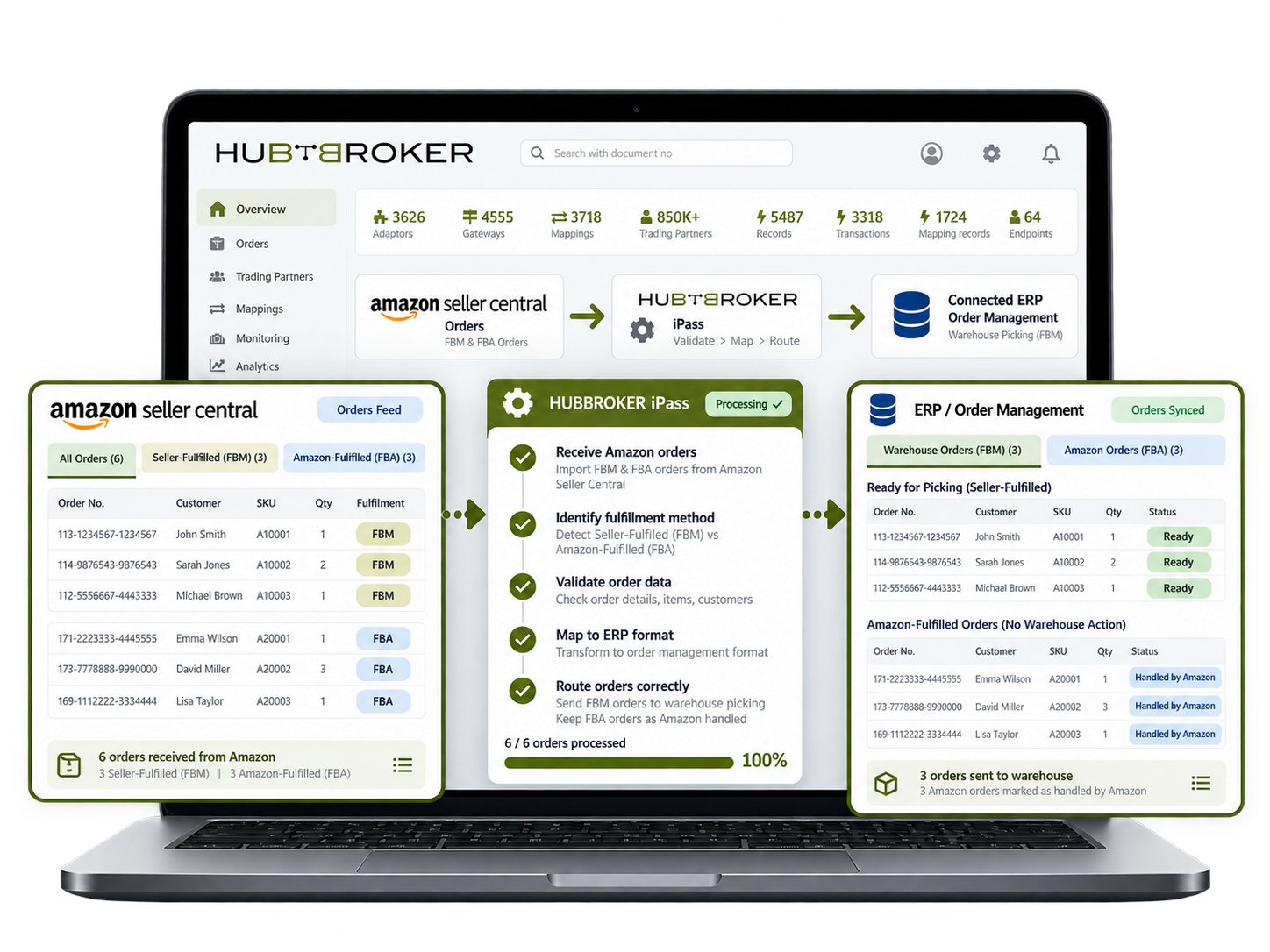
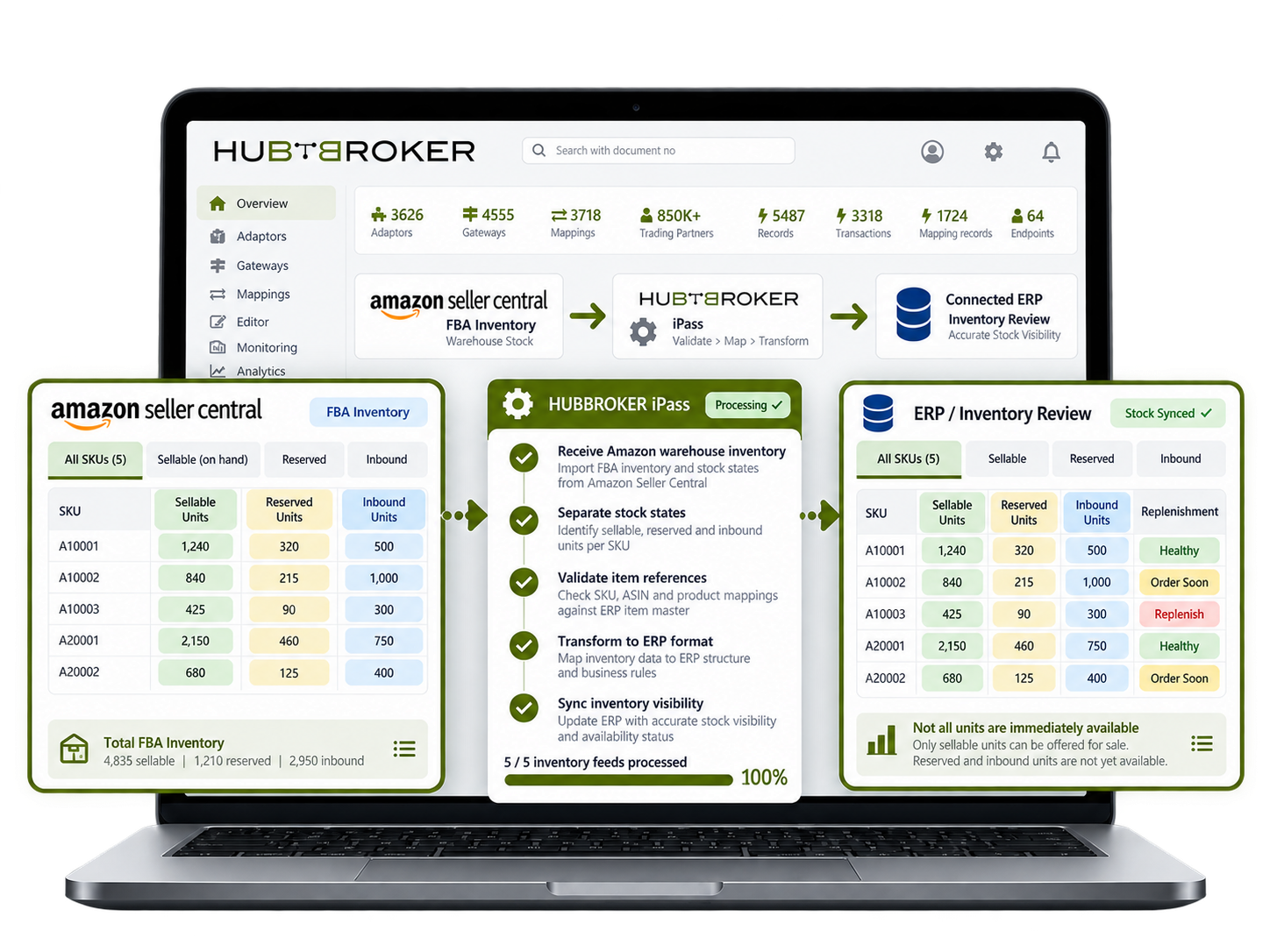
Bring Amazon orders into the ERP while keeping seller-fulfilled and Amazon-fulfilled orders distinct. Your warehouse can pick the orders it must ship without preparing goods already handled by Amazon.
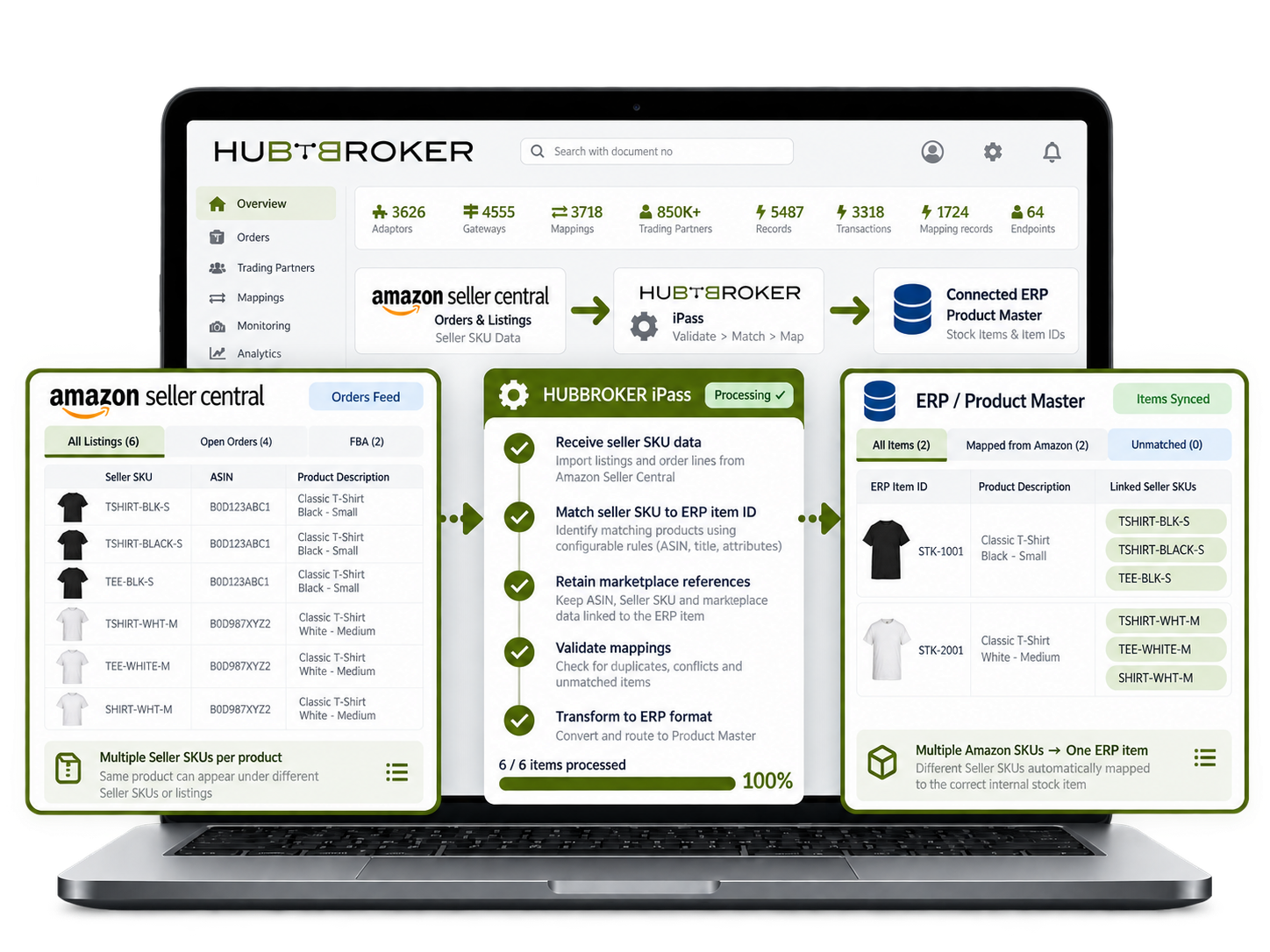
Match Amazon seller SKUs to your ERP item IDs and retain marketplace references. The same product sold under different listing codes can reach the right stock item without staff identifying each sale.
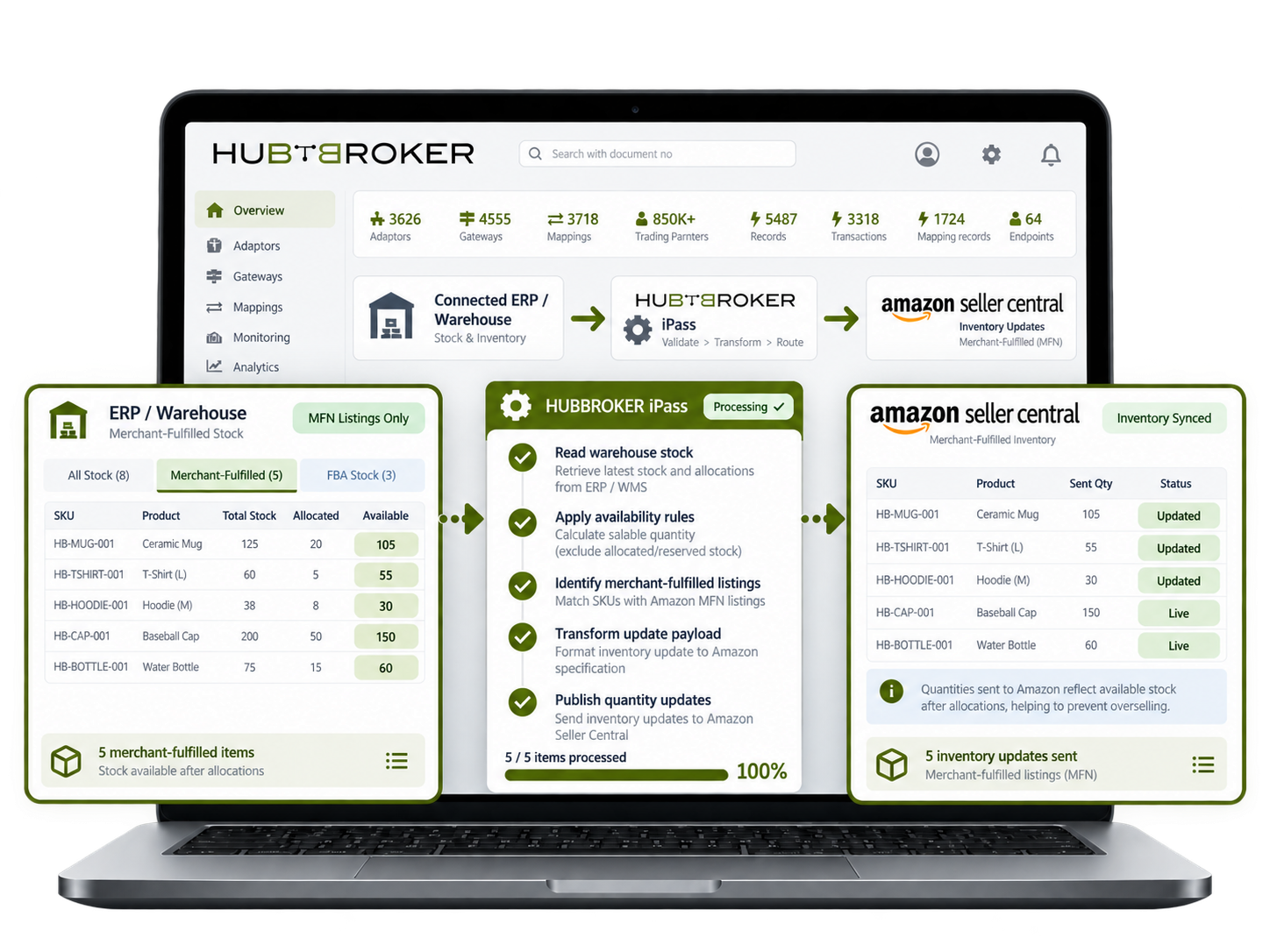
Send stock quantities from your warehouse system to Amazon for merchant-fulfilled listings. After stock is allocated elsewhere, a quantity update helps reduce the risk of selling the same units twice.
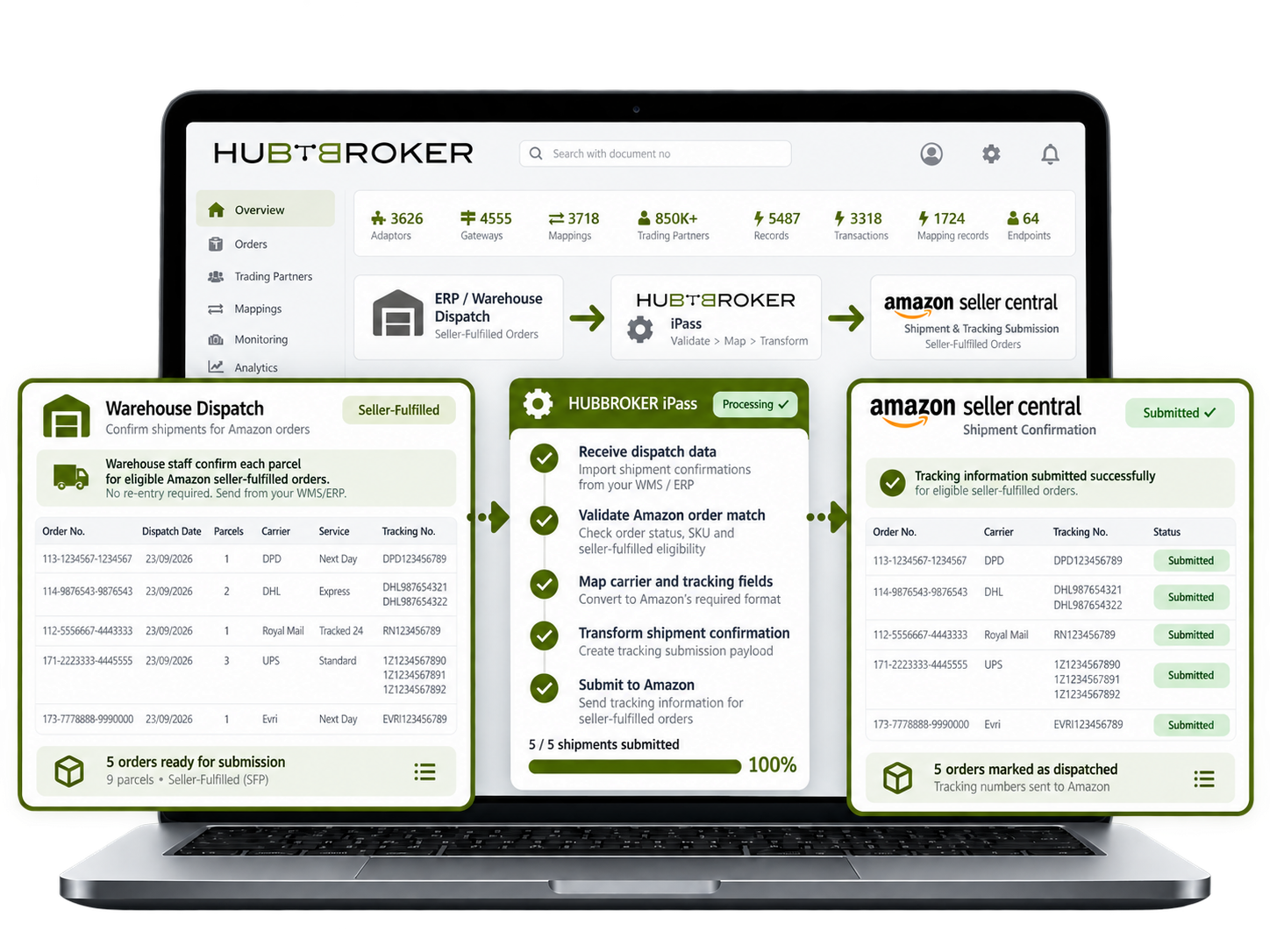
Send dispatch dates, carrier data and tracking numbers to Amazon for eligible seller-fulfilled orders. Your warehouse can confirm each parcel against the order without entering the details separately.
Bring Amazon fulfilment inventory figures into your ERP system, separating sellable, reserved and inbound units. Your buyer can review replenishment needs without counting every unit as ready to sell.
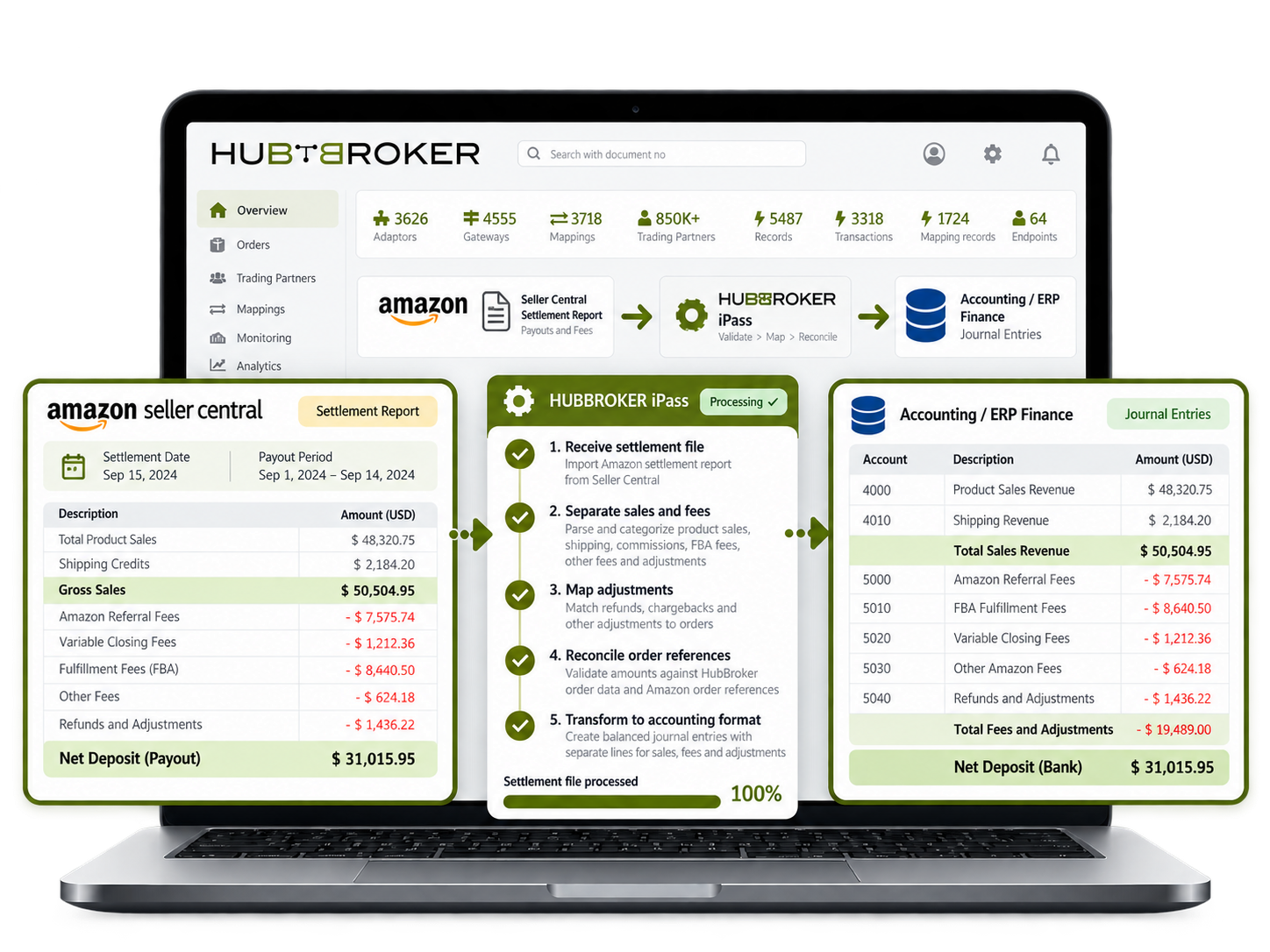
Bring Amazon settlement details into accounting with order references, fees and adjustments kept separate. Your accounting team can explain why the bank deposit is lower than the total value of sales.
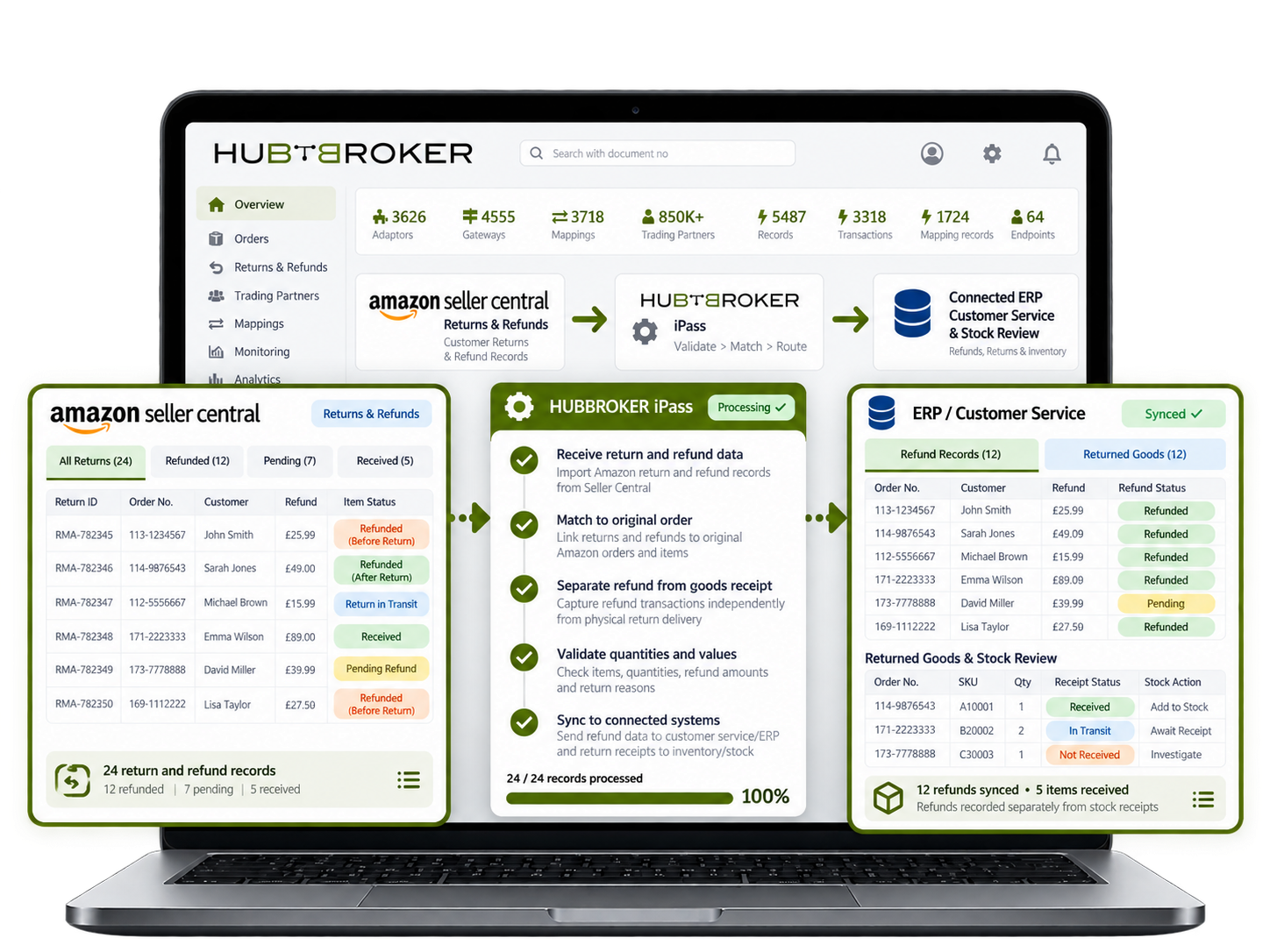
Bring Amazon return and refund records into connected systems for review against original orders. Your staff can separate money refunded from goods physically received before reviewing stock balances.


Connect Amazon with ERP systems through EDI to automate orders, inventory, shipping, returns, and invoice data exchange.
Connect BigCommerce with your ERP through EDI to automate orders, invoices, inventory, and shipping data exchange across systems.
Connect Visma e-conomic with ERP and business systems through EDI to automate invoices, orders, finance, and accounting data.
Connect Microsoft Business Central with ERP, commerce, and trading systems through EDI to automate orders, invoices, and inventory.
Connect Rackbeat with ERP and commerce systems through EDI to automate inventory, orders, purchases, and invoice data exchange.
Connect Microsoft Dynamics 365 F&O with business platforms through EDI to automate finance, supply chain, orders, and invoicing data.
Connect Shopify with your ERP through EDI to automate orders, inventory, invoices, and fulfilment data exchange across systems.
Connect Uniconta with business systems through EDI to automate invoices, orders, inventory, and finance data exchange.
Connect SAP Business One with trading platforms through EDI to automate orders, invoices, inventory, and finance data exchange.
Connect OpenCart with your ERP through EDI to automate orders, invoices, inventory, and shipping data flow across business systems.
Let's schedule a demo and discover how our integration platform connects your apps and automates processes.
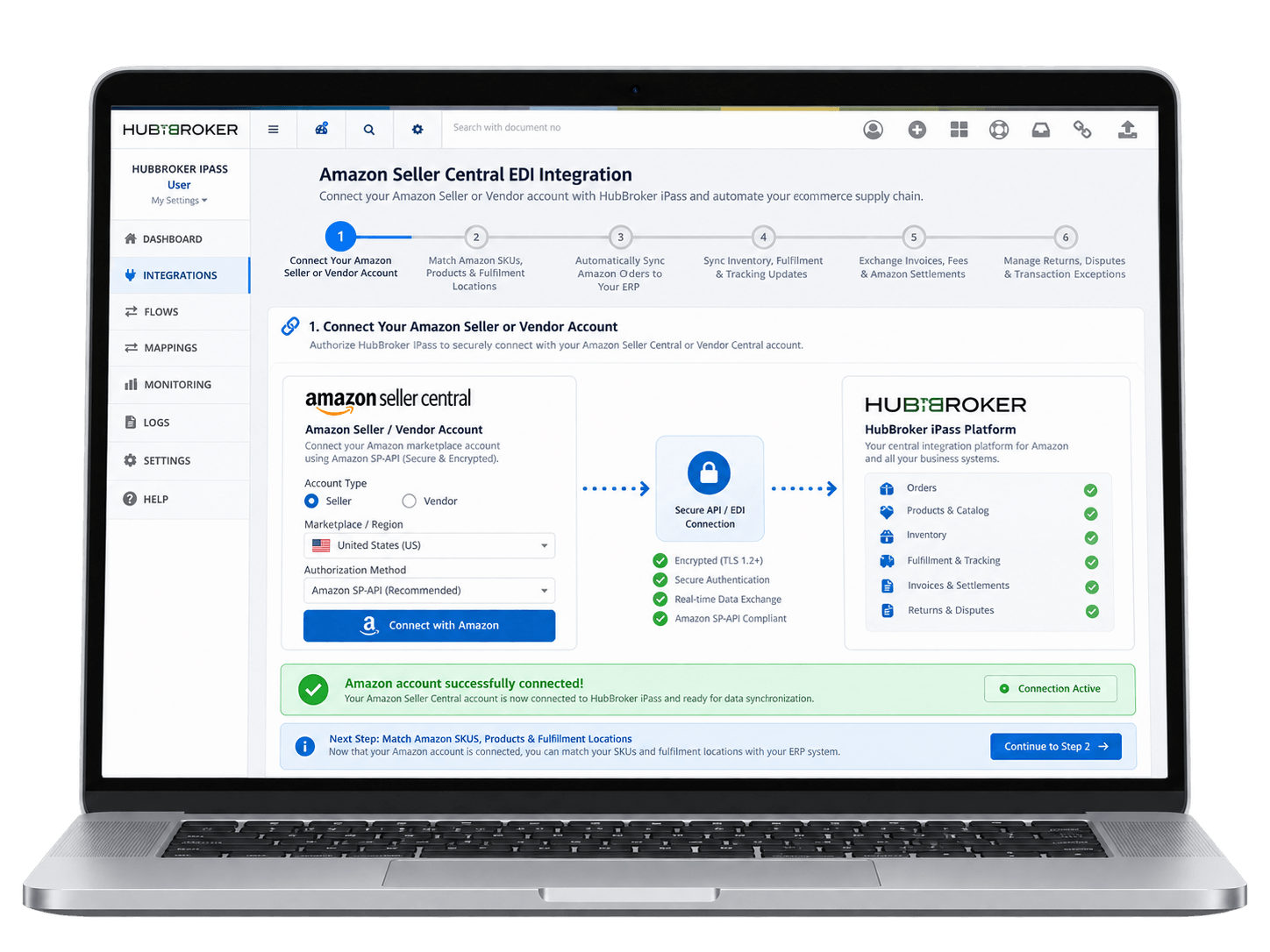
HubBroker connects your Amazon account through SP-API or supported EDI flows, enabling automated access to orders, inventory, fulfilment and marketplace data.
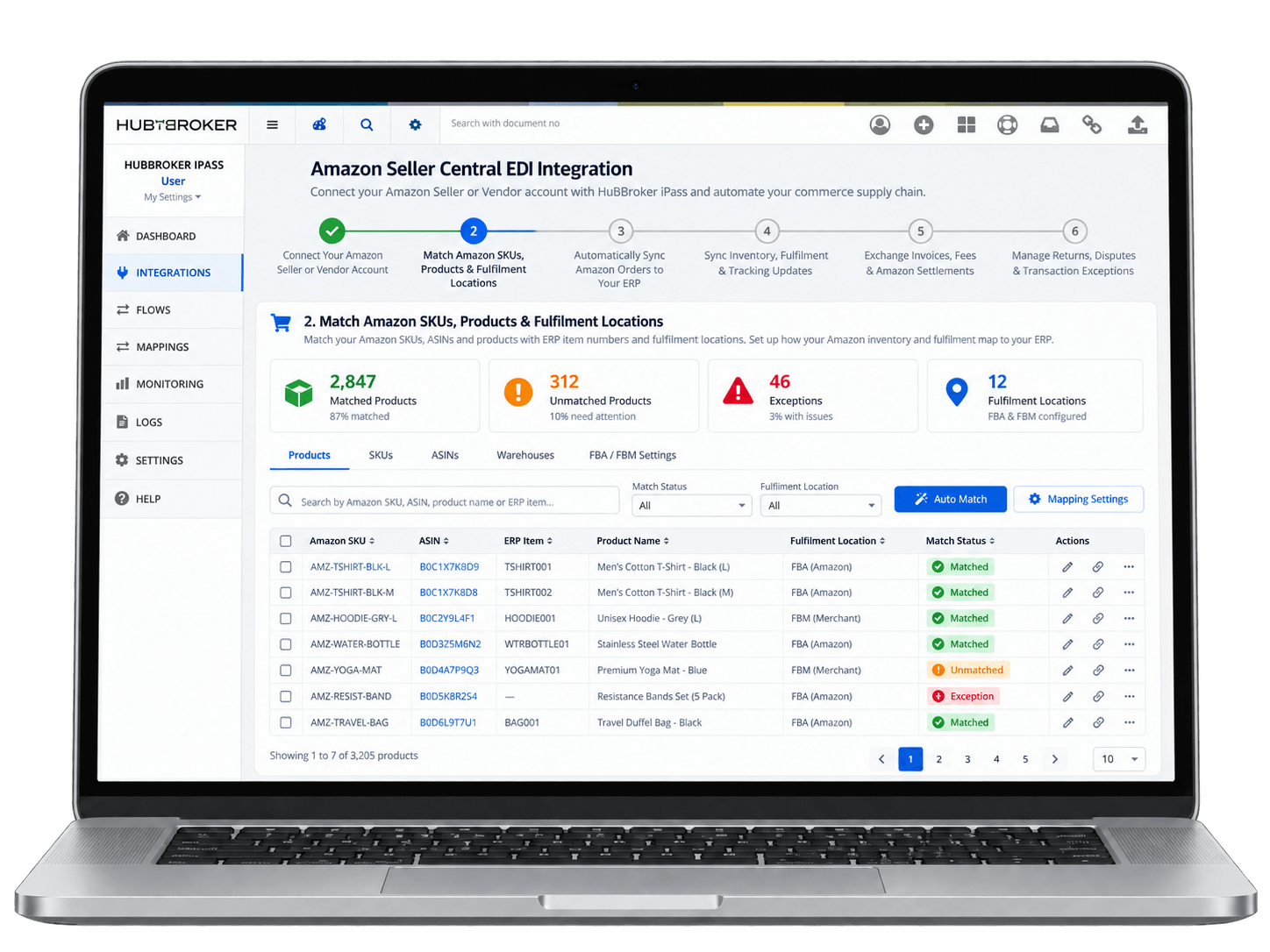
Amazon SKUs, ASINs, ERP item numbers, warehouses and FBA or FBM settings are matched so every transaction reaches the correct internal record.
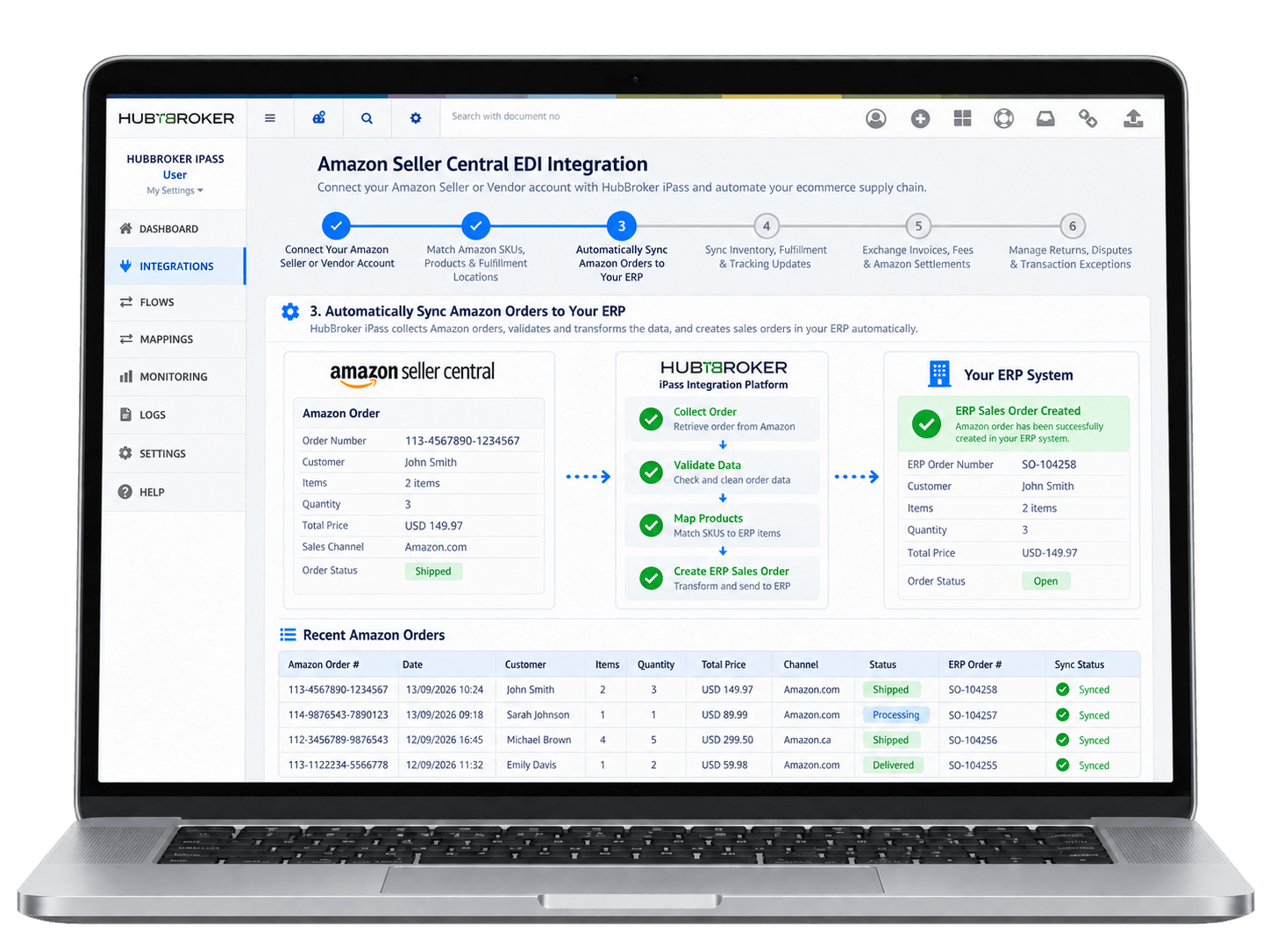
New Amazon orders are collected, validated and automatically created in your ERP with the correct products, quantities, prices and order references.
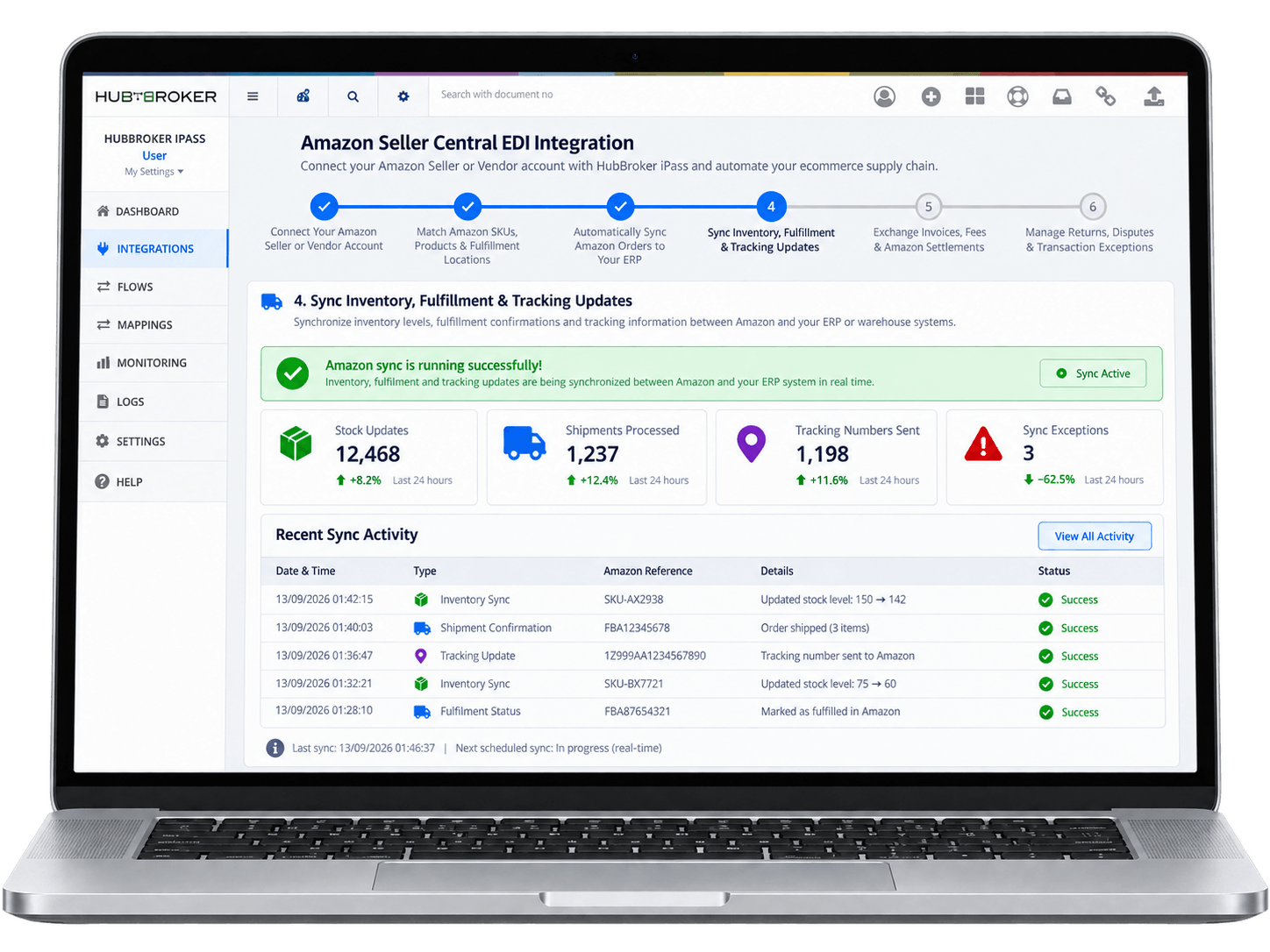
HubBroker keeps stock, fulfilment status, carrier details and tracking information synchronized between Amazon and your ERP or warehouse systems.
Invoice data, Amazon fees, commissions and settlement information are synchronized with your finance system to make reconciliation easier and more accurate.
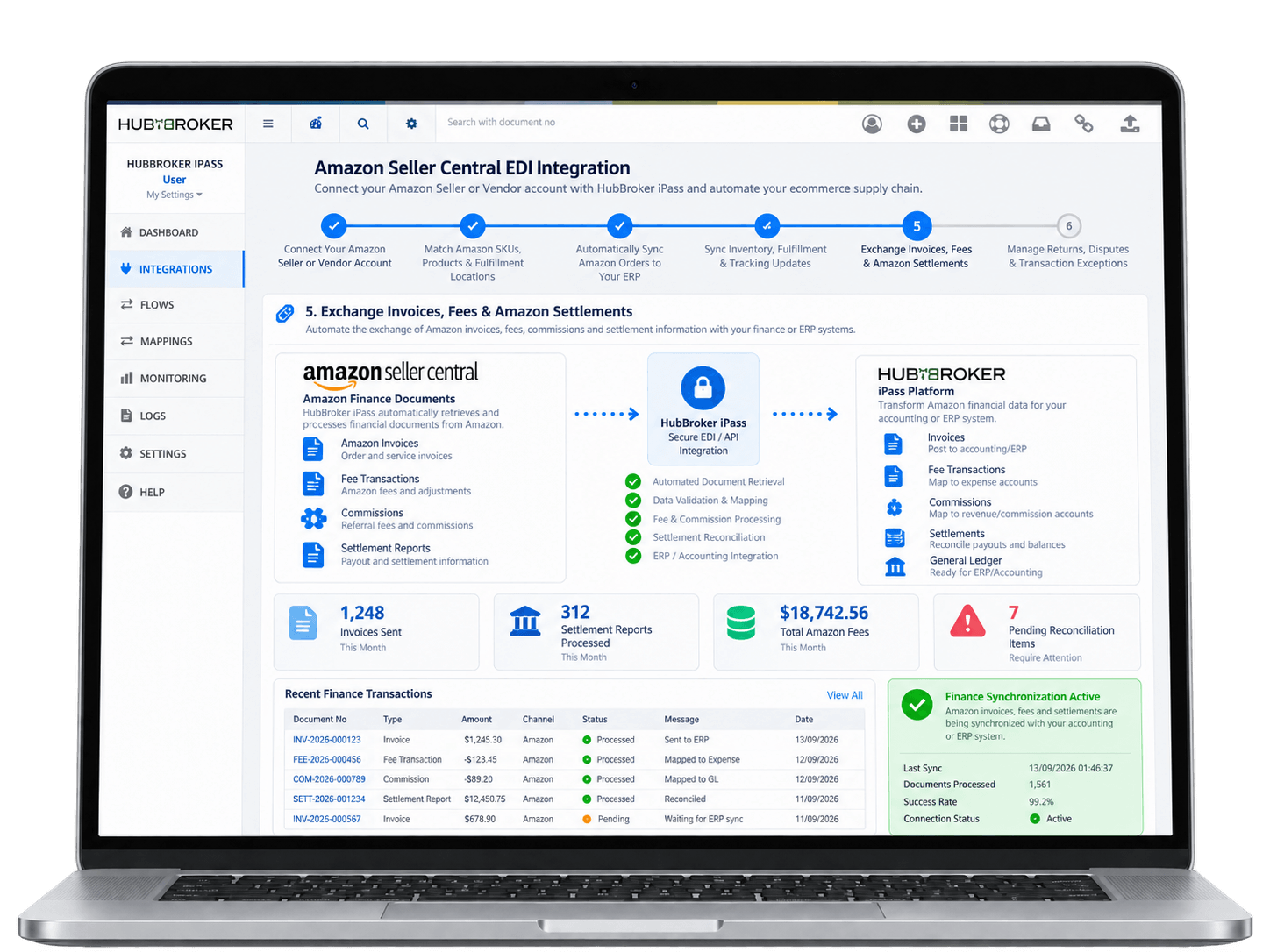
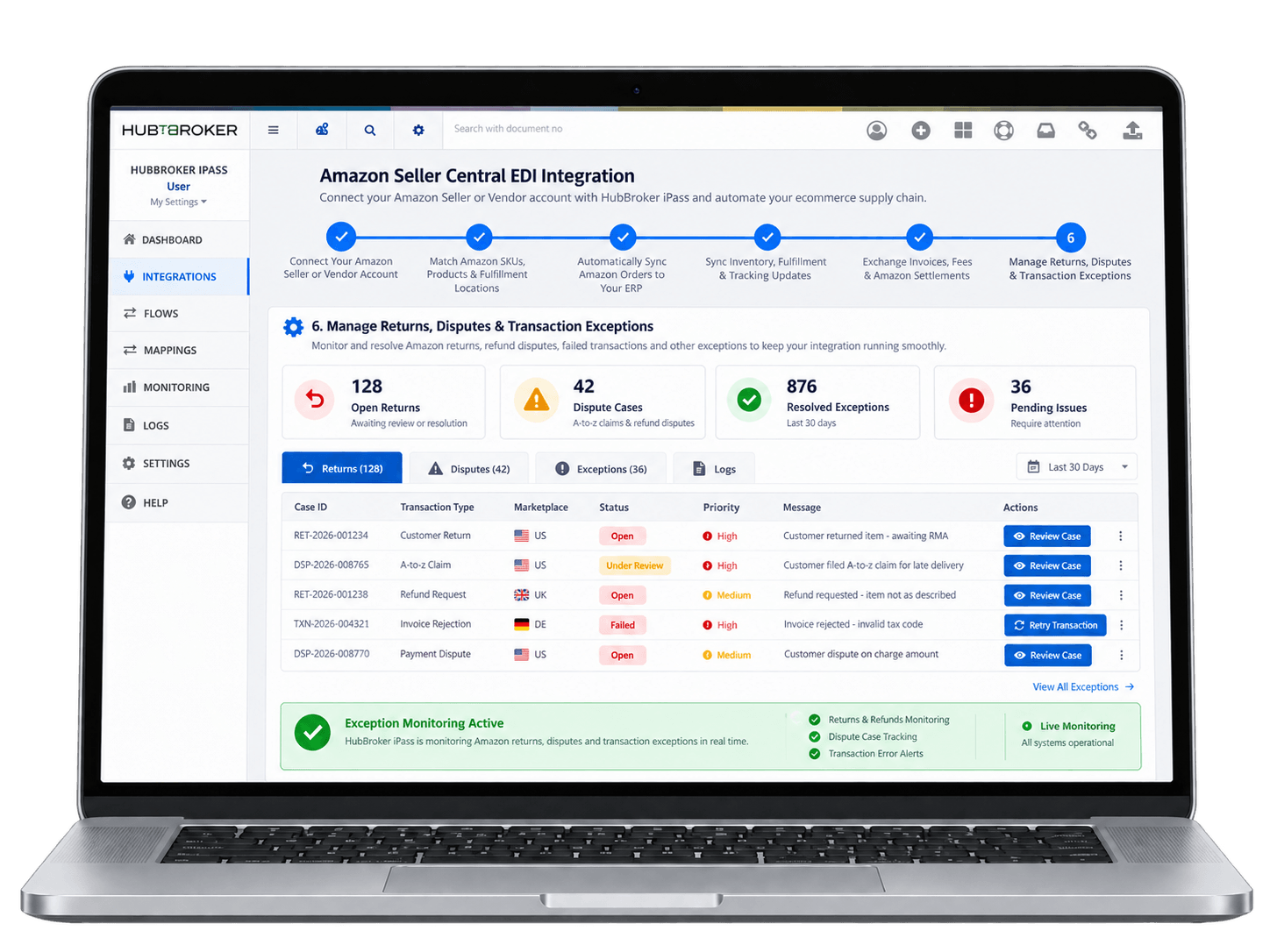
Amazon returns and disputes are synchronized with your ERP, while HubBroker tracks failed transactions, mapping issues and marketplace exceptions for faster resolution.













Amazon Business buyers are VAT-registered companies, and in more and more EU countries they must receive a structured e-invoice. HubBroker iPaaS brings Amazon orders into your ERP with the Order export adaptor, then creates the e-invoice for each buyer’s country and delivers it alongside the invoice copy Amazon expects.
Send structured invoices to Amazon Business buyers registered on Peppol across Europe. Tip: base the invoice on the ship-from and ship-to countries of each order, not your home country – Pan-EU stock can change which rules apply.
Invoice German business buyers in the structured German format. Tip: make sure the buyer’s VAT number and company name come through from the Amazon order before the invoice is built; they are mandatory on a German B2B e-invoice.
Create one hybrid PDF that a person can read and a buyer’s system can process. Tip: useful where you also need a PDF invoice copy for the same order, so you keep one document instead of two.
Clear invoices for orders that fall under Italian invoicing rules through the Sistema di Interscambio. Tip: check with your tax adviser which Amazon orders are in scope before go-live; the answer depends on your VAT registrations.
Issue invoices to Polish business buyers through KSeF. Tip: send the KSeF number back to the order record so refunds and corrections reference the right invoice.
Invoice Spanish business buyers in the Spanish national format. Tip: keep refunds as credit notes linked to the original invoice; a stand-alone negative invoice is hard for buyers to book.
Amazon orders move into your ERP and out to 3PLs or warehouses automatically, so picking, packing, and shipping start sooner and customers receive tracking updates without manual handling.
Stock levels and FBA inventory stay aligned between Amazon, your ERP, warehouses, and other channels in near real time, so listings stay accurate and oversells become much rarer.
Amazon orders, returns, settlements, and inventory feeds flow into your ERP without rekeying, freeing your team from copy-paste work and giving finance a cleaner data source for reporting.
Amazon settlements and invoices are validated and reconciled against your ERP automatically, reducing the time finance spends matching marketplace activity to accounting records each period.
Run multiple Amazon marketplaces, currencies, and regions through one connected setup, so adding new countries or seller accounts does not mean rebuilding your integrations from scratch.
Connect Amazon, other marketplaces, and your ERP through the same HubBroker platform, so your team manages a single integration layer instead of separate tools for every channel.
Our Amazon integration is shaped around how seller and vendor accounts actually run, covering orders, FBA, settlements, returns, and reporting rather than treating Amazon as one data source.
Link Amazon to ERP, WMS, 3PLs, other marketplaces, and trading partners through one platform, so your seller account stays connected to finance, inventory, and supply chain operations.
Amazon sellers get certified Peppol Access Point connectivity included, so invoicing public-sector and EU buyers can be handled inside the same automation setup, not a separate add-on.
Our Amazon EDI projects follow a clear path through requirement review, mapping, testing, and go-live, so eCommerce, IT, and operations teams share progress visibility throughout the project.
You work with teams in Denmark and India who understand Amazon, ERP integration, and EDI together, instead of being passed between separate vendors for each part of your technical setup.
Amazon can be extended with intelligent document processing, ERP API integration, and Peppol e-invoicing through the same HubBroker platform, so automation grows as the seller business scales.

ERIKS is a globally recognized industrial service provider with over 80 years of experience in delivering technical products, engineering expertise, and tailored services.
Read More
Orkla House Care Europe, a division of Orkla ASA, is a leading manufacturer and distributor of high-quality painting tools for both professionals and DIY users. Operating across Sweden, Denmark, Norway, and the UK.
Read More
Bella Group is a leading hospitality and event management company in Denmark, known for managing some of the country’s most iconic hotels and event venues.
Read More
LEPO A/S is a Danish, family-owned company established in 1933, specializing in the development and production of fish patties and other high-quality food products. These products are primarily sold under the brands of their customers, serving the needs of institutional commercial kitchens through partnerships with wholesalers.
Read More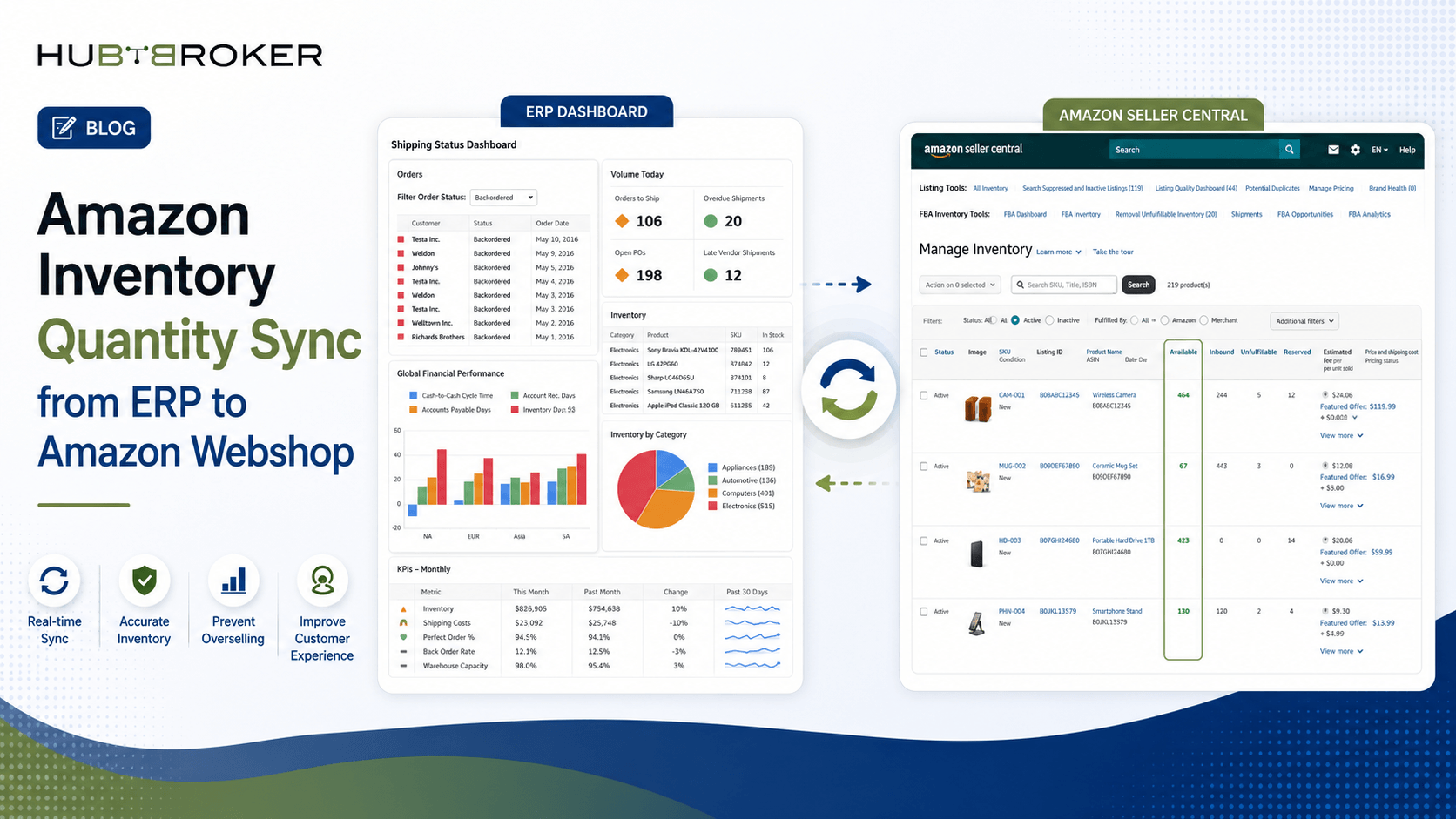
Sync inventory quantities between ERP and Amazon webshop to prevent overselling and stock mismatches.
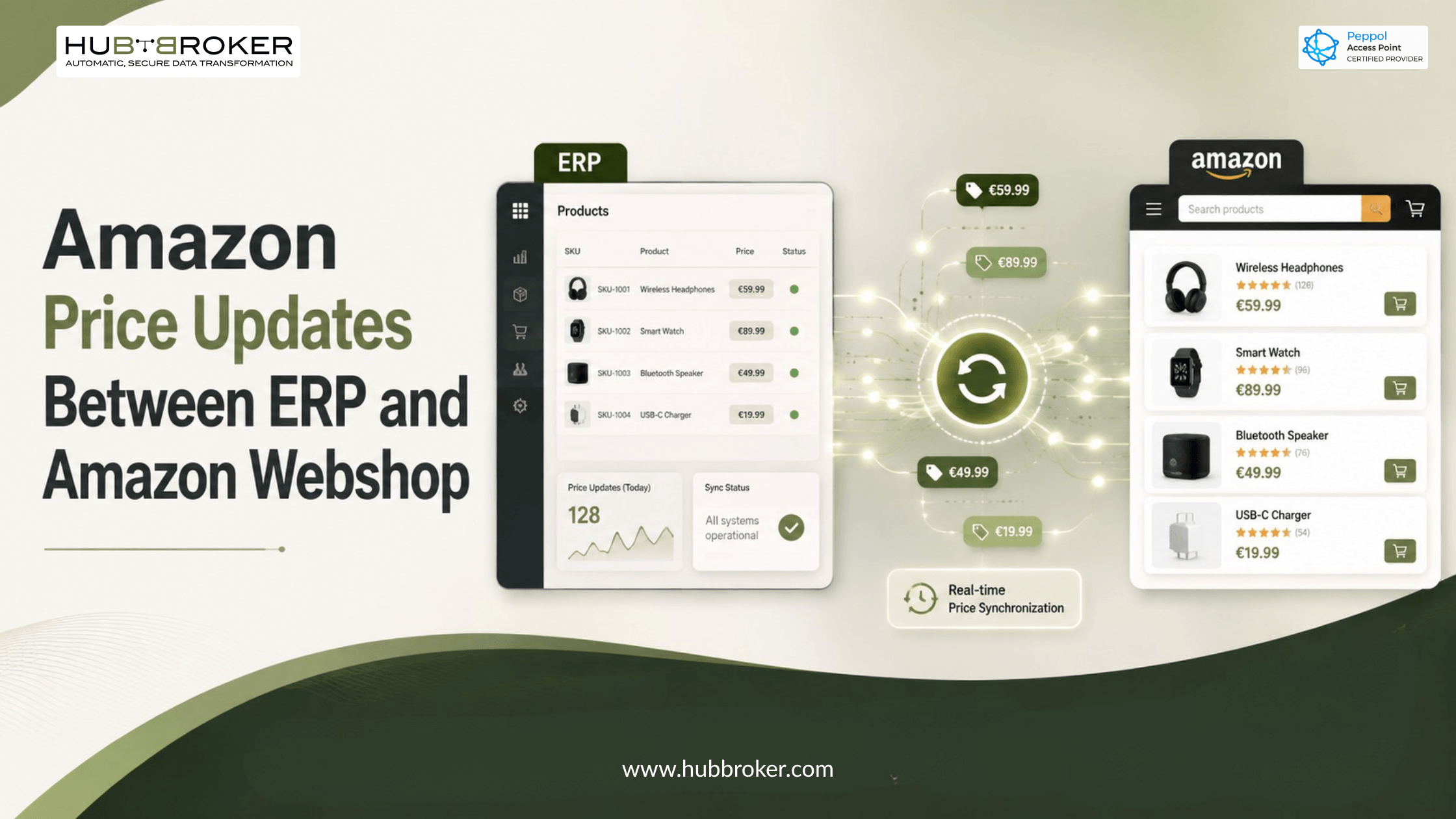
Automate Amazon price updates from ERP to webshop and keep product pricing consistent across systems.
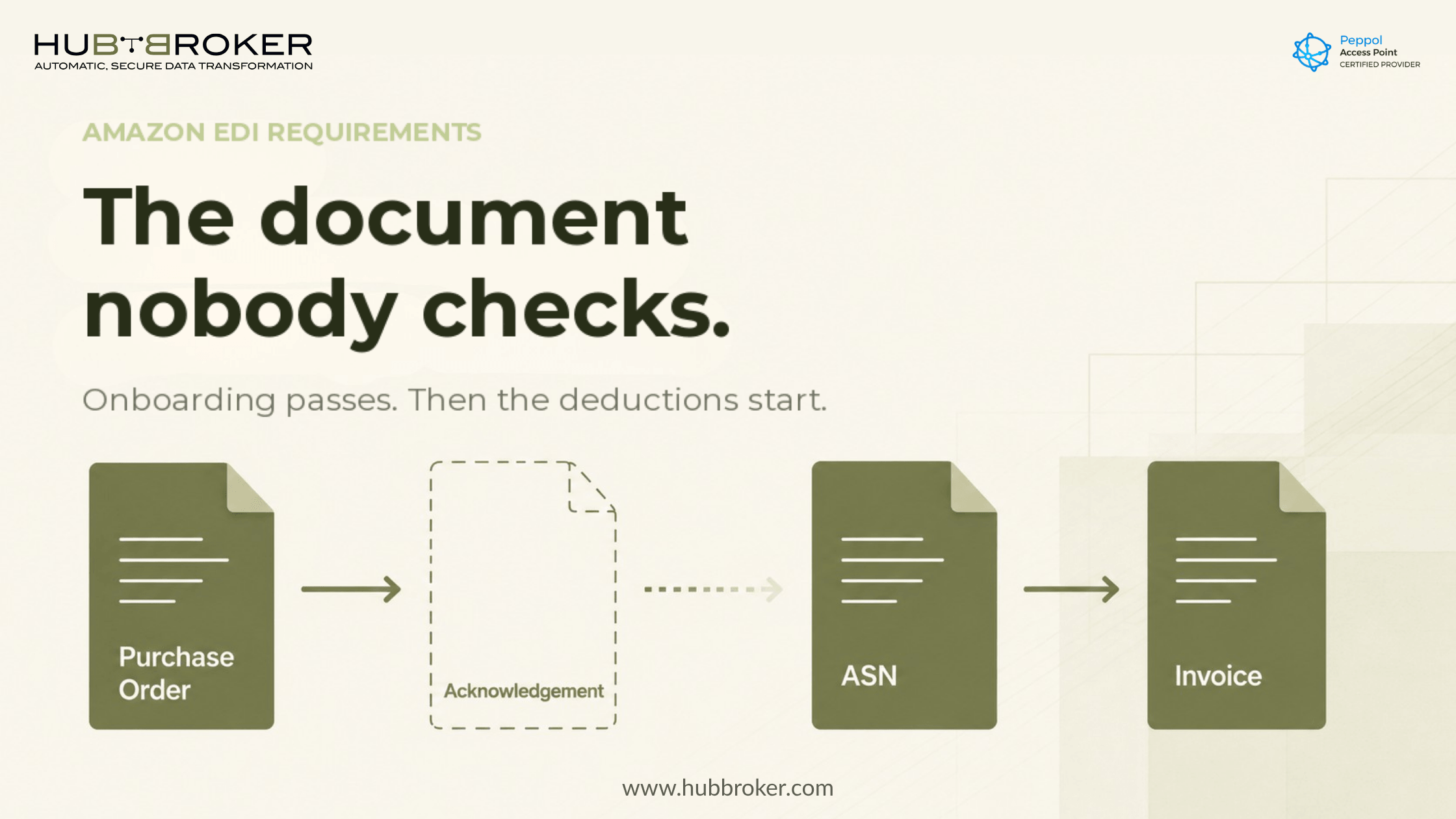
Amazon EDI requirements trip up vendors after go-live, not during onboarding. Five common failures and how to keep Amazon and your ERP in sync.
HubBroker solutions support businesses across industries where reliable data exchange, automation, compliance, and partner connectivity are essential.
Support fast-moving order, invoice, inventory, and marketplace workflows with automated document and system integrations.
Help manufacturers connect suppliers, customers, ERP systems, and logistics partners for smoother production and supply chain operations.
Enable structured data exchange for shipping, delivery, tracking, invoicing, and partner communication across logistics networks.
Support secure and accurate document exchange where compliance, reliability, and process efficiency are critical.
Help financial businesses improve document processing, data accuracy, reporting flows, and secure business communication.
Automate order-to-cash and procure-to-pay workflows across customers, suppliers, warehouses, and ERP systems.
HubBroker connects Amazon Seller Central with ERP and warehouse systems to synchronize orders, inventory, fulfillment updates, and product data. The integration reduces manual marketplace administration and helps maintain accurate stock information across connected systems.
Yes. HubBroker supports Amazon ERP integration for FBA and FBM workflows. Businesses can synchronize Amazon orders, stock information, fulfillment updates, and tracking details with their ERP or warehouse management system.
Amazon marketplace integration costs depend on the number of seller accounts, marketplaces, ERP connections, synchronization requirements, and transaction volumes. HubBroker offers customized Amazon integration services with pricing based on the required workflows.
HubBroker connects Amazon Seller Central with ERP platforms such as Microsoft Dynamics 365 and SAP through supported API and integration workflows. Businesses can automate orders, inventory, shipment information, and financial data exchange.
Yes, where Peppol invoicing is required or supported by the buyer. HubBroker can connect the seller's invoicing or ERP workflow with its certified Peppol Access Point. Peppol delivery is separate from Amazon's standard marketplace invoicing process.
HubBroker offers Amazon Seller Central integration consultations covering SP-API connectivity, ERP mapping, inventory synchronization, settlements, and fulfillment workflows. Book a demo to review your Amazon account and integration requirements.
45B 1260 Bredgade , København K Capital Region, Denmark
D-1010, The First, B/H ITC Narmada, Ahmedabad, Gujarat, 380015, India