
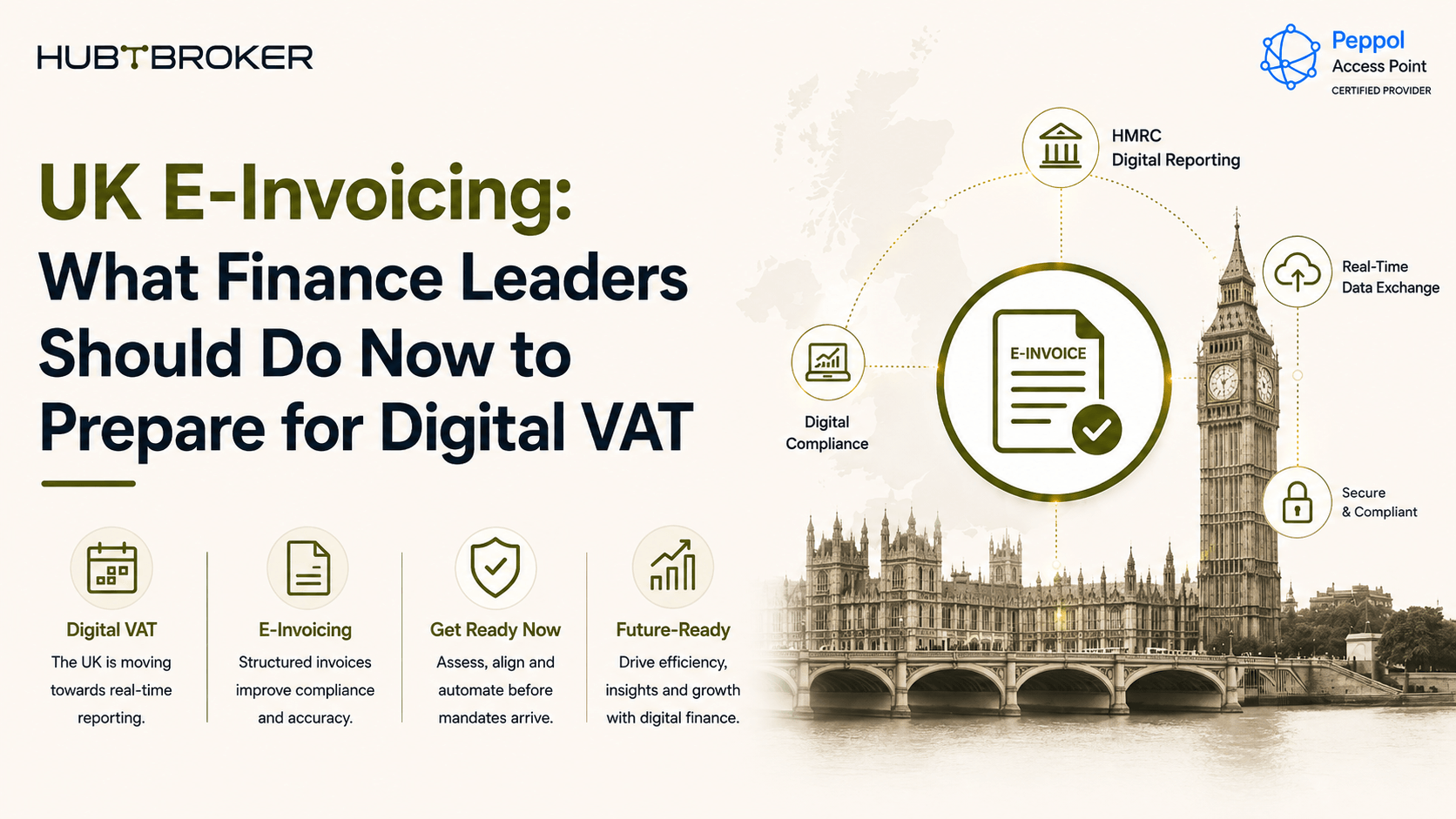
UK E-Invoicing: What Finance Leaders Should Do Now to Prepare for Digital VAT
UK finance teams may already keep VAT records in digital form, but invoice work can still depend a lot on PDFs, emails and manual checks. UK einvoicing is now becoming something businesses need to prepare for, because the government has confirmed mandatory e-invoicing for VAT invoices from April 2029. The deadline is clear, but all technical details are not final yet. So right now, it makes more sense to improve invoice data and current finance process instead of building everything around assumptions.
Don't Start With the Deadline. Start With Your Invoice Data.
A structured invoice will only work properly if the data behind it is correct. Finance team should first check customer and supplier IDs, VAT numbers, invoice numbers, invoice dates, tax codes, payment terms, PO references, line items, VAT amount and credit-note links inside ERP. A digital invoice cannot fix bad or missing source data. If master data is clean and VAT coding is more consistent, there will be less mapping and less manual correction later when final UK rules are ready.
Readiness Area | Current-State Risk | Finance Question | System/Data Involved | Preparation Action | Why It Matters | Owner |
|---|---|---|---|---|---|---|
Invoice data | Missing fields | Is required data structured? | ERP/accounting | Map and clean fields | Helps structured output | Finance + IT |
Master data | Wrong identifiers | Are records complete? | Customer/supplier master | Check records | Reduces rejection risk | Finance |
VAT coding | Different logic | Are tax codes mapped? | ERP/tax setup | Standardise mappings | Helps correct VAT treatment | Tax + Finance |
Delivery | PDF/email dependent | How are invoices sent? | ERP/AP/AR/email | Map current channels | Shows manual work | Finance |
Exceptions | Manual checking | Who handles failures? | AP/AR/workflow | Define owners | Avoids missed errors | Finance + IT |
Integration | Point-to-point/manual | Can systems exchange data? | ERP/integration layer | Check APIs/iPaaS | Helps future automation | IT |
What Could a Future UK Digital Invoice Workflow Look Like?
The government has now confirmed Peppol as the main interoperability network for UK e-invoicing, but full guidance, standards, technical specifications and legislation are still being prepared. HMRC currently plans to publish these by the end of 2027–28. So Finance team should prepare systems that are flexible. It is better than assuming every technical detail is already fixed today.
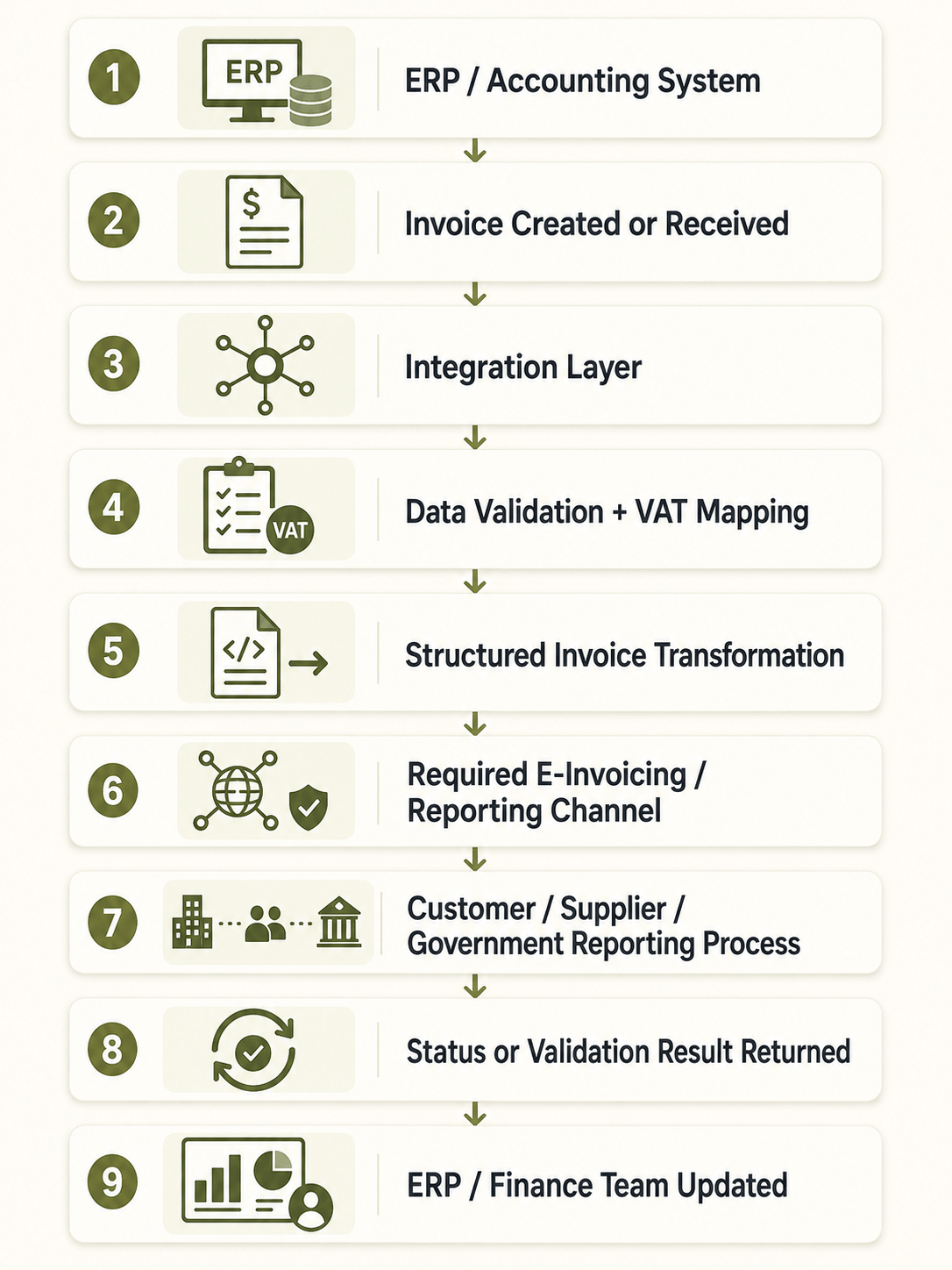
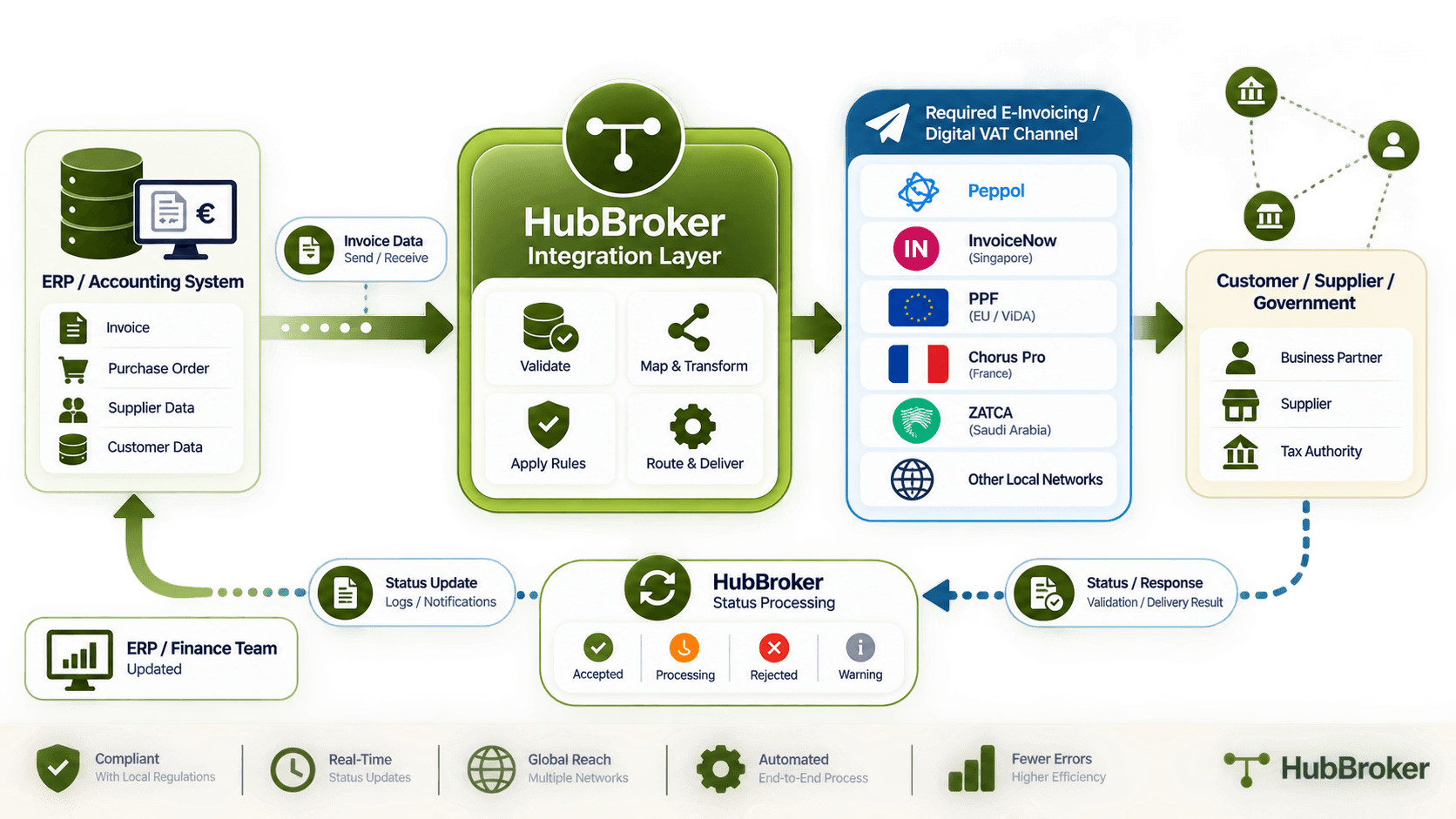
The basic flow is extract → validate → transform → route → monitor. The final reporting and sending process should follow the final UK rules when those details are confirmed.
Which Manual Invoice Processes Should Finance Leaders Identify Now?
For outgoing invoices, Finance team should check where ERP creates PDF files, where email is used to send invoice, where someone manually checks delivery and where errors are handled outside ERP. For incoming invoices, check where staff need to open attachments, enter invoice data again, check VAT or PO information, ask for approval and post invoices manually. UK e-invoicing preparation is not only about changing invoice format. The bigger point is to make sure invoice data can move in and out of finance systems without people entering same data again and again.
What Should Finance, Tax and IT Decide Before Implementation?
Agree these five points early:
System of record: Which ERP will hold the official invoice and VAT data?
Data ownership: Who will fix customer, supplier and tax-master information?
Transformation: Can ERP data be changed into required structured format without too much redevelopment?
Error ownership: Who will handle wrong VAT data, missing fields and transmission errors?
Status handling: How will acceptance, rejection and processing results come back to Finance?
Finance team should not need to keep checking outside portals manually if status can come back into their normal system.
How Does Making Tax Digital Fit Into the Picture?
Making Tax Digital for VAT and e-invoicing are connected topics, but they are not the same thing. MTD for VAT requires VAT-registered businesses, unless exempt, to keep required digital records and send VAT Returns using compatible software. E-invoicing is more about sending and receiving structured VAT invoices between business systems. So the UK’s 2029 e-invoicing requirement adds another invoice exchange process. It does not replace MTD.
“Digital VAT” is used here as a simple description, not the name of another official UK programme.
Should You Wait Until the UK Rules Are Final?
No, but business should not build too much around guesses. There is already useful work that can be done now. This includes cleaning master data, making VAT coding more consistent, checking current invoice flows, improving ERP data, improving API and integration setup, automating basic validation, deciding who handles errors and bringing status back into finance system. When looking at a solution, focus on ERP connectivity, flexible data transformation, validation, Peppol readiness, status and error handling, multi-country support and central management.
HubBroker can provide an integration layer across ERP, e-invoicing, Peppol, EDI and API workflows, with mapping, validation, transformation, routing and monitoring.
Preparing for the next stage of UK einvoicing?
HubBroker can help map current invoice flows, find manual work and check how structured data, ERP integration and automation can support a more ready setup before April 2029.
