
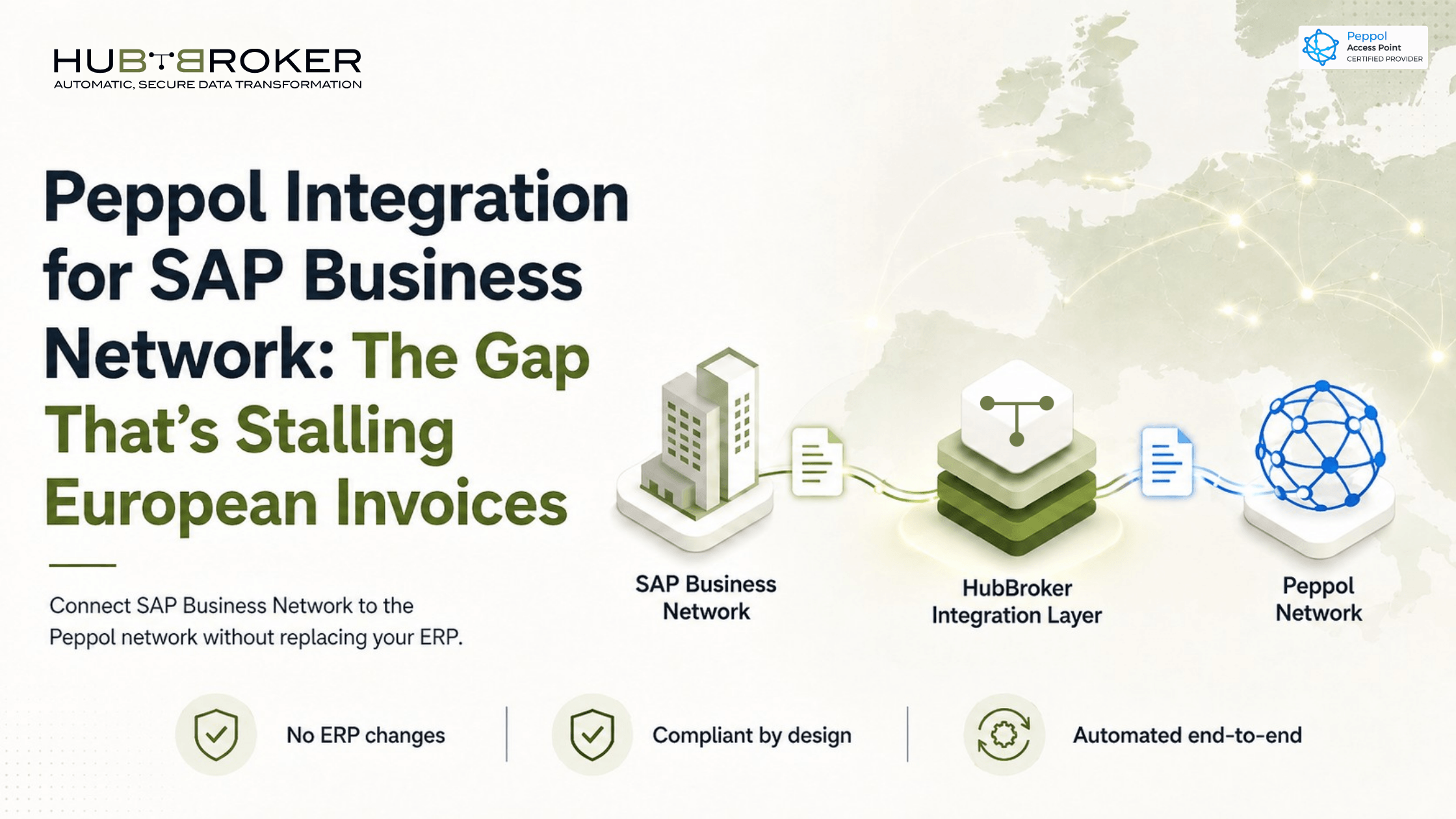
Peppol Integration for SAP Business Network: The Gap That's Stalling European Invoices
If your manufacturing business runs SAP Business Network to manage suppliers and trading partners, it's easy to assume you're already covered for e-invoicing compliance in Europe. You're not. SAP Business Network manages collaboration and document exchange between you and your trading partners it doesn't natively connect to the Peppol network, the infrastructure most European e-invoicing mandates run on. Peppol integration for SAP Business Network is a separate piece finance and IT teams often discover they need only once invoices start bouncing back or getting rejected by buyers.
What SAP Business Network Actually Covers and Where Peppol Integration Gaps In
SAP Business Network (formerly Ariba Network) is built for supplier collaboration: purchase orders, order confirmations, invoicing between you and connected trading partners. That's valuable, but it's a closed network model both sides typically need to be on SAP Business Network, or connected through a specific integration, for documents to flow.
Peppol works differently. It's an open, four-corner network: your access point talks to your buyer's access point, regardless of what systems either of you runs internally. A growing number of European buyers and public bodies will only accept invoices through Peppol. SAP Business Network, on its own, isn't a certified Peppol Access Point so trading partners who require Peppol delivery won't be reachable through it alone. If your SAP environment already handles document exchange through EDI, the mechanics are similar to what's covered in our guide to SAP EDI integration Peppol is simply a different network on the receiving end.
Why Does This Matter for a Manufacturer Trading Across Europe?
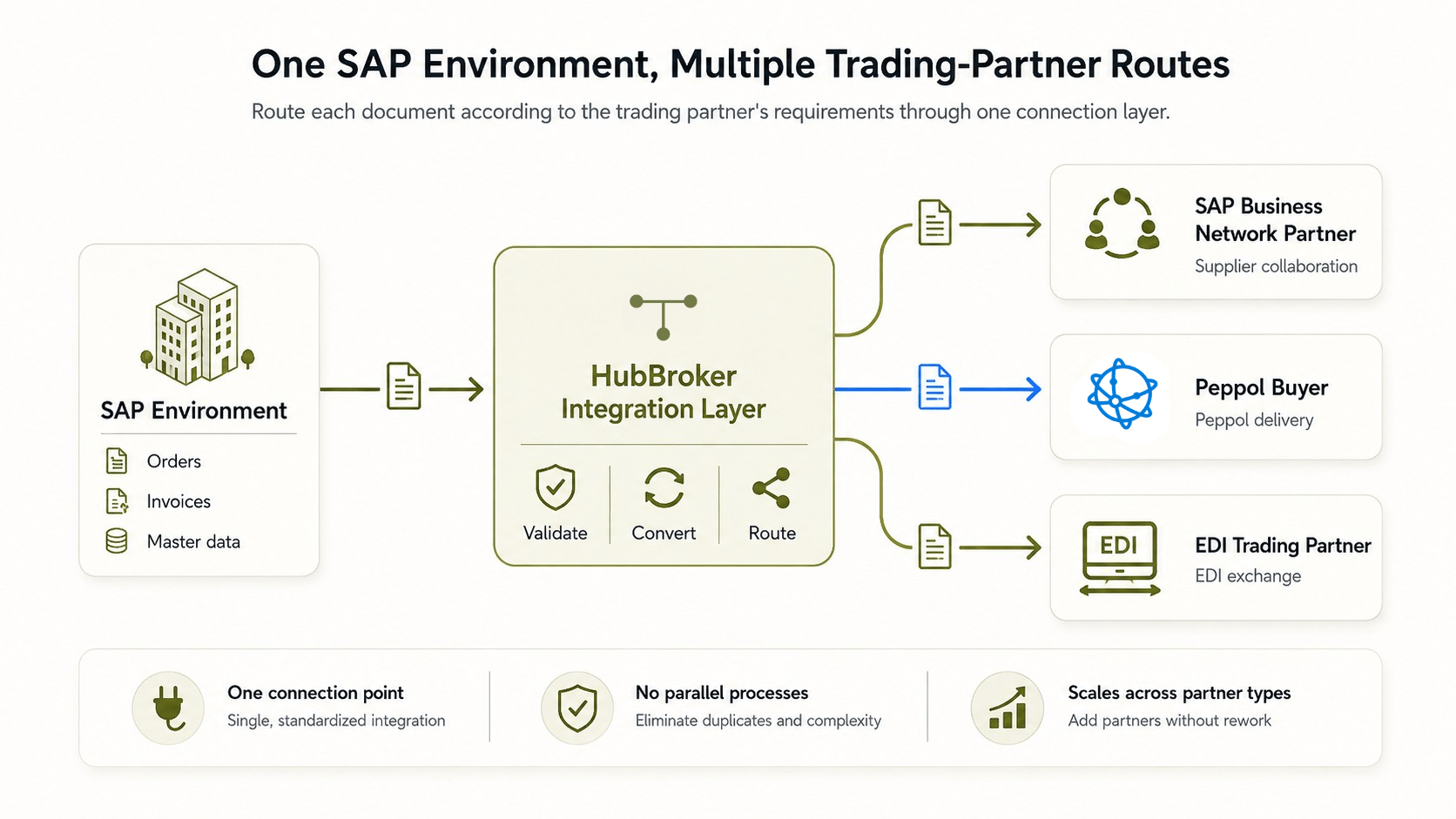
Manufacturers rarely trade with one type of buyer. You might have large retail or public-sector customers who require Peppol-format e-invoices, alongside SAP Business Network partners who don't. Without a bridge between the two, your finance team ends up running two separate invoicing processes one automated, one manual. (For a fuller breakdown of how the network operates, see our Peppol e-invoicing guide.)
That split gets more painful as mandates expand. Several European governments are moving toward mandatory structured e-invoicing for B2B and B2G transactions, with Peppol as the common backbone. Buyers who couldn't previously accept anything outside SAP Business Network are increasingly required to receive Peppol invoices and will expect their suppliers to send them that way.
Where the Gap Actually Causes Problems
The disruption shows up in AP and AR first. Invoices generated in SAP but destined for a Peppol-only buyer either don't arrive, arrive in the wrong format, or get manually reformatted and re-keyed by someone on your finance team. That slows down payment cycles and creates room for data entry errors on documents that are supposed to be audit-ready.
It also creates onboarding friction. Every time a new customer or supplier says "we only accept Peppol invoices," IT gets pulled into a one-off workaround instead of a repeatable process. Multiply that across a European customer base and it becomes a standing drag on both finance and IT time well before any compliance deadline forces the issue.
What This Means for Your ERP and Systems
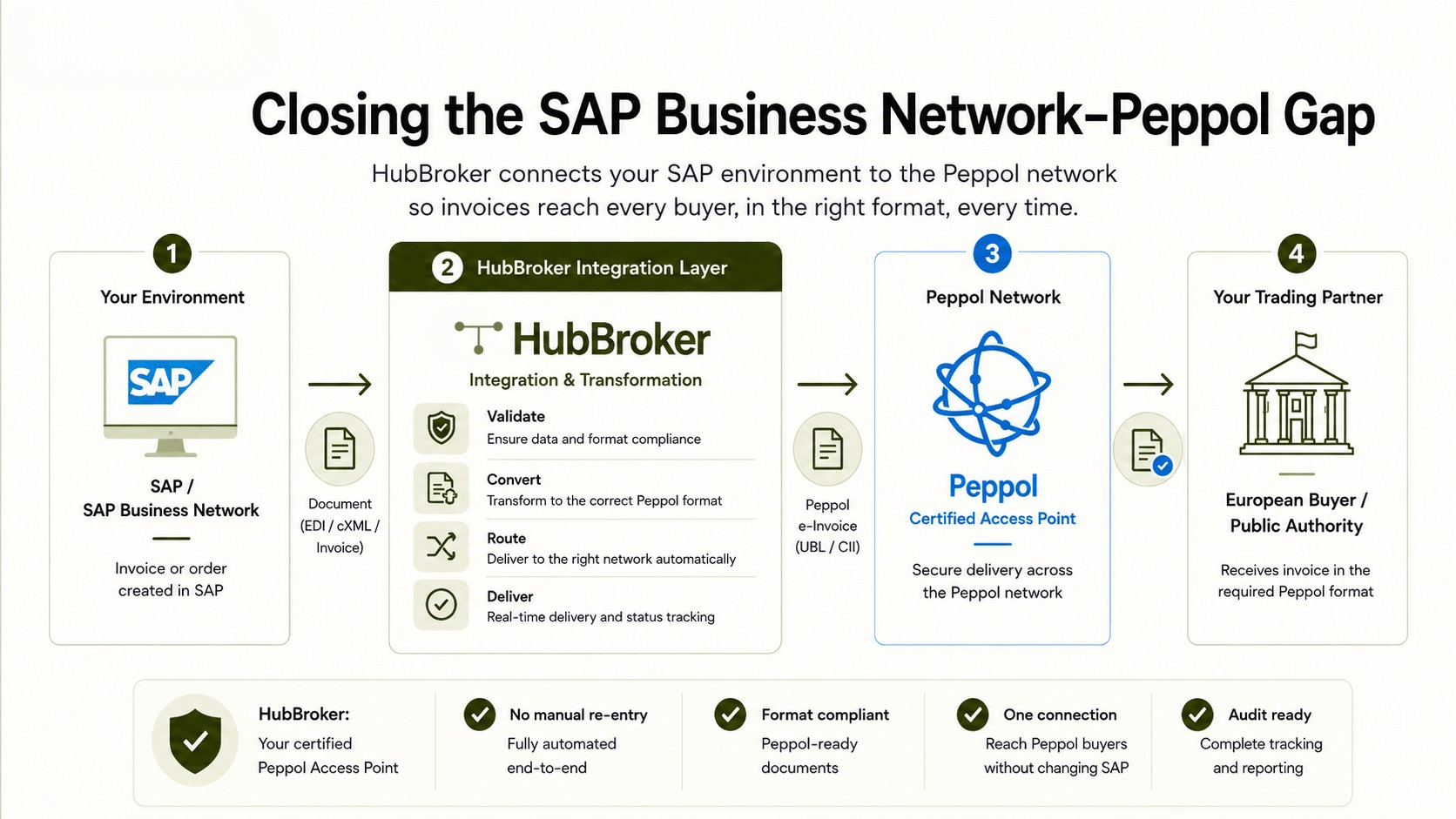
This isn't a reason to move off SAP Business Network or your ERP. HubBroker sits as the integration layer between SAP Business Network (or SAP Business One, S/4HANA, and other SAP environments) and the Peppol network, so documents flow automatically regardless of which side your trading partner is on.
In practice, that means invoices and orders generated in SAP get validated, converted to the correct Peppol format, and delivered through HubBroker's certified Peppol Access Point with no manual re-entry and no separate system for your finance team to manage. The same connection point can also handle EDI traffic for partners who aren't on Peppol at all, so you're not maintaining parallel processes for different customer types.
Manufacturers like Ammega and Eriks have taken this route: keeping their existing ERP and trading-partner setup in place while adding the network connectivity that neither system provided on its own. The integration work happens once, at the connection layer, rather than repeatedly at the invoice level.
Getting Peppol-Ready Without Disrupting SAP Business Network
Closing this gap is a connectivity project, not a system replacement. It typically starts with mapping which trading partners require Peppol versus which stay on SAP Business Network or EDI, then routing document flow accordingly through a single access point.
If you're evaluating what Peppol integration would look like alongside your current SAP Business Network setup, it's worth a short conversation before a deadline or a rejected invoice forces the timeline.
Trading across Europe on SAP Business Network? Talk to HubBroker about connecting it to Peppol without touching your ERP.
