
How to Set Up a PEPPOL E-Invoicing Solution in the Netherlands for B2B Businesses
Understanding PEPPOL and Its Role in the Netherlands’ B2B E-Invoicing Landscape Today
PEPPOL (Pan-European Public Procurement On-Line) is a standardized framework that enables secure and efficient electronic document exchange between businesses and government entities across Europe. In the Netherlands, PEPPOL has become a key enabler of digital transformation in B2B invoicing by providing a common network that ensures interoperability between different systems.
The Dutch government strongly supports e-invoicing adoption, particularly through PEPPOL, to streamline procurement and invoicing practices. Many organizations are transitioning from traditional invoicing methods to fully automated digital workflows using PEPPOL standards such as BIS Billing 3.0.
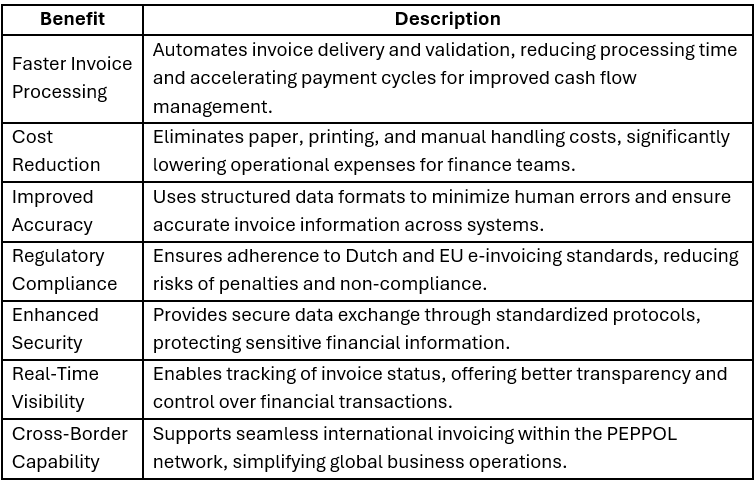
Benefits of PEPPOL E-Invoicing Solutions for Dutch B2B Businesses Growth
PEPPOL e-invoicing solutions provide Dutch B2B businesses with a scalable and standardized approach to managing invoice exchange. By eliminating paper-based processes and manual intervention, companies can significantly reduce administrative overhead while improving accuracy and compliance.
Key Requirements for PEPPOL E-Invoicing Compliance in the Netherlands for Businesses
To comply with PEPPOL e-invoicing requirements in the Netherlands, businesses must align their invoicing processes with standardized formats and technical protocols. This includes adopting structured invoice formats such as PEPPOL BIS Billing 3.0, which ensures consistency and interoperability across systems.
In addition, businesses must ensure their internal systems, such as ERP or accounting platforms, are capable of generating and receiving PEPPOL-compliant invoices. Proper identification through unique PEPPOL IDs is essential for routing invoices correctly.
Key Requirements:
PEPPOL Access Point Connection – Businesses must connect via a certified provider to send and receive invoices securely within the PEPPOL network.
PEPPOL BIS Billing 3.0 Format – Invoices must follow standardized structured formats to ensure interoperability and compliance.
Valid PEPPOL ID Registration – Companies need a unique identifier to enable accurate invoice routing across the network.
ERP/System Compatibility – Internal systems must support structured data exchange and PEPPOL integration capabilities.
Data Validation Rules – Invoices must pass validation checks to ensure correctness and compliance with standards.
Tax Compliance Requirements – Businesses must align invoices with Dutch VAT regulations and reporting standards.
Secure Data Transmission – Use of encrypted communication protocols to protect sensitive financial data.
Audit Trail Maintenance – Maintain records of invoices and transactions for compliance, auditing, and transparency.
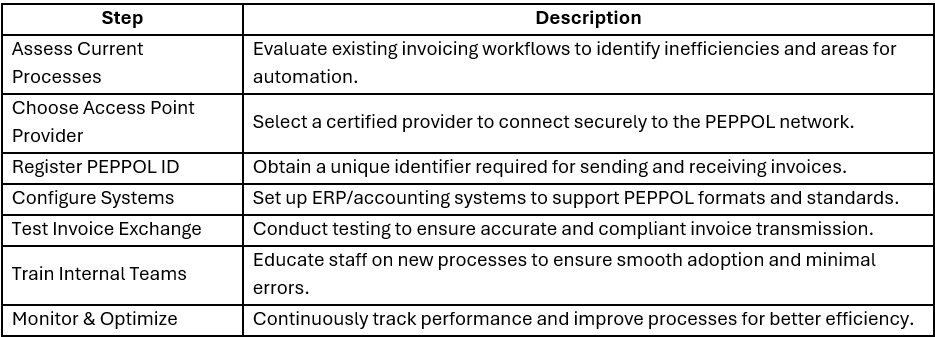
Step-by-Step Process to Set Up a PEPPOL E-Invoicing Solution Successfully
Setting up a PEPPOL e-invoicing solution requires a structured approach to ensure seamless integration and compliance. Businesses must begin by assessing their current invoicing processes and identifying gaps in automation and standardization.
Integrating PEPPOL with Your ERP or Accounting System for Seamless Automation
Integrating PEPPOL with your ERP or accounting system is essential for achieving full automation in invoicing processes. This integration allows businesses to generate, send, receive, and process invoices directly within their existing systems without manual intervention.
Integration Points:
ERP Compatibility Check – Ensure your system supports PEPPOL formats and integration capabilities.
API Integration Setup – Use APIs to connect ERP systems with PEPPOL Access Point providers.
Data Mapping Configuration – Map invoice fields to ensure accurate data exchange between systems.
Automated Invoice Generation – Enable automatic creation of structured invoices within ERP systems.
Validation Rule Implementation – Apply checks to ensure invoices meet PEPPOL compliance standards.
Real-Time Data Sync – Ensure seamless synchronization of invoice data across systems.
Workflow Automation – Automate approval, sending, and receiving processes for efficiency.
Ongoing System Updates – Regularly update integration to comply with evolving PEPPOL standards.
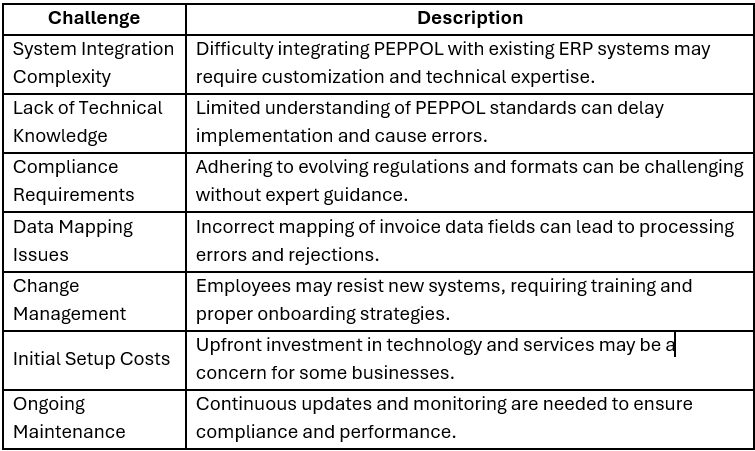
Common Challenges in PEPPOL Implementation and How to Overcome Them Effectively
Implementing PEPPOL e-invoicing can present several challenges for businesses, especially during the transition from traditional invoicing systems. One common issue is the complexity of integrating PEPPOL with existing ERP systems, which may require technical expertise and system upgrades.
Why Choose HubBroker as Your Trusted PEPPOL E-Invoicing Solution Provider in the Netherlands
Choosing the right PEPPOL e-invoicing provider is crucial for ensuring a smooth and efficient implementation, and HubBroker stands out as a reliable partner for businesses in the Netherlands. With extensive experience in global e-invoicing and system integration, HubBroker offers a robust platform that simplifies the entire invoicing lifecycle. From onboarding to full-scale deployment, businesses benefit from fast implementation, seamless ERP integration, and compliance with PEPPOL standards.
HubBroker also provides dedicated support and expertise to help businesses navigate complex compliance requirements and technical challenges. Its scalable infrastructure ensures that companies can grow without worrying about system limitations. By automating invoice exchange and reducing manual processes, HubBroker enables organizations to improve efficiency, reduce costs, and enhance financial visibility.
