Peppol E-invoicing A Comprehensive Guide
Your finance team may be sending invoices digitally, but that does not always mean the process is truly automated.
If invoices are still arriving as PDF attachments, being downloaded manually, checked line by line, and entered into ERP systems by hand, the business is still carrying the cost of manual work.
That is where Peppol e-invoicing becomes important.
Peppol is not just another invoice format. It is a standardised way for businesses and public organisations to exchange electronic business documents securely, accurately, and in a format systems can understand.
For CFOs, finance directors, and IT managers, Peppol matters because it supports compliance, reduces manual invoice handling, and helps prepare finance operations for a more automated future.
What Is Peppol E-Invoicing?
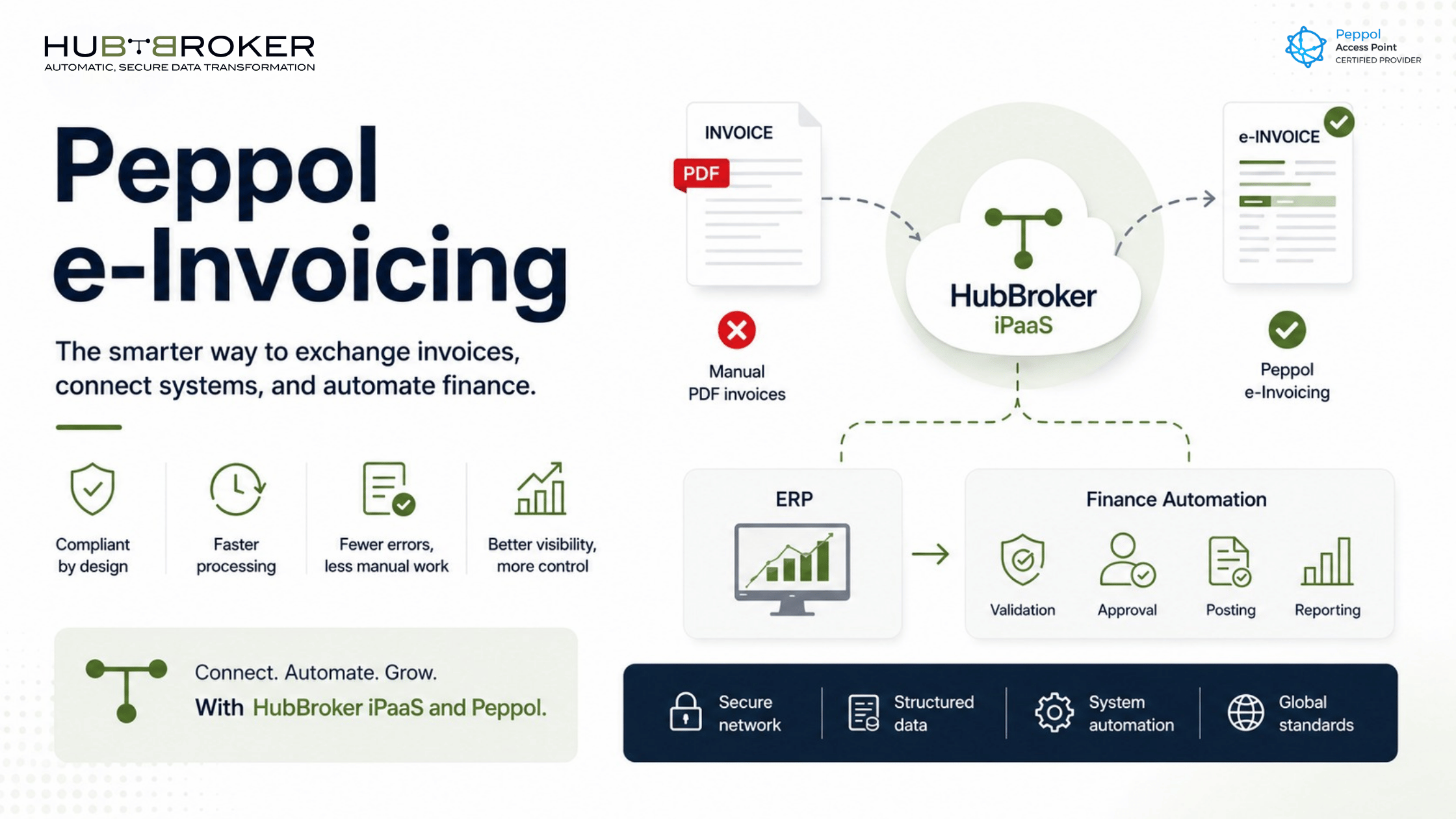
Peppol e-invoicing is the exchange of structured electronic invoices through the Peppol network.
Unlike a PDF invoice, which is mainly designed for human reading, a Peppol e-invoice contains structured data that business systems can process automatically. This means invoice information such as supplier details, invoice number, tax amount, due date, and line items can move directly into the buyer’s finance or ERP system.
Peppol is commonly used for e-invoices, but it can also support other procurement documents such as purchase orders and related business documents.
In simple words, Peppol gives businesses a common digital language for document exchange.
Why Are Businesses Moving Toward Peppol?
Many companies are moving toward Peppol because invoice processing is becoming more regulated, more digital, and more connected.
Governments across different markets are pushing businesses toward structured e-invoicing. At the same time, finance teams are under pressure to reduce manual work, close faster, and improve invoice accuracy.
Peppol helps with these goals because it allows businesses to:
Send and receive invoices in a structured format
Reduce manual invoice entry
Improve invoice validation
Support faster processing
Prepare for country-level e-invoicing requirements
Exchange documents with trading partners more efficiently
For business leaders, the main benefit is not only compliance. It is operational control.
Simplify Peppol E-Invoicing for Your Business
Exchange compliant e-invoices across global networks with HubBroker’s Peppol connectivity, ERP integration, and automated invoice processing solutions.
Contact Us to Know More
How Does the Peppol Network Work?
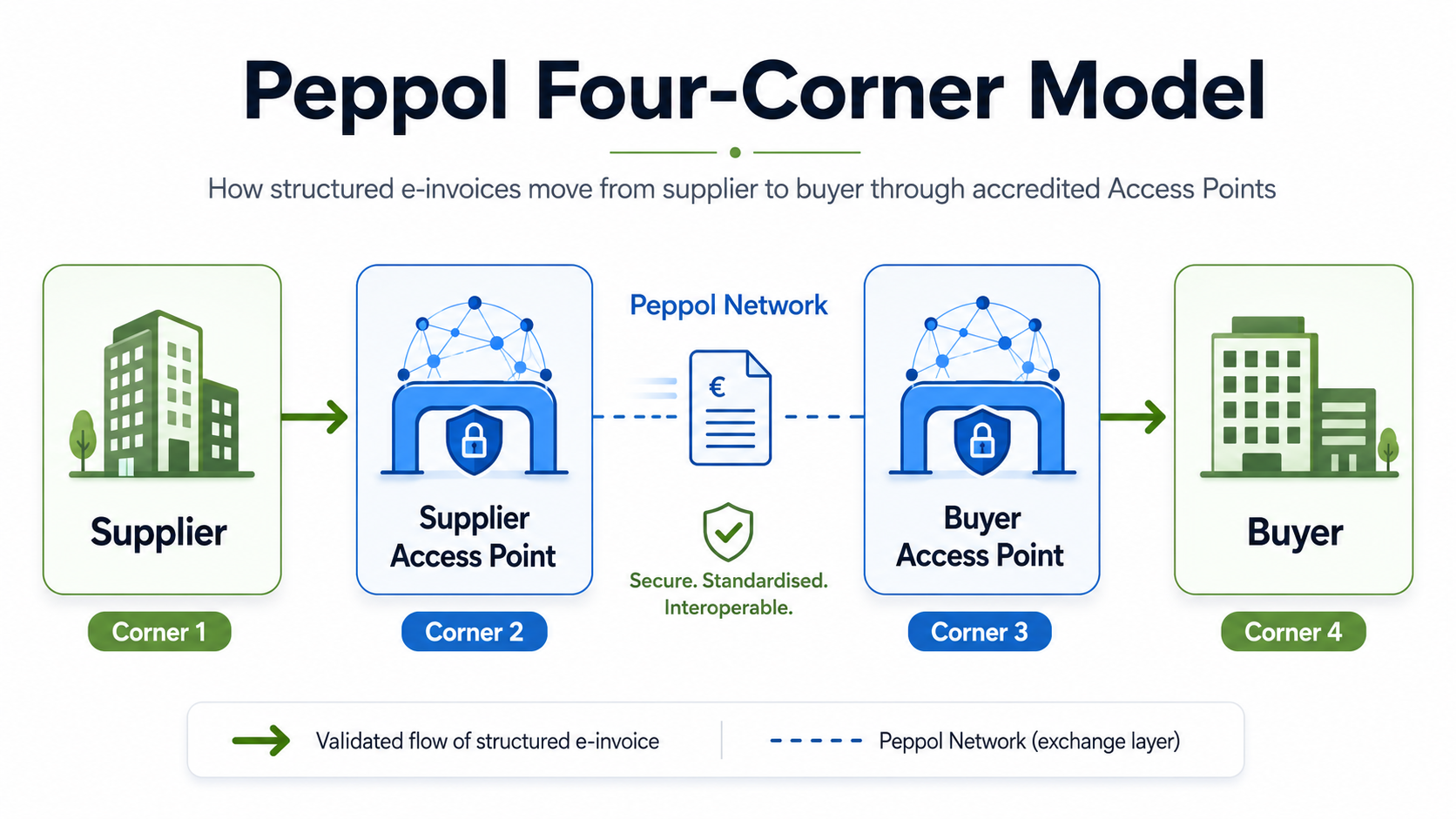
Peppol works through a four-corner model.
Here is a simple version:
The supplier creates and sends an e-invoice.
The supplier’s Peppol Access Point validates and sends the invoice.
The buyer’s Peppol Access Point receives the invoice.
The buyer receives the structured invoice in their system.
This model means the supplier and buyer do not need to use the same software provider. Each party can work with its own Peppol-accredited service provider.
That flexibility is one of Peppol’s biggest advantages. It avoids closed networks and makes document exchange easier across different systems, countries, and trading partners.
What Is a Peppol Access Point?
A Peppol Access Point is the certified gateway that connects your business to the Peppol network.
Think of it as the secure connection point between your company and other businesses or public organisations using Peppol.
A Peppol Access Point helps with:
Sending Peppol e-invoices
Receiving Peppol e-invoices
Validating invoice structure
Routing documents to the correct recipient
Connecting Peppol documents with business systems
Without an Access Point, your business cannot directly exchange documents through the Peppol network.
This is why companies usually work with an accredited provider that can manage the technical connection and simplify onboarding.
Peppol vs PDF Invoices: What Is the Difference?
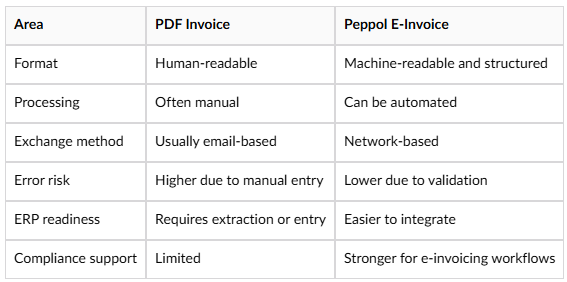
PDF invoices may look digital, but they often create manual work behind the scenes. Peppol e-invoices are designed for system-to-system exchange, which makes them better suited for automation.
Where Does an iPaaS Vendor Fit Into Peppol E-Invoicing?
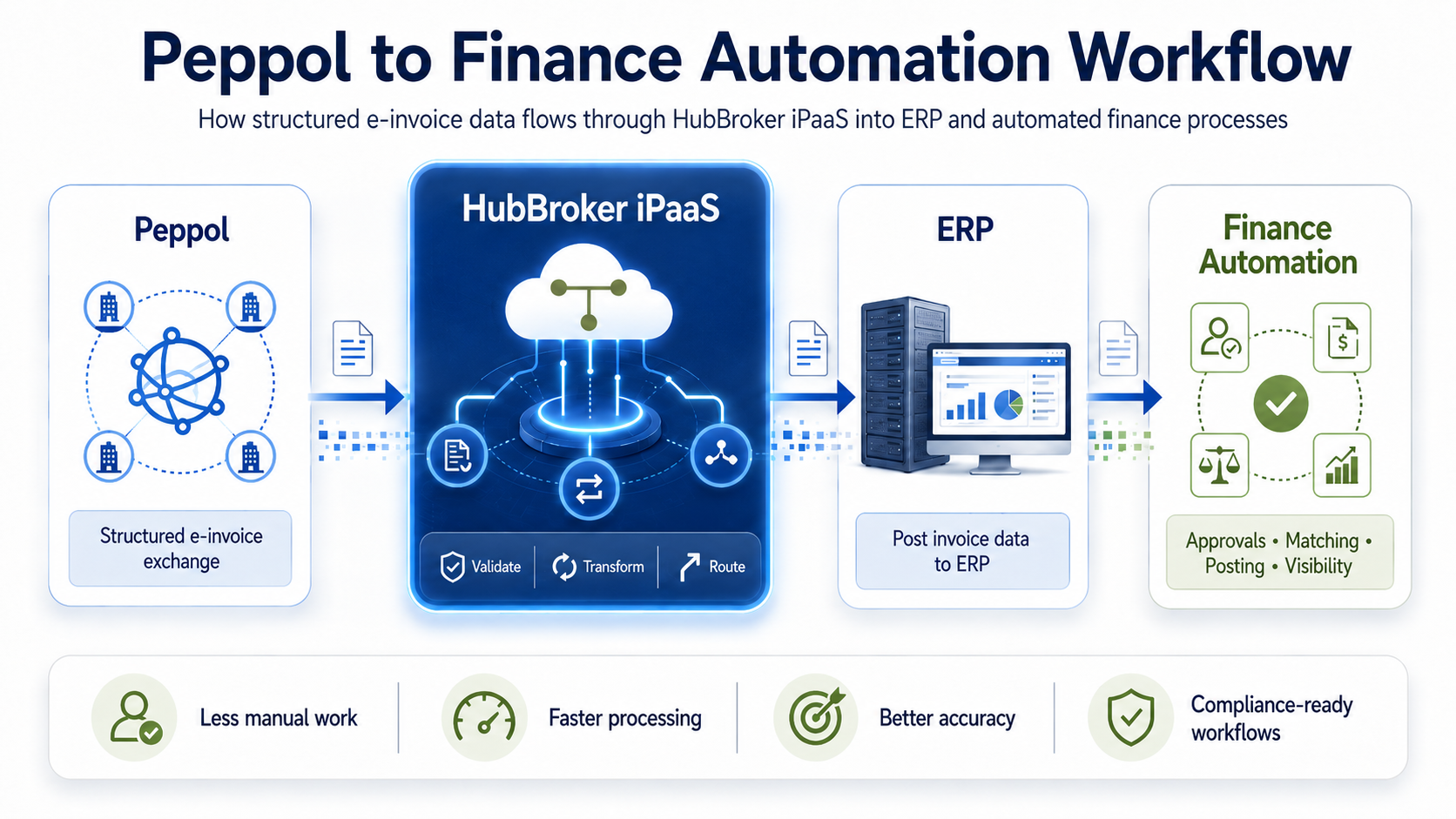
Peppol helps businesses exchange structured invoices, but most companies still need one more important layer: integration.
The invoice must move from the Peppol network into the ERP, accounting system, approval workflow, or finance platform. That is where an iPaaS vendor becomes valuable.
An iPaaS vendor can help connect Peppol with:
ERP systems
Accounting platforms
EDI workflows
PDF2XML conversion
Intelligent Document Processing
Supplier invoice automation
Approval and validation workflows
This is important because not every supplier will move to Peppol at the same time. Some may still send PDFs, XML files, EDI documents, or emails.
A strong iPaaS approach helps businesses manage all these document flows from one connected platform instead of creating separate tools for every format.
Common Peppol E-Invoicing Challenges
Peppol is powerful, but implementation still needs planning.
Common challenges include:
Understanding which trading partners require Peppol
Choosing the right Peppol Access Point
Connecting invoice data with ERP systems
Handling suppliers that still send PDF invoices
Managing validation rules and document routing
Preparing teams for new invoice workflows
The risk is treating Peppol as only a compliance project. In reality, it should be part of a wider finance automation strategy.
How HubBroker Helps Businesses Get Started with Peppol
HubBroker helps businesses simplify Peppol e-invoicing by connecting document exchange with ERP and automation workflows.
As a Peppol Access Point provider and iPaaS vendor, HubBroker can support companies with Peppol onboarding, invoice exchange, ERP integration, and document automation.
HubBroker also supports related workflows such as EDI integration, PDF to XML conversion, Intelligent Document Processing, and ERP API integration.
This means businesses can manage Peppol and non-Peppol document flows through one connected approach.
Peppol Readiness Checklist
Before starting Peppol implementation, review these points:
Identify the countries and customers where Peppol is required or preferred.
Review your current invoice formats: PDF, XML, EDI, and Peppol.
Check whether your ERP can receive structured invoice data.
Choose a Peppol Access Point or iPaaS vendor.
Plan how invoices will be validated and routed.
Prepare supplier onboarding.
Test invoice exchange before scaling.
This helps avoid delays and ensures Peppol becomes part of a practical automation plan.
FAQ: Peppol E-Invoicing
What is Peppol e-invoicing?
Peppol e-invoicing is the exchange of structured electronic invoices through the Peppol network. It allows businesses and public organisations to send and receive invoice data in a standardised digital format.
Is Peppol only for government invoicing?
No. Peppol is widely used for business-to-government invoicing, but it is also becoming more relevant for business-to-business e-invoicing.
Do I need a Peppol Access Point?
Yes. To send or receive documents through the Peppol network, businesses usually connect through a Peppol-accredited Access Point provider.
Can Peppol connect with my ERP system?
Yes. Peppol invoice data can be integrated with ERP systems, but the connection usually requires proper mapping, validation, and workflow setup.
Why use an iPaaS vendor for Peppol?
An iPaaS vendor helps connect Peppol with ERP, EDI, PDF2XML, IDP, and other business systems. This helps companies avoid disconnected invoice workflows and manage multiple document types from one platform.
Ready to simplify Peppol e-invoicing?
HubBroker helps businesses connect to the Peppol network, integrate invoice data with ERP systems, and automate document workflows through one connected iPaaS platform.
Talk to HubBroker about Peppol e-invoicing, Peppol Access Point services, and ERP integration.
