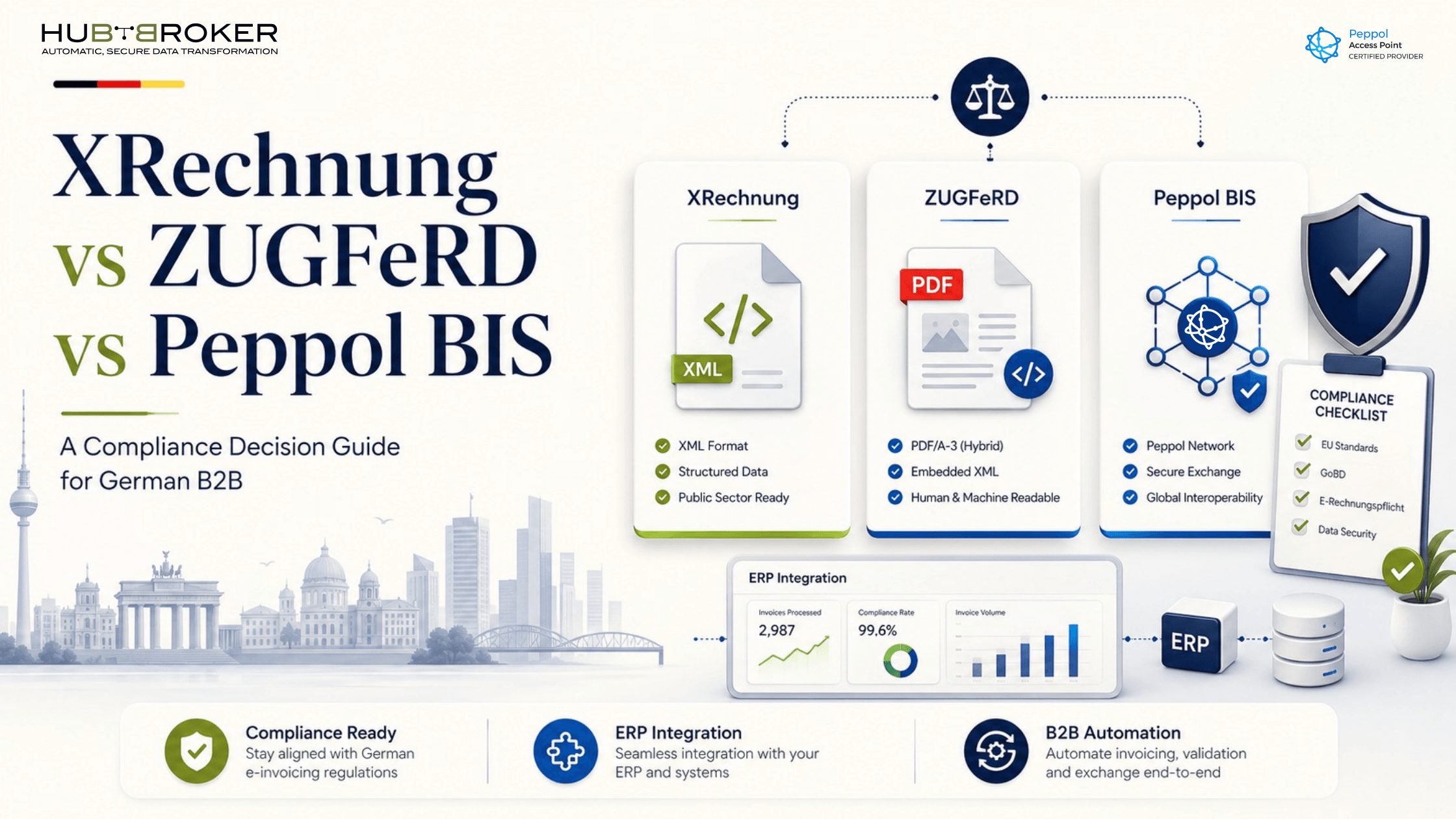
XRechnung vs ZUGFeRD vs Peppol BIS: A Compliance Decision Guide for German B2B
German businesses no longer need to decide whether structured e-invoicing is relevant. They need to determine which format and delivery method fits their customers, ERP systems and international trading requirements.
The XRechnung vs ZUGFeRD vs Peppol BIS decision affects invoice acceptance, process automation, customer onboarding and future compliance. Selecting the right model can reduce manual entry while preventing avoidable document rejections.
What Is the Difference Between XRechnung ZUGFeRD and Peppol BIS?
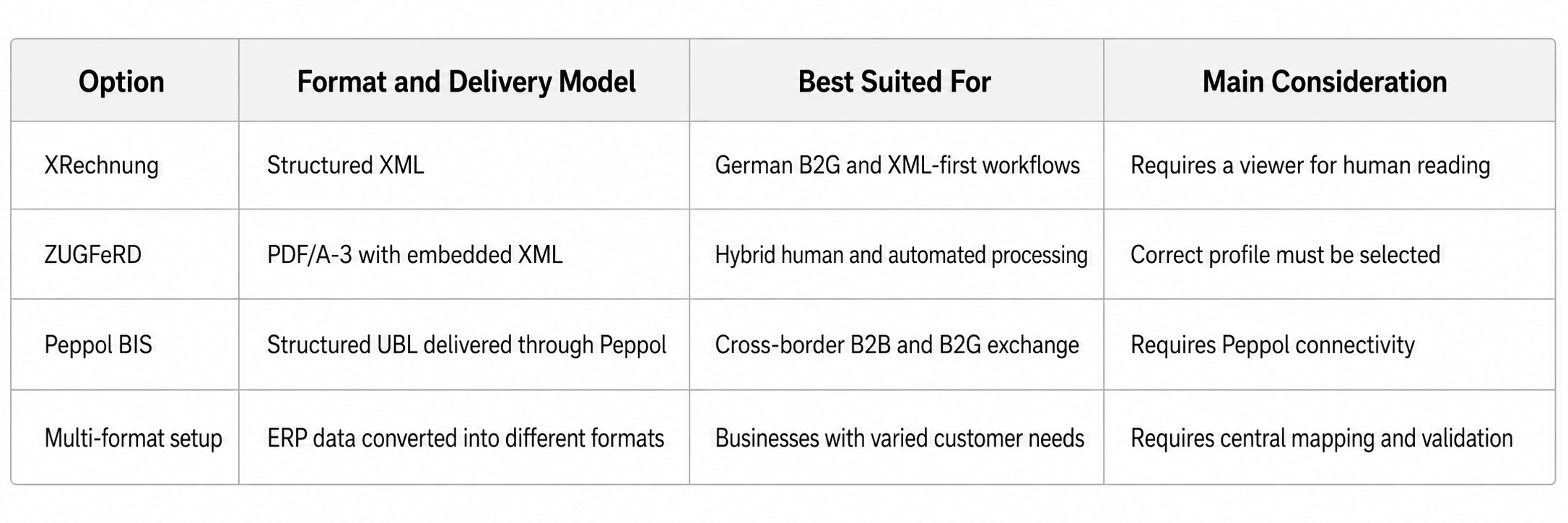
Since 1 January 2025, a simple PDF is not classified as an e-invoice under Germany’s updated B2B rules. An e-invoice must contain structured information that enables electronic processing.
Is XRechnung Mandatory for German B2B Invoices?
XRechnung is not generally mandatory for every German B2B transaction. It is primarily used for invoicing German public authorities, where B2G requirements must also be considered.
For domestic B2B invoicing, Germany allows structured formats that meet the applicable legal requirements. XRechnung and qualifying ZUGFeRD profiles are recognised examples. Businesses may also agree on another structured format when the required invoice information can be correctly and completely extracted.
A supplier serving both public authorities and private companies may therefore require more than one invoice profile.
When Is ZUGFeRD the Better Choice?
ZUGFeRD is suitable when employees or customers require a readable PDF while accounting systems process structured invoice data.
The German Ministry of Finance confirms that ZUGFeRD from version 2.0.1 can meet the requirements, except for the MINIMUM and BASIC-WL profiles.
ZUGFeRD may be appropriate for:
Companies moving gradually from PDF invoicing
Approval processes involving human review
Customers requesting both visual and structured content
Businesses that need automated invoice extraction
The embedded XML must contain complete and accurate invoice data. A visually correct PDF cannot compensate for incomplete structured information.
When Should German Businesses Use Peppol BIS?
Peppol BIS is a strong option when businesses:
Trade across several European countries
Serve customers requesting Peppol delivery
Need standardised participant identification
Want to reduce point-to-point integrations
Plan to exchange procurement documents beyond invoices
Peppol combines structured document specifications with a network model. Documents are exchanged through approved Access Points rather than individual connections between every sender and receiver.
What Percentage Should Influence the Format Decision?
The following percentage model can help finance and IT teams compare the available options.
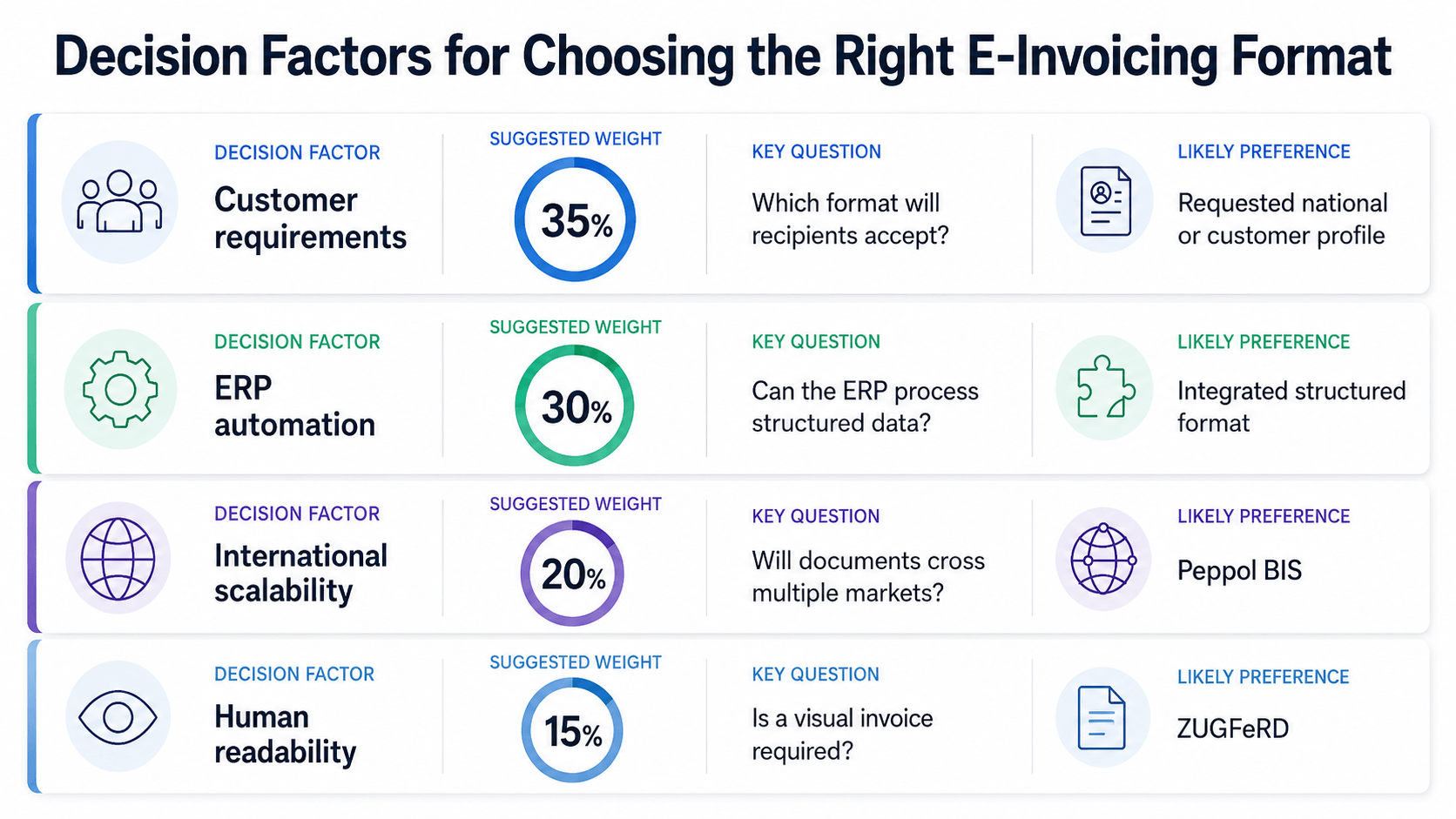
Recipient requirements should have the highest weight. Choosing one preferred internal format does not mean every customer or authority can receive it.
How Do Germany’s Transition Rules Affect the Decision?
German businesses have generally needed to support receiving structured e-invoices since 1 January 2025.
Transitional rules allow other invoice formats for qualifying transactions through 31 December 2026. Businesses meeting the applicable previous-year turnover threshold may use an extended transition through 31 December 2027. Certain existing EDI arrangements can also continue during the transition period.
Companies should avoid treating 2027 or 2028 as the starting point. ERP mapping, customer testing and exception handling should be completed before the relevant transition expires.
Can One ERP Support All Three Formats?
Yes. A central integration layer can receive one invoice structure from the ERP and generate the required output for each recipient.
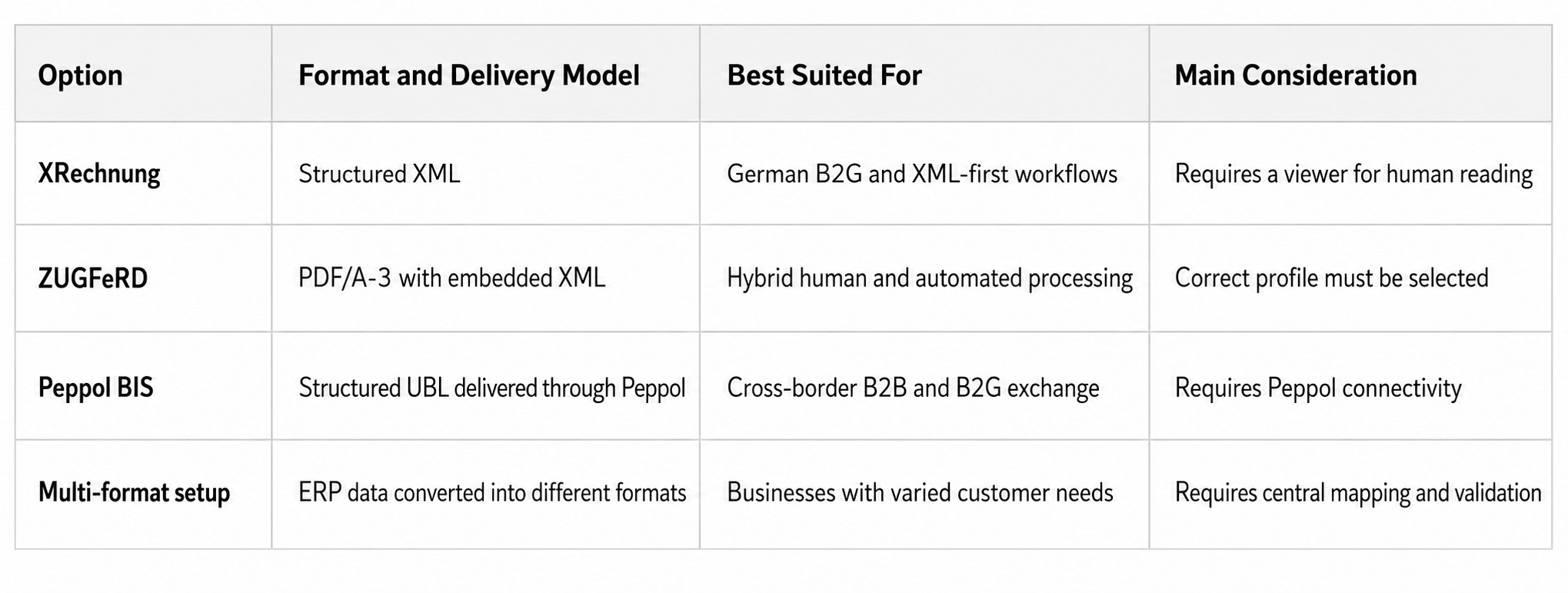
The integration platform should validate mandatory fields, apply customer-specific rules, select the correct format and return delivery statuses to the ERP.
Choose Your German E Invoicing Setup with HubBroker
HubBroker connects ERP platforms with XRechnung, ZUGFeRD and Peppol-based invoicing. The HubBroker iPaaS platform transforms invoice data, validates compliance requirements, manages document delivery and provides central transaction monitoring.
A multi-format integration model allows businesses to meet different customer requirements without maintaining separate ERP processes for every invoice format.
Contact HubBroker for a German B2B e-invoicing assessment based on your ERP, customer portfolio and compliance timeline.
