What Is E-Invoicing
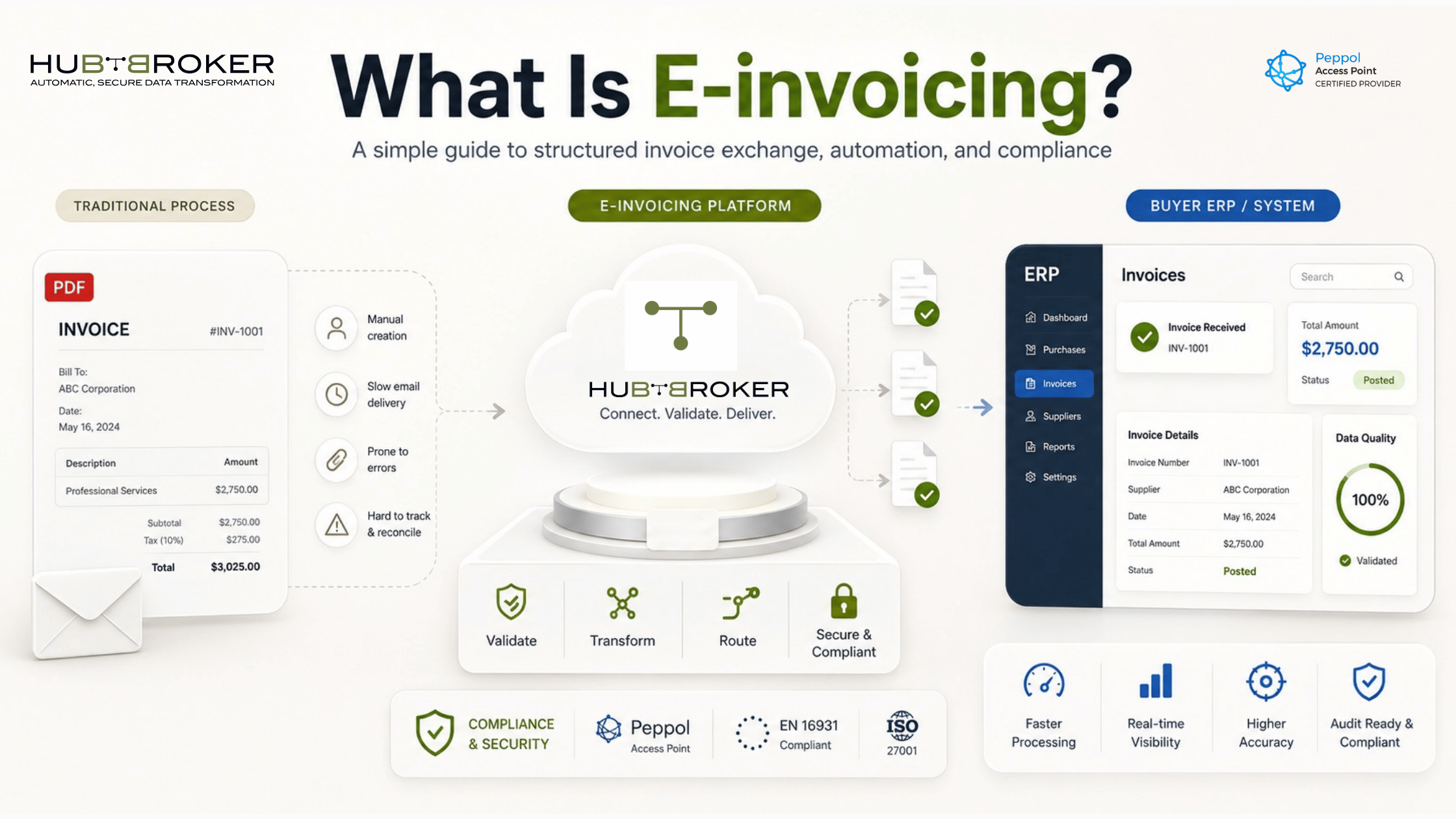
Many businesses believe they are already using e-invoicing because they send invoices as PDFs by email.
But a PDF invoice is often just a digital version of paper. Someone still has to open it, check it, copy the details, enter the data into an ERP or accounting system, approve it, and archive it.
E-invoicing is different.
E-invoicing allows invoice data to move between business systems in a structured electronic format. That means finance teams can reduce manual work, improve accuracy, process invoices faster, and prepare for growing compliance requirements.
What Is E-Invoicing? A Simple Guide for Businesses
E-invoicing is the process of creating, sending, receiving, and processing invoices in a structured electronic format that software systems can read automatically.
Instead of sending an invoice as paper or a simple PDF attachment, an e-invoice carries important data in a machine-readable format. This can include:
Invoice number
Supplier and buyer details
VAT or tax information
Purchase order number
Line-item details
Payment terms
Total amount due
The main goal is simple: invoice data should move from one system to another without unnecessary manual entry.
For CFOs, this means better visibility and control. For finance teams, it means fewer repetitive tasks. For IT managers, it means cleaner integration between ERP, accounting, supplier, and customer systems.
Is a PDF Invoice the Same as an E-invoice?
No. A PDF invoice is not always a true e-invoice.
A PDF is usually easy for a human to read, but it is not always easy for software to process. In many cases, finance teams still need OCR, manual checking, or data entry to move the invoice into an ERP system.
A true e-invoice is built for system-to-system exchange. It contains structured data that can be validated, processed, approved, and archived automatically.
In simple terms:
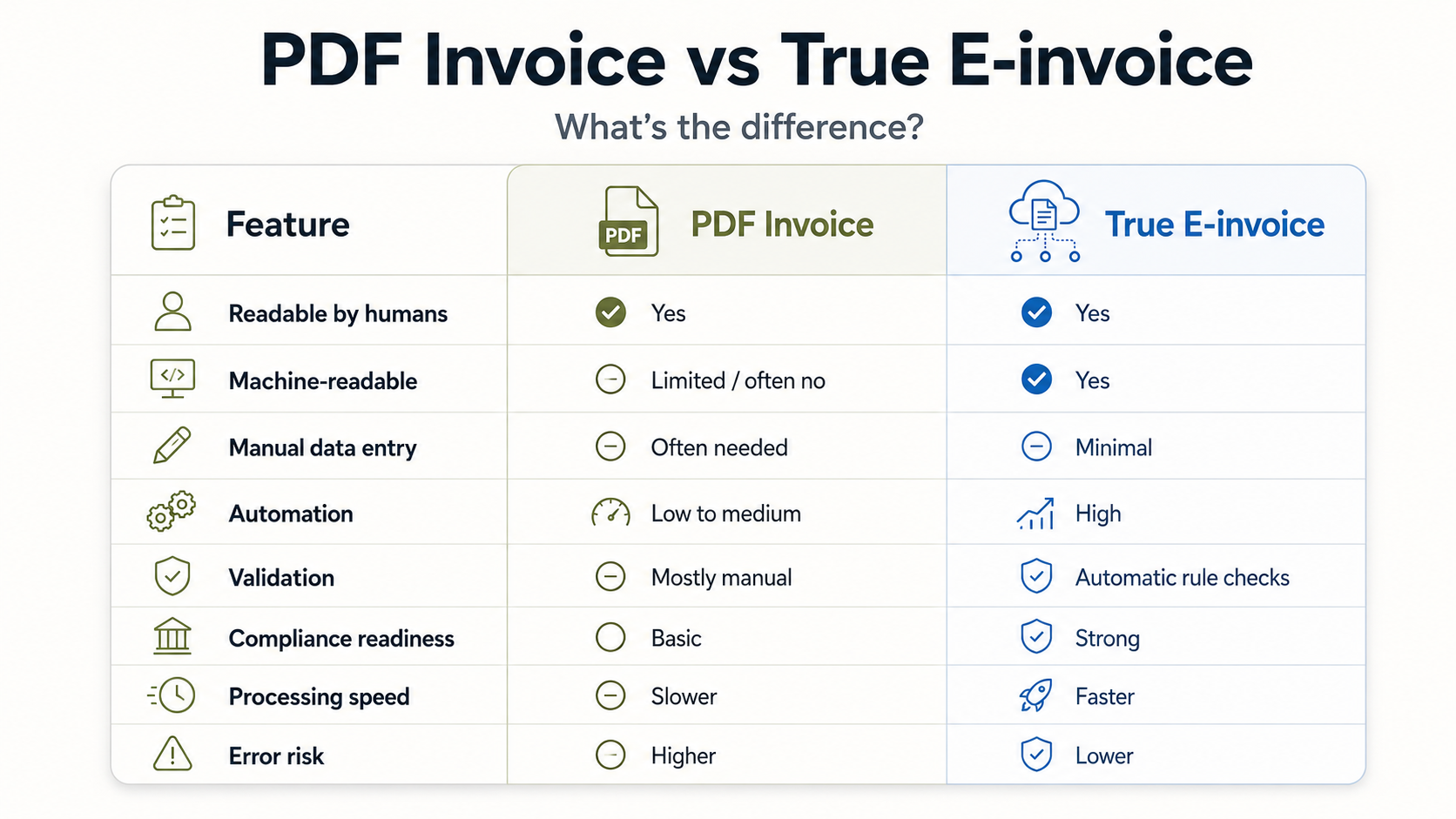
This is why many businesses are moving beyond PDF invoices. They do not just want digital documents. They want digital invoice processing.
How Does E-invoicing Work?
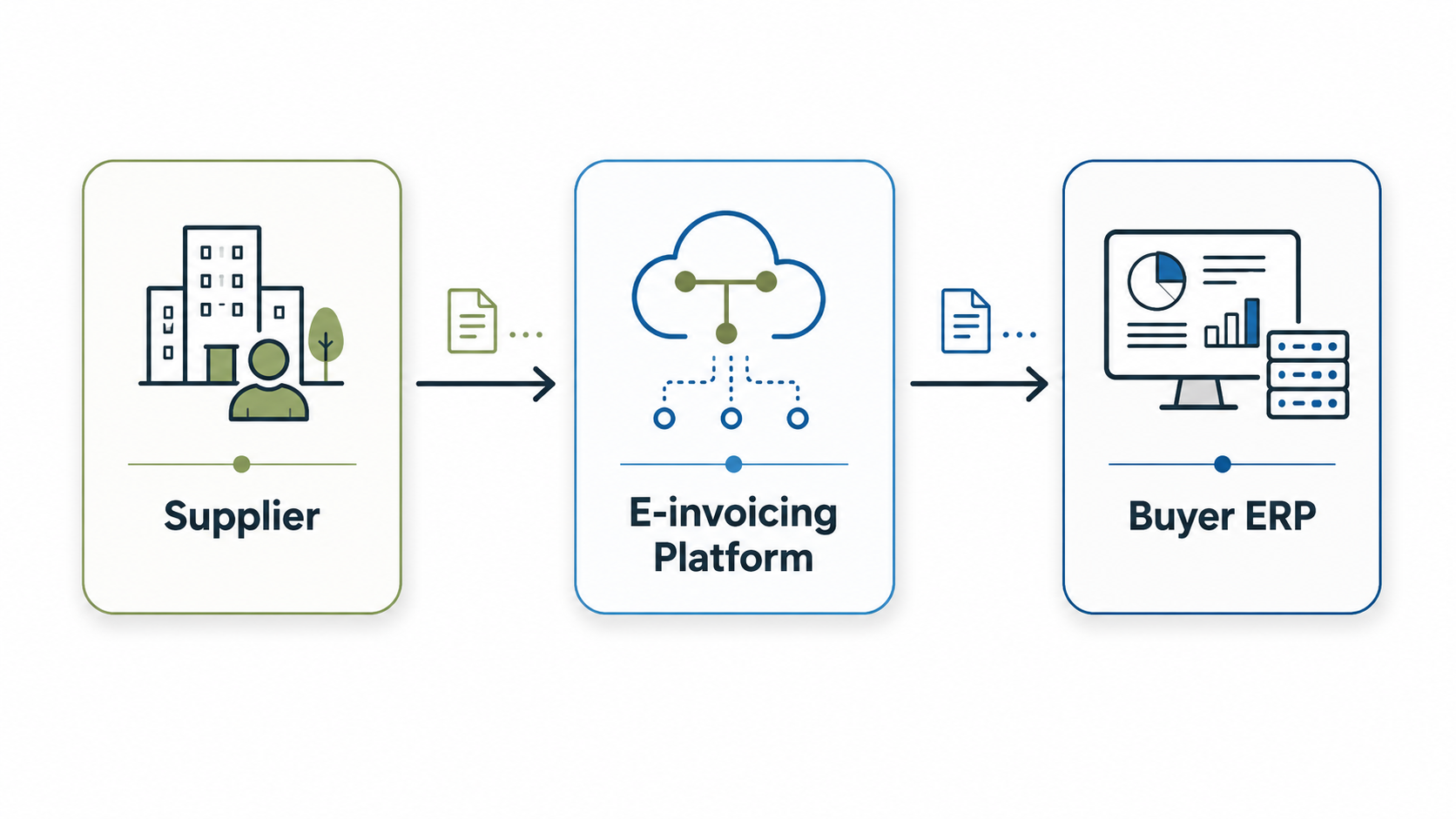
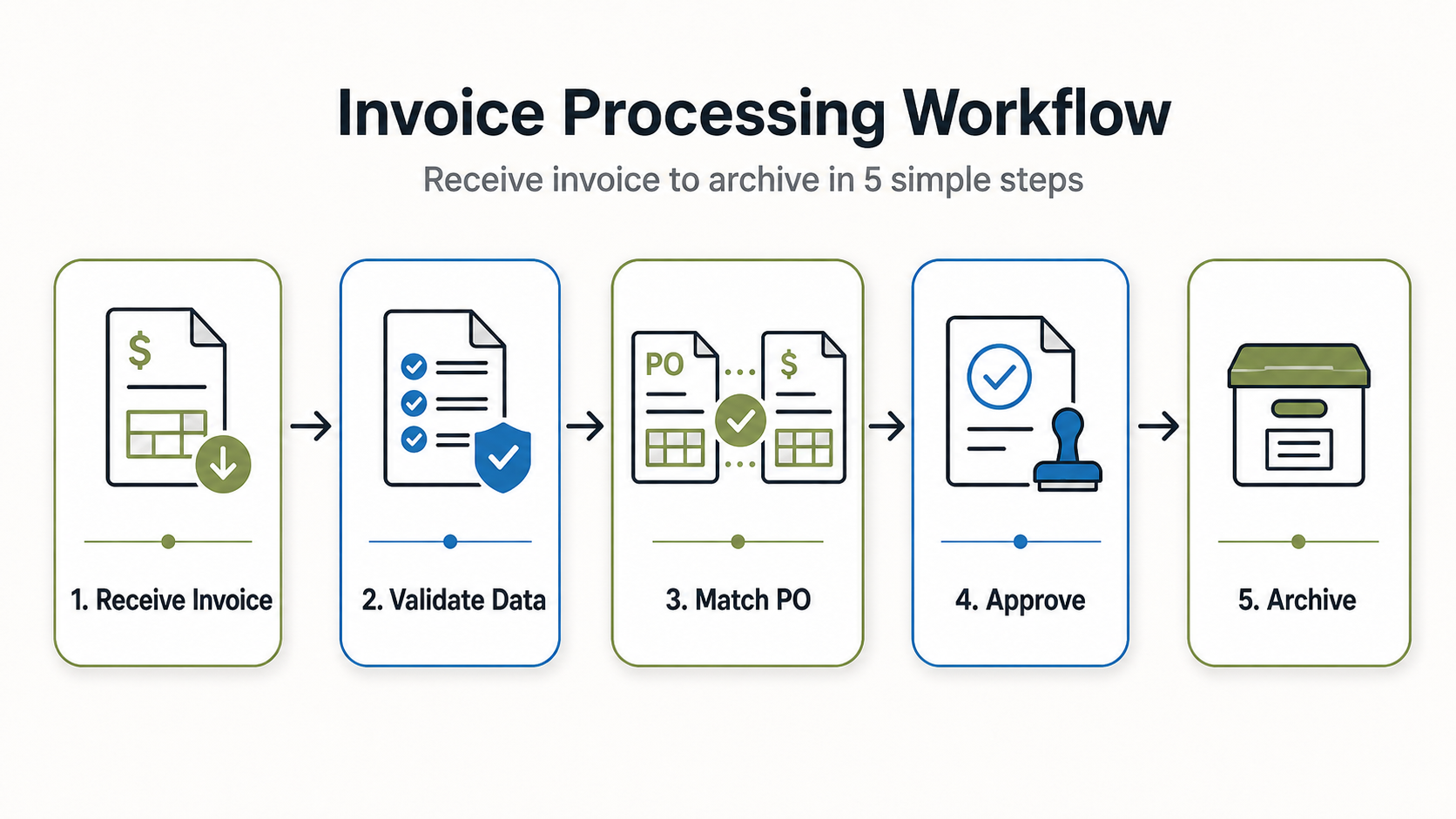
A typical e-invoicing process looks like this:
The supplier creates an invoice in an ERP or invoicing system.
The invoice is converted into a structured electronic format.
The invoice is sent through a secure network or approved exchange method.
The buyer receives the invoice directly into their ERP or finance system.
The invoice data is validated against business rules, tax rules, and purchase order details.
The invoice moves into approval, payment, and archive workflows.
This reduces the need for email attachments, manual downloads, copy-paste work, and repeated follow-ups.
Why Is E-invoicing Becoming More Important?
E-invoicing is no longer only about saving paper.
Across many countries, governments are introducing digital invoice and reporting requirements to improve tax visibility and reduce fraud. At the same time, businesses are looking for faster, more reliable finance operations.
For finance leaders, e-invoicing supports:
Faster invoice approvals
Fewer data entry errors
Better audit trails
Improved cash flow visibility
Stronger compliance readiness
Reduced manual workload
For IT teams, it also creates a more reliable data flow between ERP systems, suppliers, customers, and external networks such as Peppol or EDI.
Understand E-Invoicing and Its Business Benefits
Move from manual invoice handling to faster, structured, and compliant digital invoice exchange with HubBroker’s e-invoicing and ERP integration solutions.
Contact Us to Know More
What Are the Main Benefits of E-invoicing?
Fewer Manual Errors
Manual invoice entry can lead to wrong amounts, missing purchase order numbers, duplicate invoices, and delayed payments. E-invoicing reduces these risks by allowing invoice data to move directly between systems.
Faster Invoice Processing
When invoices arrive in a structured format, finance teams do not need to spend as much time opening emails, downloading PDFs, and typing data into ERP systems.
Better Compliance Readiness
E-invoicing helps businesses prepare for country-specific invoice formats, tax authority requirements, and structured reporting rules.
Improved Cash Flow Visibility
When invoice data is processed faster, businesses get better visibility into payables, receivables, approvals, due dates, and payment status.
Stronger Supplier and Customer Relationships
Fewer invoice disputes and faster processing can improve trust between trading partners.
What Should Businesses Check Before Starting E-invoicing?
Before choosing an e-invoicing solution, businesses should ask:
Which countries do we operate in?
Do our customers or suppliers require e-invoices?
Which ERP or accounting system do we use?
Do we send invoices, receive invoices, or both?
Do we need Peppol, EDI, PDF2XML, or API integration?
How are invoices approved today?
Where are invoices archived?
What compliance deadlines affect our business?
E-invoicing works best when finance, IT, and compliance teams plan together.
Where Do Peppol, EDI, PDF2XML, and IDP Fit In?
E-invoicing is not one single tool. It is part of a wider document automation strategy.
A Peppol Access Point helps businesses send and receive structured e-invoices through the Peppol network.
EDI integration supports structured document exchange between trading partners.
PDF2XML helps convert PDF invoices into structured XML data when suppliers still send PDF documents.
Intelligent Document Processing, or IDP, helps capture, validate, and process invoice data from different document types.
ERP integration connects invoice data with business systems so finance teams can process invoices faster and with fewer manual steps.
Common E-invoicing Mistakes to Avoid
Many businesses make e-invoicing harder than it needs to be by:
Assuming PDF invoices are enough.
Waiting until compliance deadlines are too close.
Ignoring supplier and customer readiness.
Choosing a solution that does not integrate with the ERP.
Treating e-invoicing as only a finance project.
The better approach is to map invoice flows early and understand where automation can remove manual work.
FAQ
What is e-invoicing in simple words?
E-invoicing means sending and receiving invoices in a structured electronic format that software systems can process automatically.
Is a PDF invoice an e-invoice?
Not always. A PDF may be digital, but it may not contain structured data that an ERP or accounting system can read automatically.
Who needs e-invoicing?
Businesses that send or receive invoices, work with government buyers, trade across borders, or want to automate finance processes can benefit from e-invoicing.
Does e-invoicing require ERP integration?
ERP integration is strongly recommended because it allows invoice data to move directly into finance, accounting, approval, and payment workflows.
What is Peppol e-invoicing?
Peppol e-invoicing allows businesses and public organisations to exchange structured electronic documents through a secure network using approved access points.
Final Thoughts
E-invoicing is not just about replacing paper. It is about making invoice data faster, cleaner, more reliable, and easier to process.
For finance teams, it reduces manual work. For IT teams, it improves system integration. For business leaders, it supports better compliance readiness and stronger operational control.
If your business still relies on PDF invoices, email attachments, or manual ERP entry, now is the right time to review your e-invoicing process.
HubBroker helps businesses simplify e-invoicing through Peppol, EDI, PDF2XML, IDP, and ERP integration. Explore HubBroker’s e-invoicing solutions to make invoice exchange faster, safer, and easier to manage.
