
If your business sells goods or services in Norway, especially to public-sector buyers, EHF and Peppol are no longer optional technical terms. They are becoming part of the standard way invoices, credit notes, orders, and other business documents move between companies and public authorities.
In 2026, this topic is even more important because Norway is moving toward broader e-invoicing adoption beyond public-sector invoicing. The Norwegian government has proposed mandatory e-invoicing between bookkeeping-obligated businesses from 1 January 2027, followed by mandatory digital bookkeeping and automatic e-invoice receiving from 1 January 2030. The expected socioeconomic gain is estimated at around NOK 10 billion over 20 years.
This guide explains what EHF and Peppol mean, how they work in Norway, what suppliers must do in 2026, and how businesses can prepare before the next wave of e-invoicing requirements arrives.
Key Takeaways
- EHF stands for Elektronisk handelsformat, Norway’s electronic trading format for structured business documents.
- Peppol is the international network used to exchange EHF/Peppol BIS documents securely between senders and receivers.
- For Norwegian public-sector invoicing, suppliers are expected to send invoices and credit notes electronically in EHF format.
- In Norway, Peppol BIS Billing v3.0 is treated as the same as an EHF invoice for invoice and credit note receiving.
- Norway has proposed mandatory B2B e-invoicing from 1 January 2027 and digital bookkeeping/e-invoice receiving obligations from 1 January 2030.
- Suppliers should use 2026 to check ERP readiness, Peppol Access Point connectivity, invoice validation, and customer onboarding.
What Is EHF?
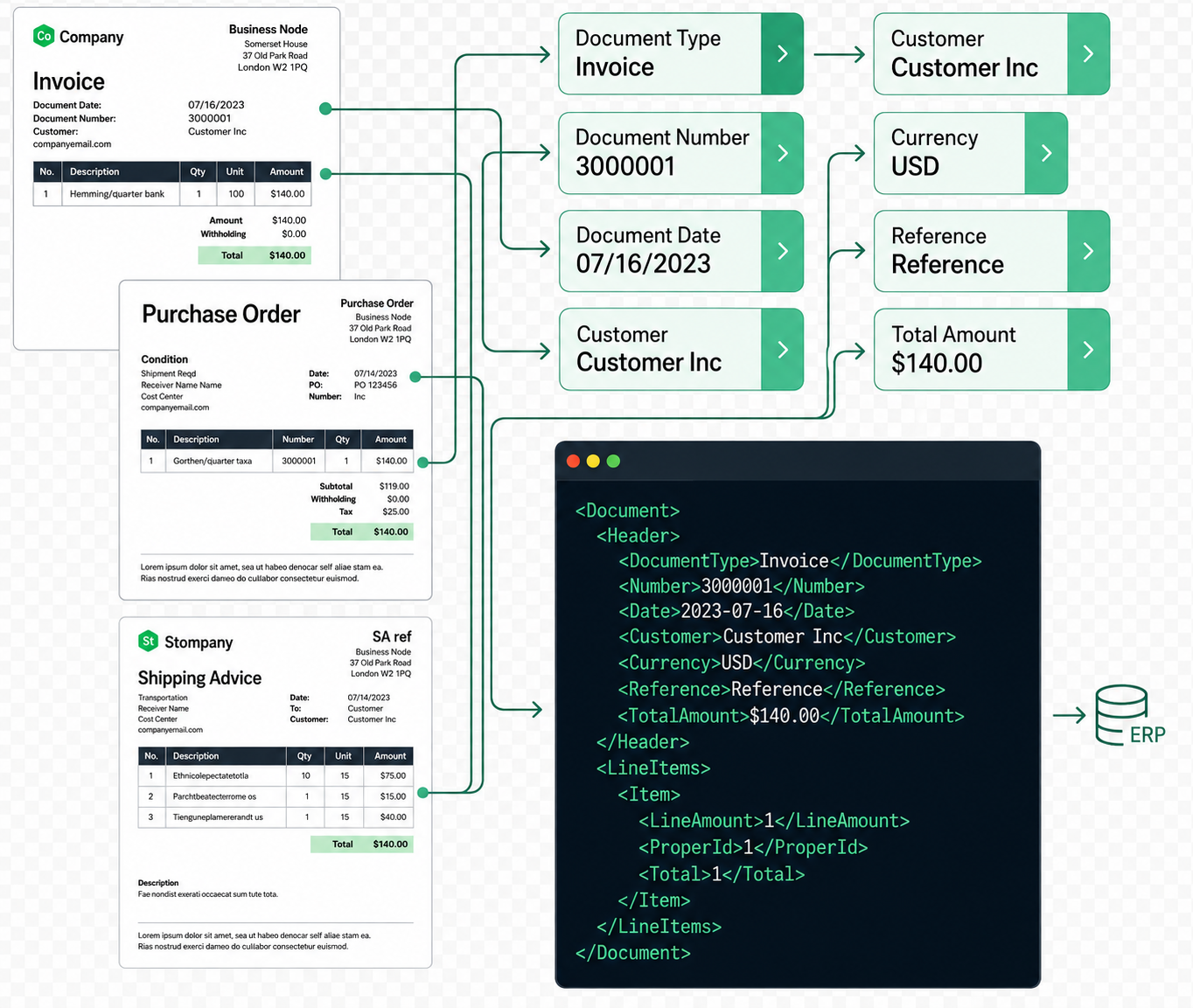
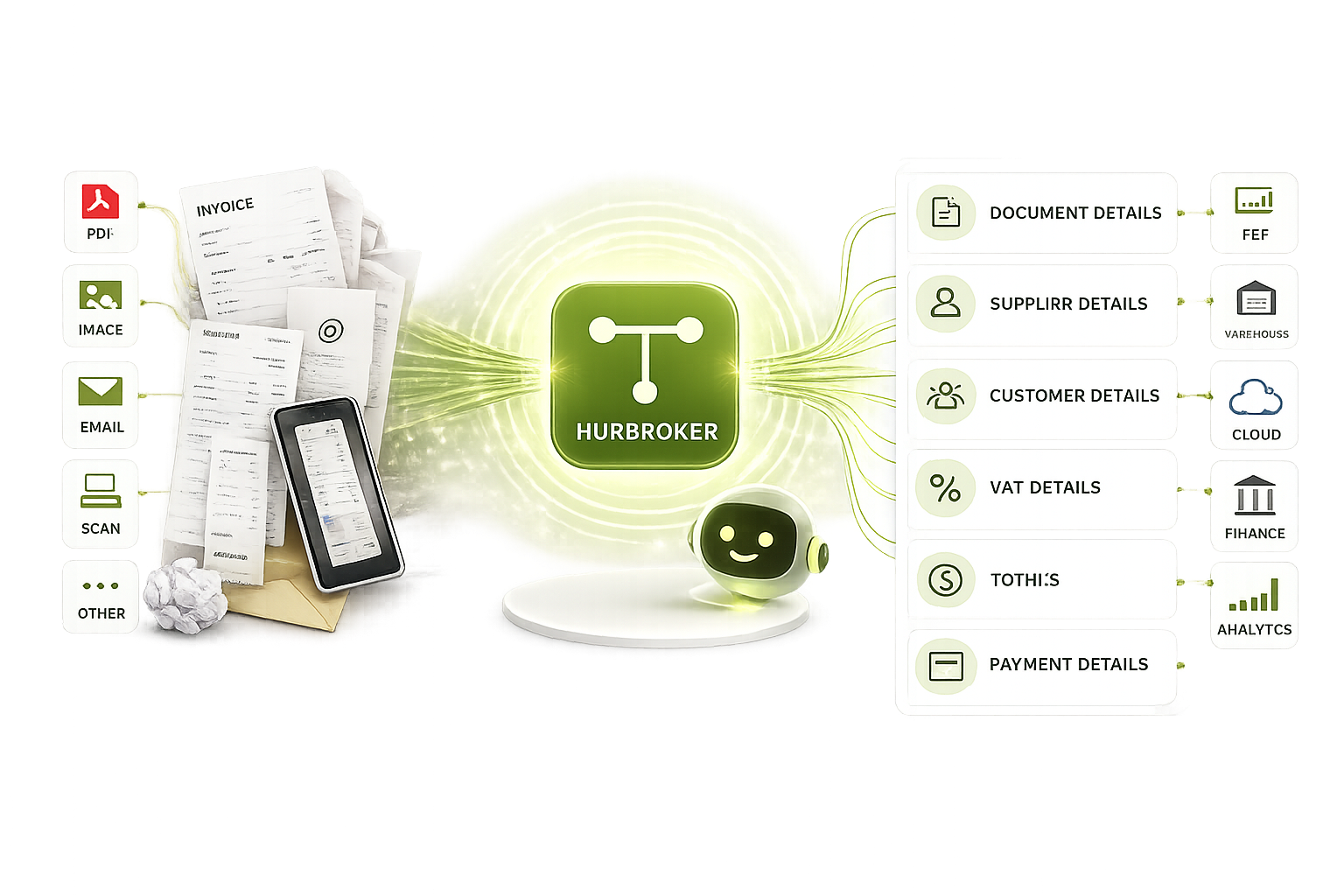
EHF, or Elektronisk handelsformat, is Norway’s standard format for structured electronic business documents such as invoices and credit notes. Unlike a PDF invoice, an EHF invoice is not designed only for human reading. It is a structured digital document that can be validated, transmitted, received, and processed automatically by the buyer’s accounting or ERP system.
This distinction is important. A PDF sent by email may look digital, but it still often requires manual reading, data entry, approval routing, and archiving. EHF is different because the invoice data is machine-readable from the beginning.
In Norway, EHF Billing 3.0 is based on Peppol BIS Billing 3.0 and implements the European e-invoicing standard EN 16931 for the Norwegian market.
Join Peppol now to stay ready for Norway’s 2026 EHF requirements
What Is Peppol?
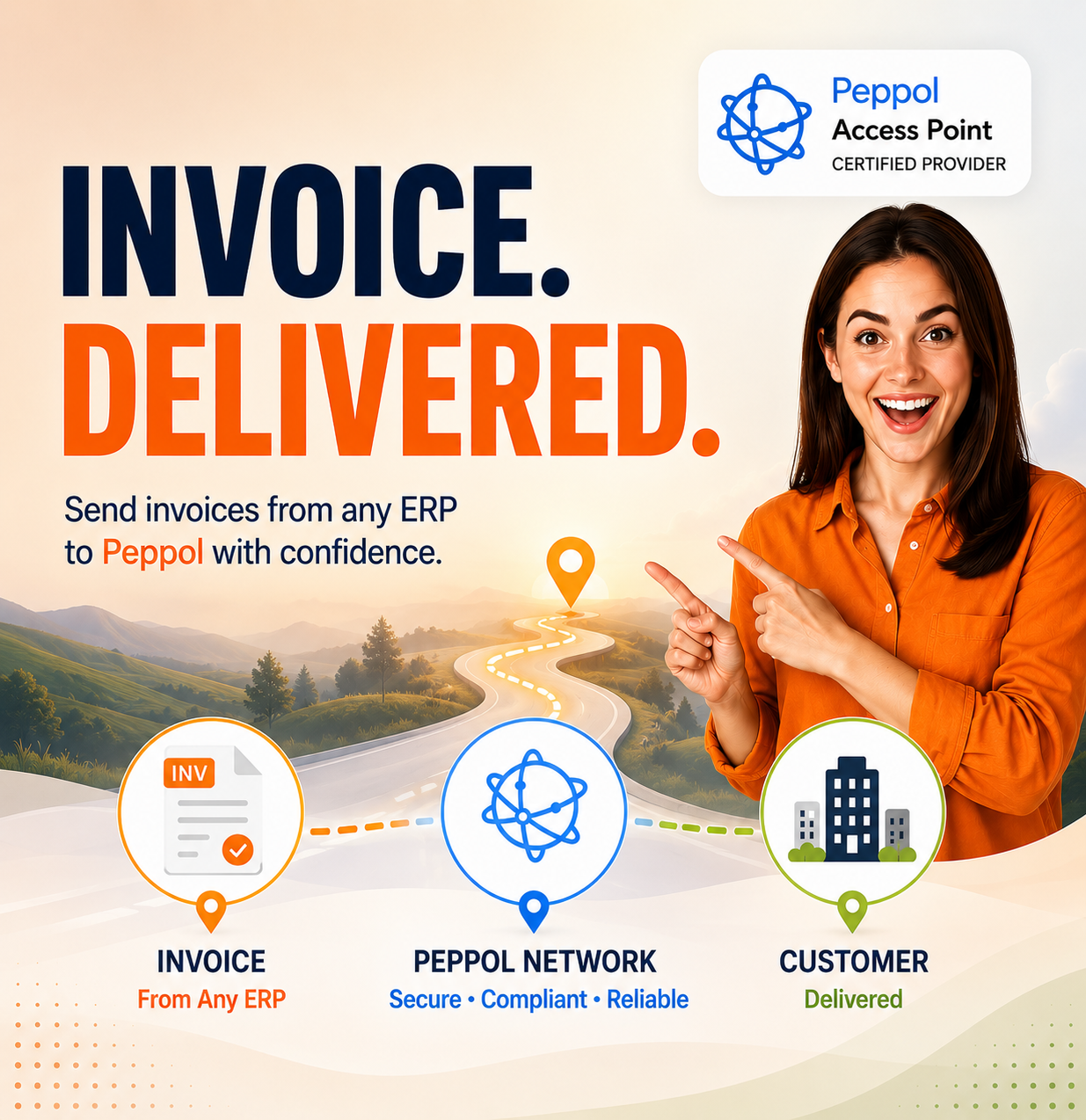
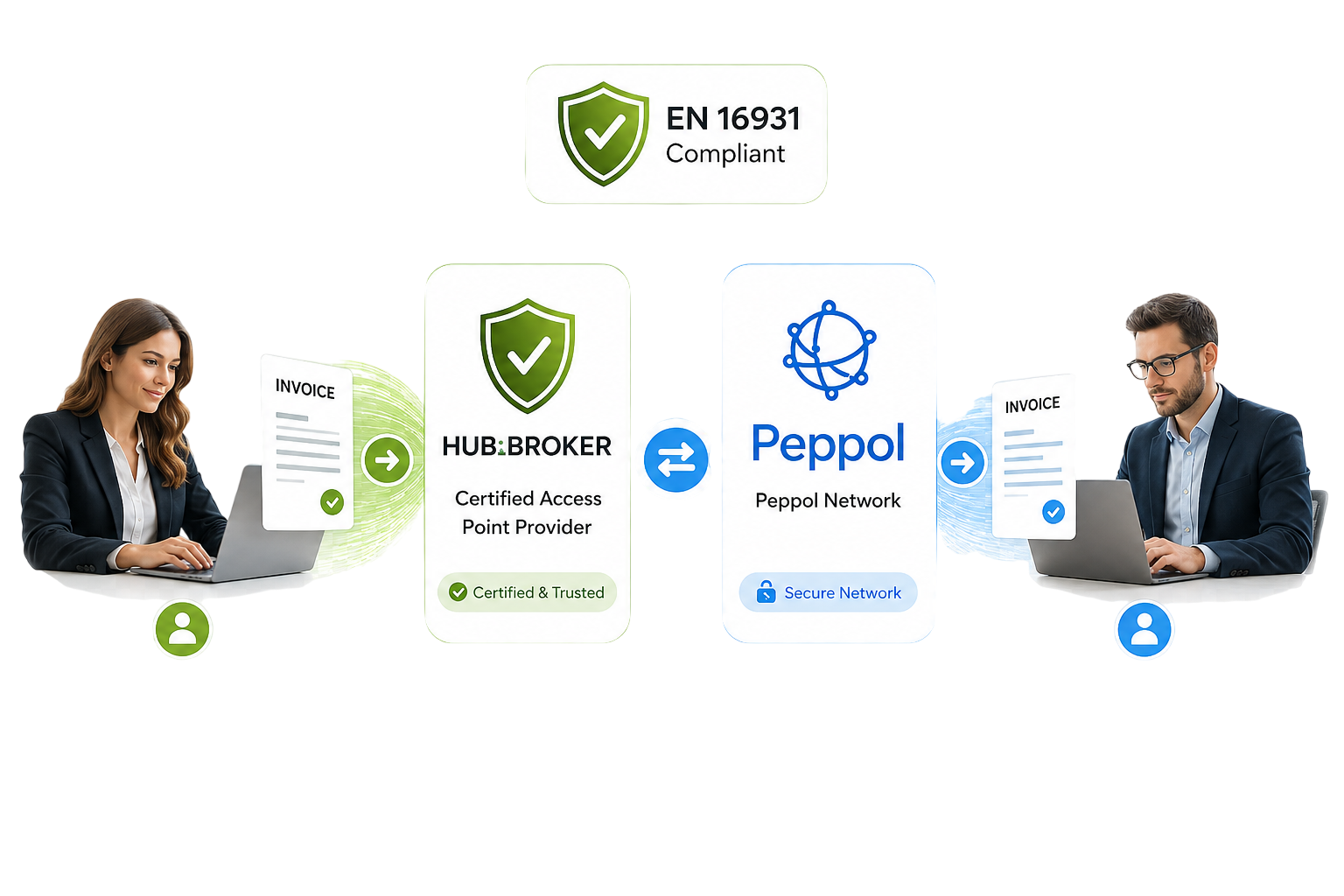
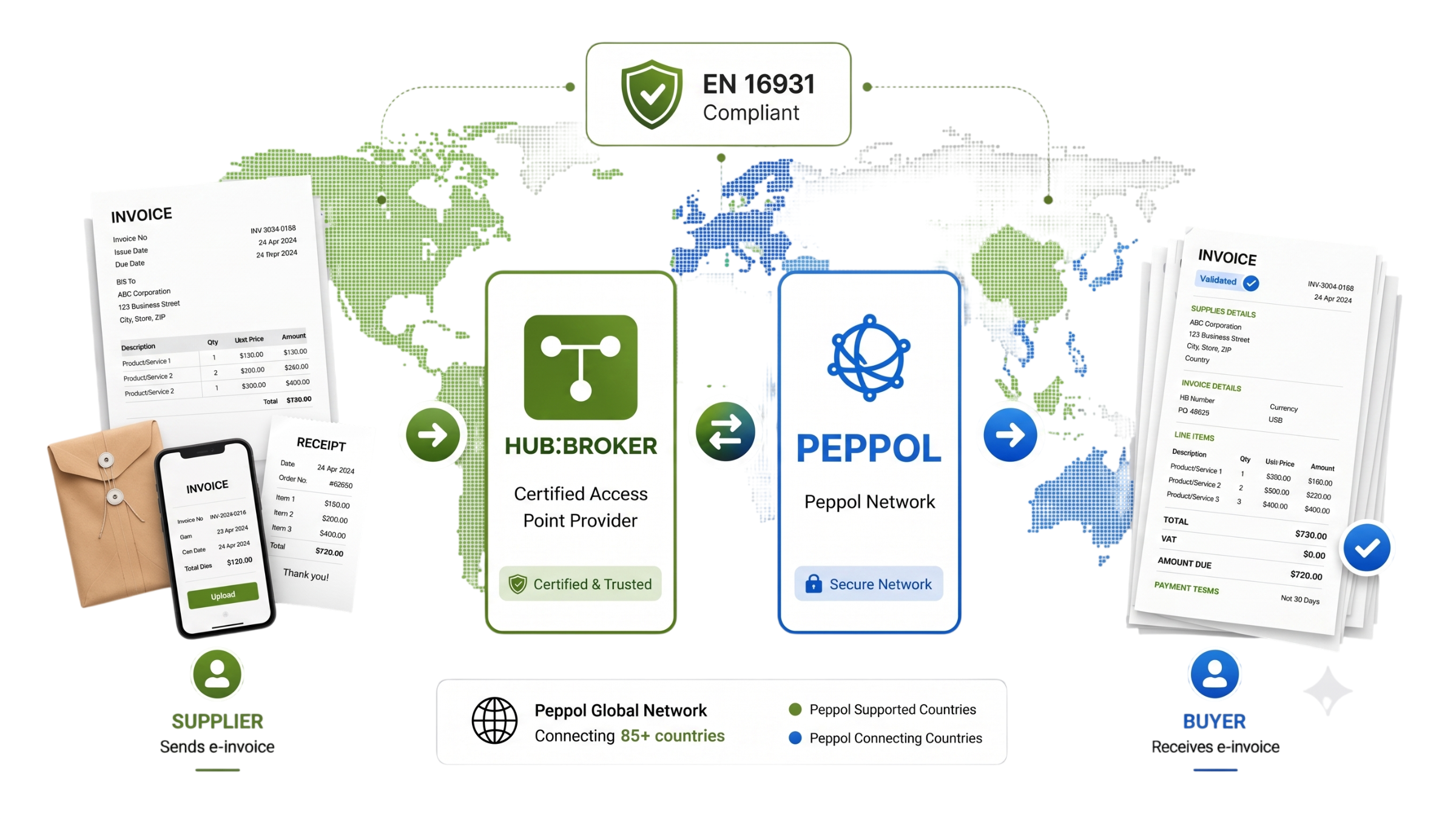
Peppol is the network infrastructure that allows businesses and public authorities to exchange standardized electronic documents through certified service providers called Access Points. It works like a secure business document delivery network.
Norway’s Peppol Authority describes Peppol as a network of authorities, service providers, and end users created to promote standardized digital processes. In Norway, the authority role supports digital process adoption in the Norwegian market using standard formats through the Peppol Network.
| Step | Role in the Peppol flow |
| 1. Supplier ERP / invoice system | Creates invoice data and sends it for conversion or validation. |
| 2. Supplier Peppol Access Point | Validates and transmits the invoice to the Peppol network. |
| 3. Peppol Network | Routes the document based on the buyer’s registered electronic address. |
| 4. Buyer Peppol Access Point | Receives the document securely. |
| 5. Buyer ERP / accounting system | Processes the structured invoice data. |
This means the supplier does not need a separate technical connection to every customer. Instead, both parties connect through the Peppol network, and the invoice is routed using the buyer’s registered electronic address.
EHF vs Peppol: What Is the Difference?
Many suppliers use the terms EHF and Peppol together, but they are not exactly the same. EHF is best understood as the invoice or document format used in Norway. Peppol is the network used to send and receive those documents.
| Term | Meaning | Supplier relevance |
| EHF | Norway’s electronic trading format for invoices, credit notes, and other business documents. | Defines the structure and content of the invoice. |
| Peppol BIS Billing 3.0 | International Peppol specification for electronic invoices and credit notes. | Used in Norway and across Peppol countries. |
| Peppol Network | Delivery network for sending and receiving documents. | Moves the invoice from supplier to buyer. |
| Access Point | Certified service provider connected to Peppol. | Required to send and receive Peppol documents. |
| ELMA / Peppol Directory | Address lookup for finding receivers. | Helps verify whether a customer can receive EHF/Peppol. |
Why EHF and Peppol Matter for Suppliers in Norway
For suppliers, EHF and Peppol matter because they directly affect whether invoices are accepted, processed, and paid without delay. Public-sector buyers in Norway commonly require structured electronic invoices, and invoice references are often needed for internal routing and approval.
If a supplier sends a PDF invoice by email to a public-sector buyer that expects EHF, the invoice may be rejected or delayed. For this reason, EHF readiness should be treated as a finance, compliance, and customer-experience priority, not only as an IT task.
Current EHF and Peppol Requirements in Norway in 2026
1. Public-sector invoicing is already EHF/Peppol-driven
Suppliers dealing with Norwegian public-sector customers must be able to send electronic invoices in the required structured format. Public entities covered by procurement rules are required to demand electronic invoices in EHF format.
2. B2B e-invoicing is moving toward mandatory adoption
The major 2026 development is Norway’s proposed expansion of mandatory e-invoicing into the business-to-business space. The government proposal states that bookkeeping-obligated businesses should invoice each other using e-invoices by 1 January 2027, while digital bookkeeping and automatic e-invoice receiving should be required by 1 January 2030.
The safest interpretation for suppliers is simple: 2026 is the preparation year.
Metrics Snapshot: EHF and Peppol in Norway
Norway already has significant EHF/Peppol adoption. More than 875 million EHF/BIS documents have been sent and received since the beginning of Norway’s e-procurement infrastructure. This includes invoices, orders, catalogues, reminders, despatch advice, order confirmations, and other documents.
OpenPeppol’s Norway country profile estimates that around 50% of Norway’s 140 million annual B2B and B2G invoices use the EHF/Peppol BIS format.
Chart 1: Estimated invoice format usage in Norway. Source: OpenPeppol Norway country profile.
| Metric | Value | Why it matters |
| Annual B2B + B2G invoices in Norway | ~140 million | Shows the size of the invoicing ecosystem. |
| Estimated EHF/Peppol BIS invoice share | ~50% | Shows strong adoption and remaining transition potential. |
| EHF/BIS documents sent and received since the beginning | 875 million+ | Shows maturity of Norway’s digital procurement infrastructure. |
| Proposed B2B sending mandate | 1 January 2027 | Suppliers should prepare in 2026. |
| Proposed digital bookkeeping/e-invoice receiving mandate | 1 January 2030 | Businesses need systems that can receive and process e-invoices automatically. |
| Estimated socioeconomic benefit | NOK 10 billion over 20 years | Shows why the government is accelerating digital invoicing. |
Compliance Timeline
How Suppliers Can Send EHF Invoices in Norway
1. Use an ERP or accounting system connected to an Access Point
This is the best option for businesses with regular invoice volume. The invoice is created in the ERP or accounting system, converted into EHF/Peppol BIS format, validated, and sent through a Peppol Access Point.
2. Use an invoice service provider
This is useful if your ERP cannot directly produce valid EHF files or if you need integration support. A provider can convert invoice data into the correct format, validate mandatory fields, and transmit the document through Peppol.
3. Use a web-based invoice portal
This is suitable for low-volume suppliers. Instead of integrating an ERP, the supplier manually enters invoice details into a portal, and the portal sends the EHF invoice on behalf of the supplier.
What Is ELMA and Why Does It Matter?
ELMA is Norway’s electronic recipient address register and is part of the Peppol Network. It helps senders identify whether a Norwegian organization can receive EHF or Peppol BIS documents. The Peppol Directory lookup has replaced the older ELMA register search and allows suppliers to search by company name or organization number.
For suppliers, this matters because an EHF invoice needs a correct receiver address. If the customer is not registered, if the organization number is wrong, or if the receiver’s document capability is missing, the invoice may not route correctly.
- Confirm the customer’s organization number.
- Check whether the customer is registered as a receiver.
- Check whether the customer supports invoice and credit note document types.
- Ask whether the buyer has additional reference requirements.
Important EHF Invoice Fields Suppliers Should Validate
A technically valid invoice can still fail if buyer-specific fields are missing. Public-sector buyers often require references that help route invoices internally, such as buyer reference, order number, contract reference, and supporting attachments.
| Field | Why it matters |
| Supplier organization number | Identifies the seller. |
| Buyer organization number | Routes the invoice to the correct receiver. |
| Buyer reference | Helps the buyer route the invoice internally. |
| Order reference | Matches invoice to purchase order. |
| Contract reference | Supports framework agreement matching. |
| VAT category and rate | Supports tax handling and validation. |
| Payment means | Tells the buyer how payment should be made. |
| Attachments | Supports documentation when required. |
Common Mistakes Suppliers Should Avoid
Mistake 1: Treating PDF invoices as e-invoices
A PDF sent by email is not the same as an EHF invoice. EHF is structured, machine-readable, and transmitted through an approved digital channel.
Mistake 2: Missing buyer references
Many public-sector buyers need buyer references, order numbers, or contract references to route invoices correctly. Missing references can delay approval.
Mistake 3: Not checking the receiver before sending
Before sending, check the customer in the Peppol Directory or lookup service. A failed lookup can mean the company is not registered, the directory is not updated, or the search term is incorrect.
Mistake 4: Waiting until the 2027 deadline
ERP configuration, Access Point setup, customer testing, and invoice validation rules should be handled in 2026, not after the mandate takes effect.
Mistake 5: Ignoring inbound e-invoices
Many suppliers focus only on sending invoices. However, future digital bookkeeping requirements mean businesses should also prepare to receive and process incoming e-invoices automatically.
Supplier Readiness Checklist for 2026
| Area | Checklist Item | Status |
| ERP/accounting system | Can your system create EHF/Peppol BIS Billing 3.0 invoices? | Required — Review and confirm in 2026 |
| Peppol connectivity | Are you connected through a certified Peppol Access Point? | Required — Set up or verify Access Point connection |
| Customer lookup | Can your team check buyers in the Peppol Directory/ELMA? | Required — Enable lookup process before sending invoices |
| Invoice validation | Are mandatory fields validated before sending? | Required — Implement validation rules |
| Buyer references | Can your system capture buyer reference, order number, and contract number? | Required — Configure fields in ERP/accounting system |
| VAT handling | Are Norwegian VAT rates and categories configured correctly? | Required — Validate tax setup |
| Credit notes | Can your system send credit notes in the correct EHF/Peppol format? | Required — Test before live use |
| Attachments | Can you include PDF attachments where required? | Recommended — Useful for documentation-heavy invoices |
| Error handling | Does your team know how to correct and resend failed invoices? | Required — Define internal correction process |
| Inbound invoices | Can your accounting system receive and process EHF invoices? | Recommended for 2026 — Important for future readiness |
| B2B readiness | Are your private-sector customers and suppliers ready for 2027? | High Priority — Start preparation in 2026 |
EHF and Peppol in Norway – Supplier Guide 2026
Prepared for HubBroker marketing and supplier education
How EHF and Peppol Improve Supplier Operations
Faster invoice processing
Structured invoices reduce manual entry and help buyers process invoices faster. This can reduce back-and-forth communication and payment delays.
Fewer errors
Because invoice data is structured and validated, errors such as missing VAT fields, incorrect buyer information, or invalid references can be detected before or during transmission.
Better automation
EHF invoices can flow directly into ERP and accounting systems. This supports automated matching against purchase orders, approval workflows, and bookkeeping.
Stronger audit trail
Digital invoices make it easier to trace what was sent, when it was sent, through which Access Point, and whether it was received.
Easier cross-border invoicing
Foreign suppliers can use Peppol BIS to send electronic invoices to Norwegian buyers. This simplifies cross-border exchange because Peppol is used across many countries and supports standardized business document exchange.
Simplify EHF and Peppol compliance in Norway with expert guidance
What Suppliers Should Do Now
The most important action in 2026 is to stop treating e-invoicing as a one-off public-sector requirement. Norway is moving toward a broader digital invoicing and bookkeeping environment, and suppliers should prepare their systems accordingly.
- Audit your current invoicing process. Identify where invoices are created, approved, converted, sent, and archived.
- Check ERP support for EHF/Peppol BIS Billing 3.0. Confirm whether your system supports sending and receiving structured invoices.
- Choose or review your Peppol Access Point provider. Ensure your provider supports Norwegian EHF requirements, validation, error handling, and customer onboarding.
- Validate master data. Clean customer organization numbers, VAT numbers, buyer references, and contact details.
- Test with key customers. Start with public-sector customers and high-volume B2B customers.
- Prepare for inbound automation. Build a process for receiving, validating, approving, and booking incoming EHF invoices.
- Train finance and sales teams. Teams should understand that EHF invoices require accurate references and structured data, not just a visual invoice layout.
How HubBroker Can Help Suppliers with EHF and Peppol in Norway
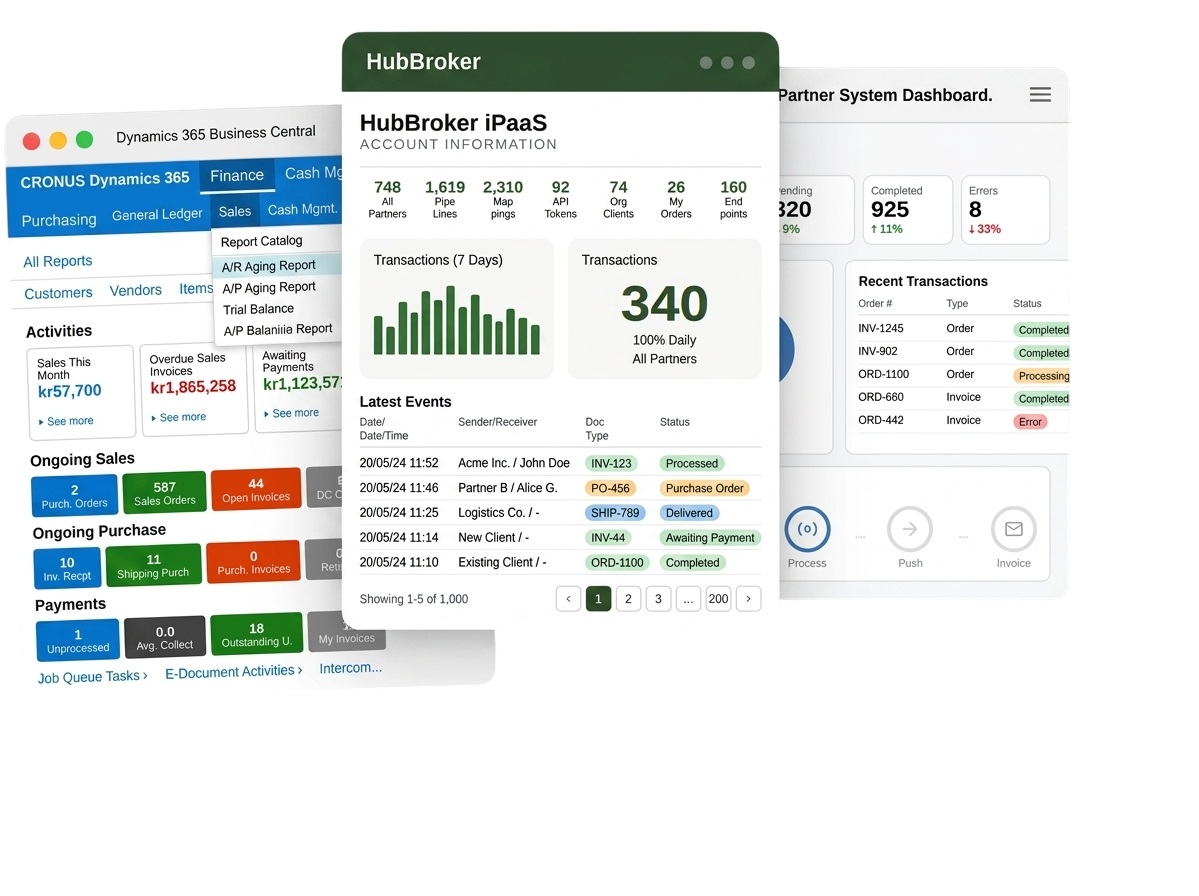
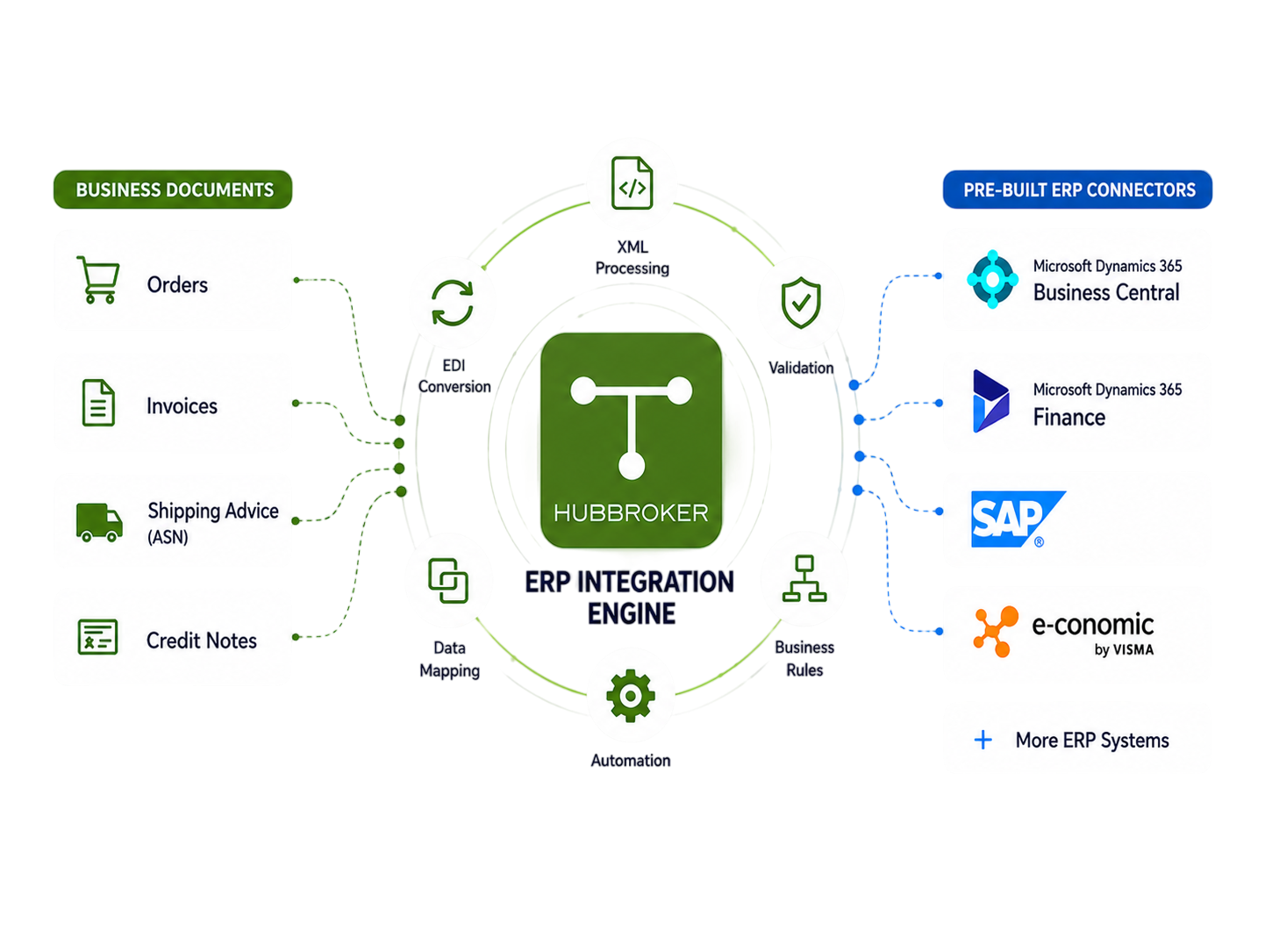
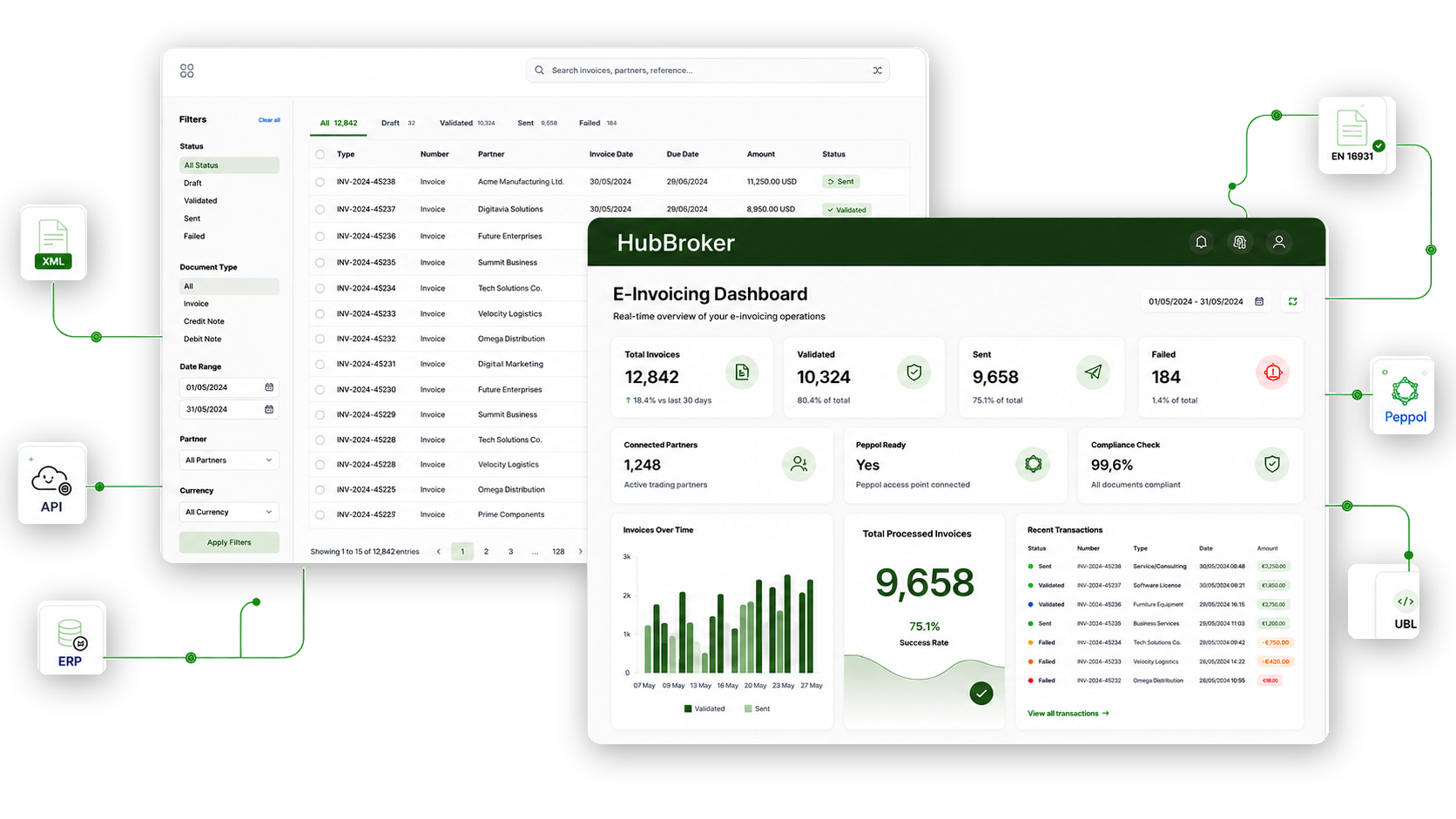
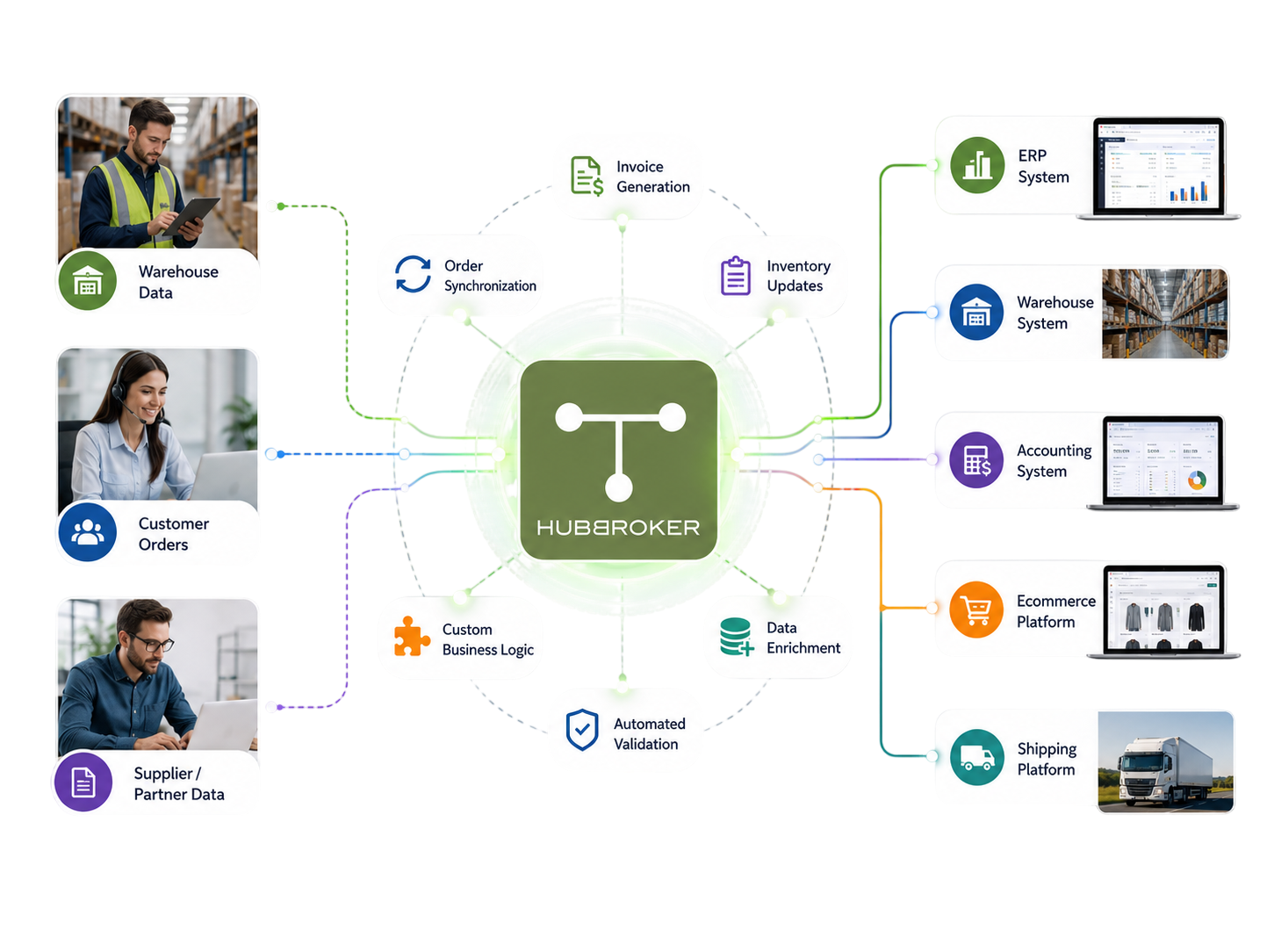
For suppliers, the challenge is not only creating an EHF invoice. The bigger challenge is managing the full flow: ERP integration, Peppol connectivity, document validation, customer lookup, error handling, and automation.
HubBroker can support businesses with:
- Peppol Access Point connectivity.
- EHF invoice and credit note exchange.
- ERP integration for automated invoice flows.
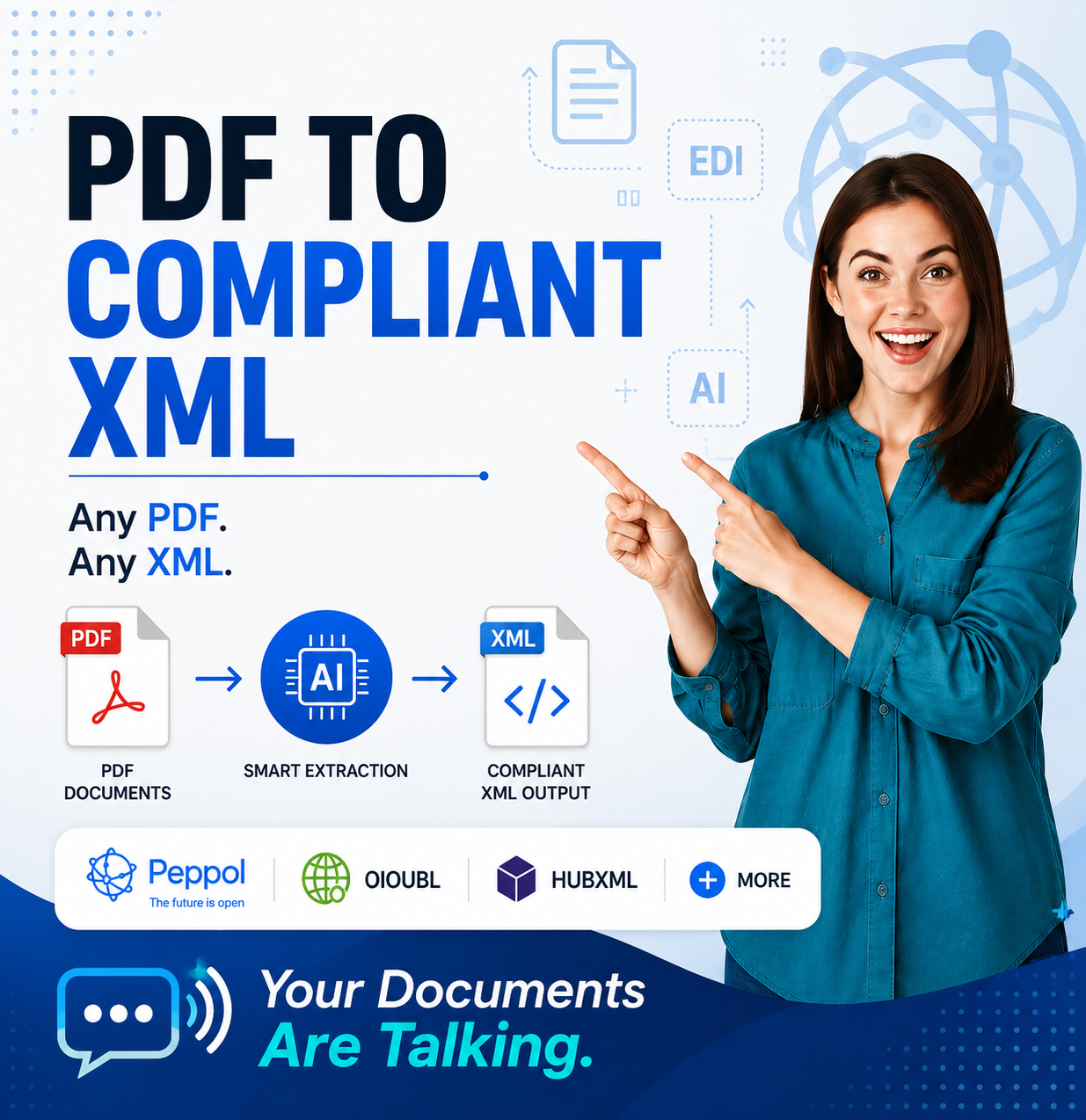
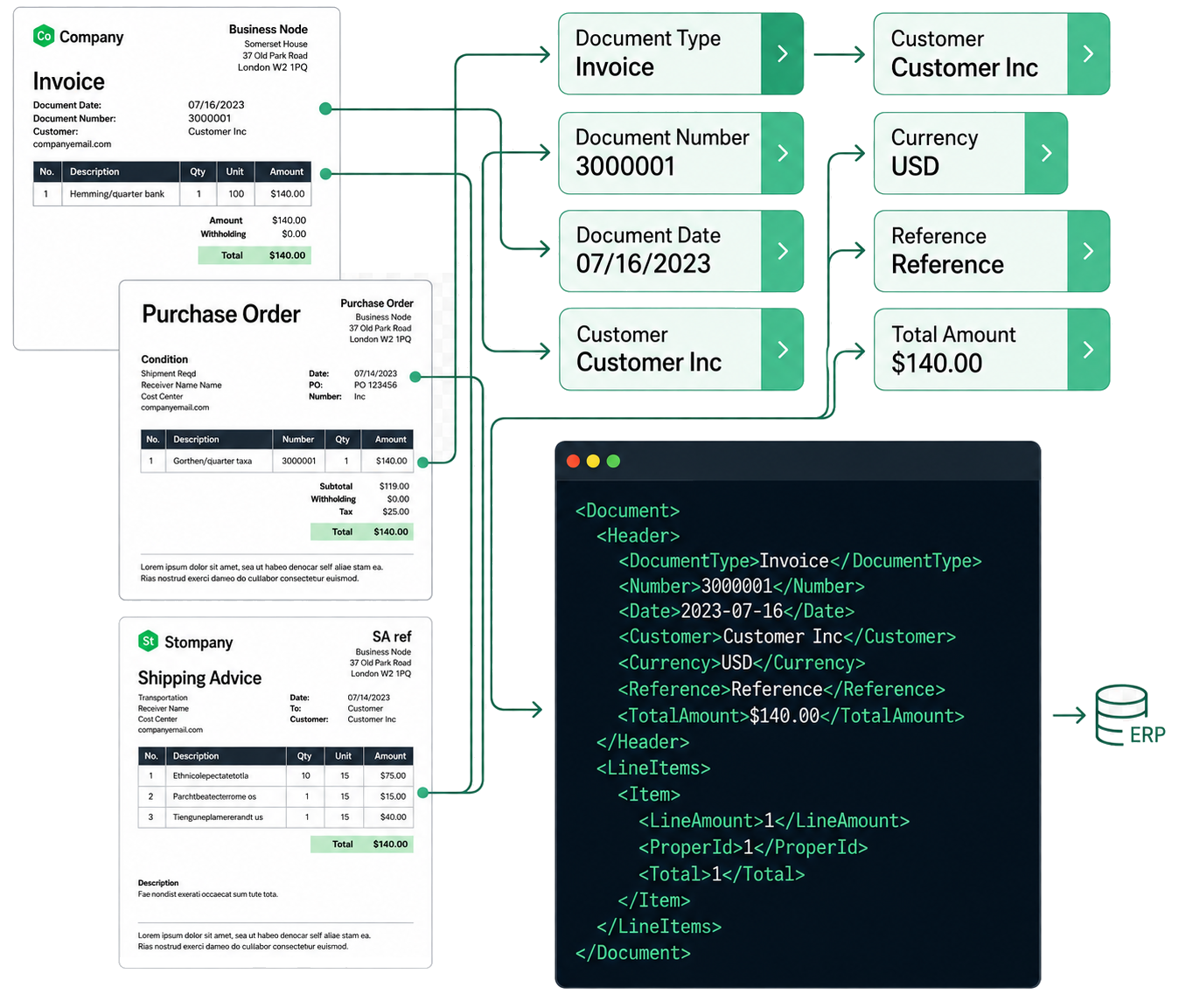
- PDF/XML and structured document conversion.
- Validation and routing of electronic documents.
- Scalable B2G and B2B e-invoicing automation.
This helps suppliers reduce manual invoicing work, avoid rejected invoices, and prepare for Norway’s broader e-invoicing transition.
- By HubBroker ApS