
Choosing an E-Invoicing Provider in Switzerland: A Guide for International Businesses
Sending electronic invoices in Switzerland can involve more than creating a PDF and sending it by email. For international companies, the process may also include ERP data, Swiss invoicing channels, customer requirements and invoicing processes in other European countries. So, choosing the right Switzerland e-invoicing provider is not only about sending invoices electronically.
The provider should work with your finance systems, customers and cross-border processes without adding more manual work for accounting team.
What Should a Switzerland E-Invoicing Provider Support?
Start by looking at the invoice routes your business actually use. For example, suppliers to the Swiss Federal Administration are required to send electronic invoices when the contractual amount is more than CHF 5,000. The Confederation supports electronic invoice processing, including structured invoice data submitted through service providers.
Switzerland also uses eBill, which is operated by SIX. Businesses that want to send invoices through eBill need to connect through an eBill network partner.
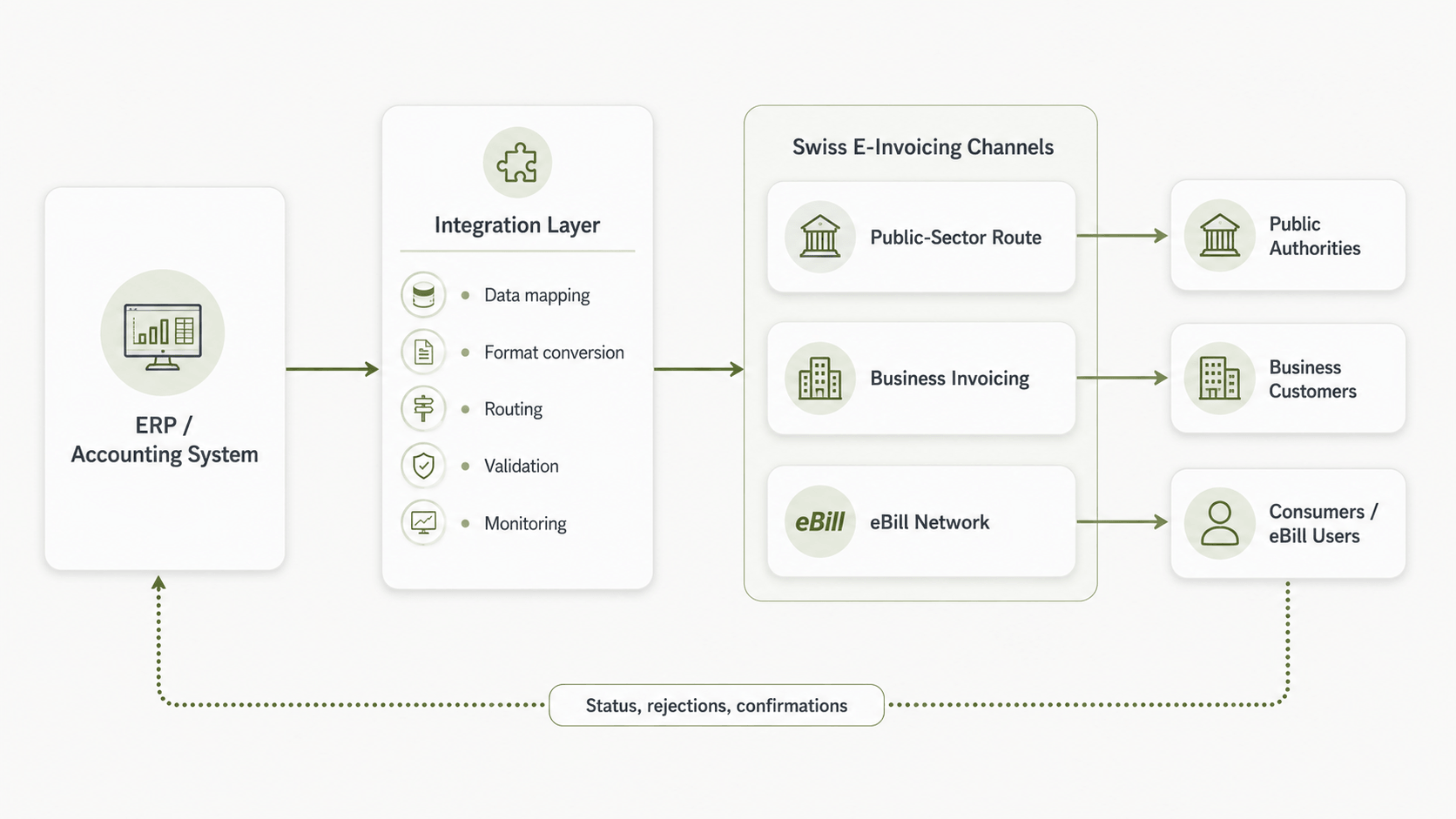
When comparing providers, consider:
Who you invoice in Switzerland
Whether customers require structured electronic invoices
Whether eBill is part of your B2C or business process
Public-sector invoicing requirements
Your existing ERP or accounting system
Cross-border invoice networks and formats
A provider that works well for one Swiss invoicing route may not cover everything an international business need.
Look at ERP Integration, Not Only Invoice Delivery
A good e-invoicing process should begin and end inside the business systems your team already use.
A typical outgoing invoice flow may look like:
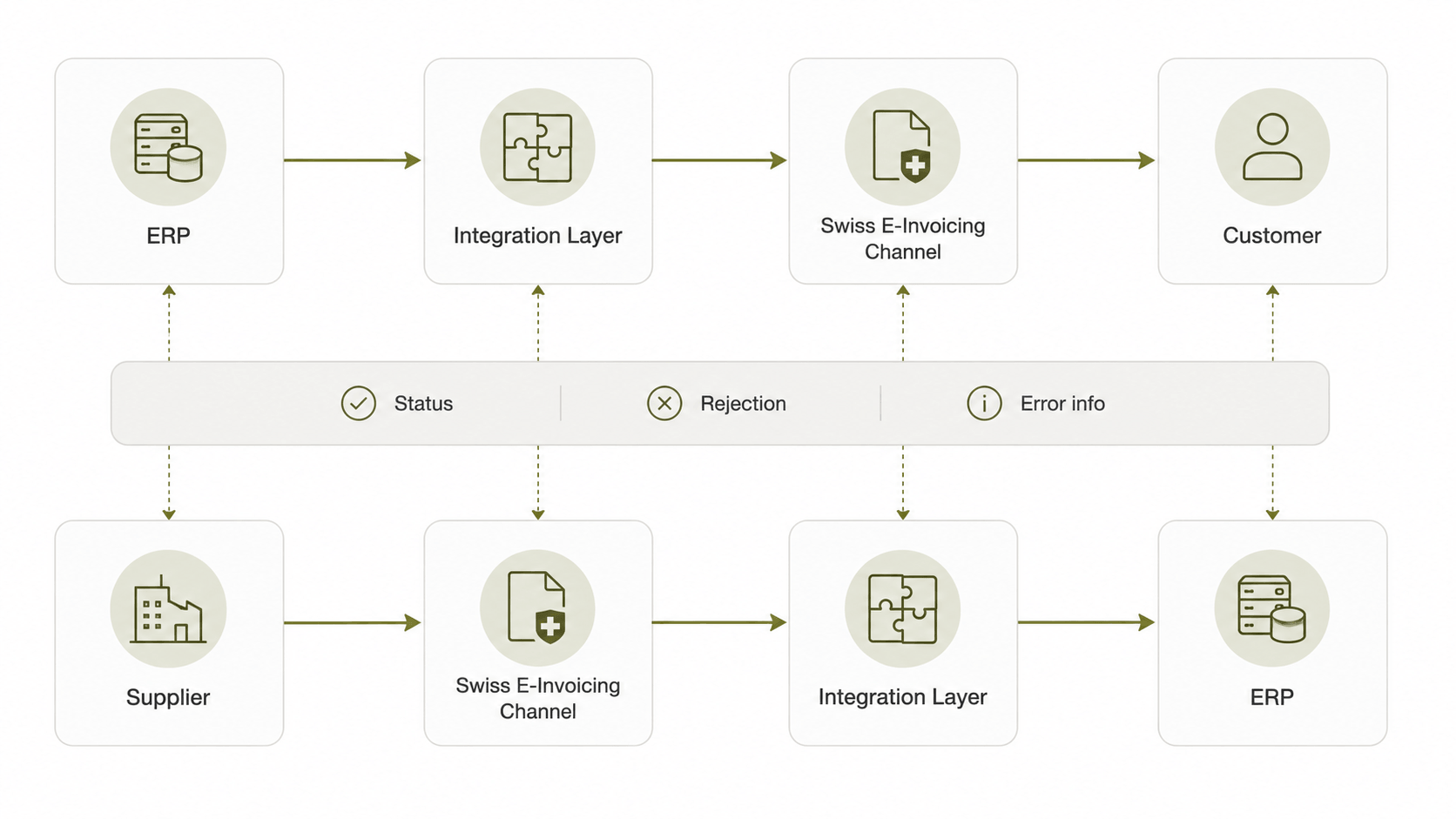
Invoice status, errors and other useful information can also be sent back into the ERP. This reduces the need for finance teams to export invoice files, upload them into another portal and then update the ERP manually afterwards. This process may be manageable when there are only five invoices, but it becomes more difficult when invoice volume starts growing.
When choosing a Switzerland e-invoicing provider, ask how they connect with systems like SAP, Microsoft Dynamics, Business Central, Oracle or other ERP platforms your company use.
Check Data Mapping and Format Handling
The invoice data inside your ERP may not always match the exact structure required by customer or receiving platform. The integration may need to map information such as:
✔ Supplier and customer identifiers
✔ Invoice and reference numbers
✔ VAT information
✔ Currency
✔ Payment details
✔ Purchase order references
✔ Line items
✔ Quantities and prices
✔ Credit note information
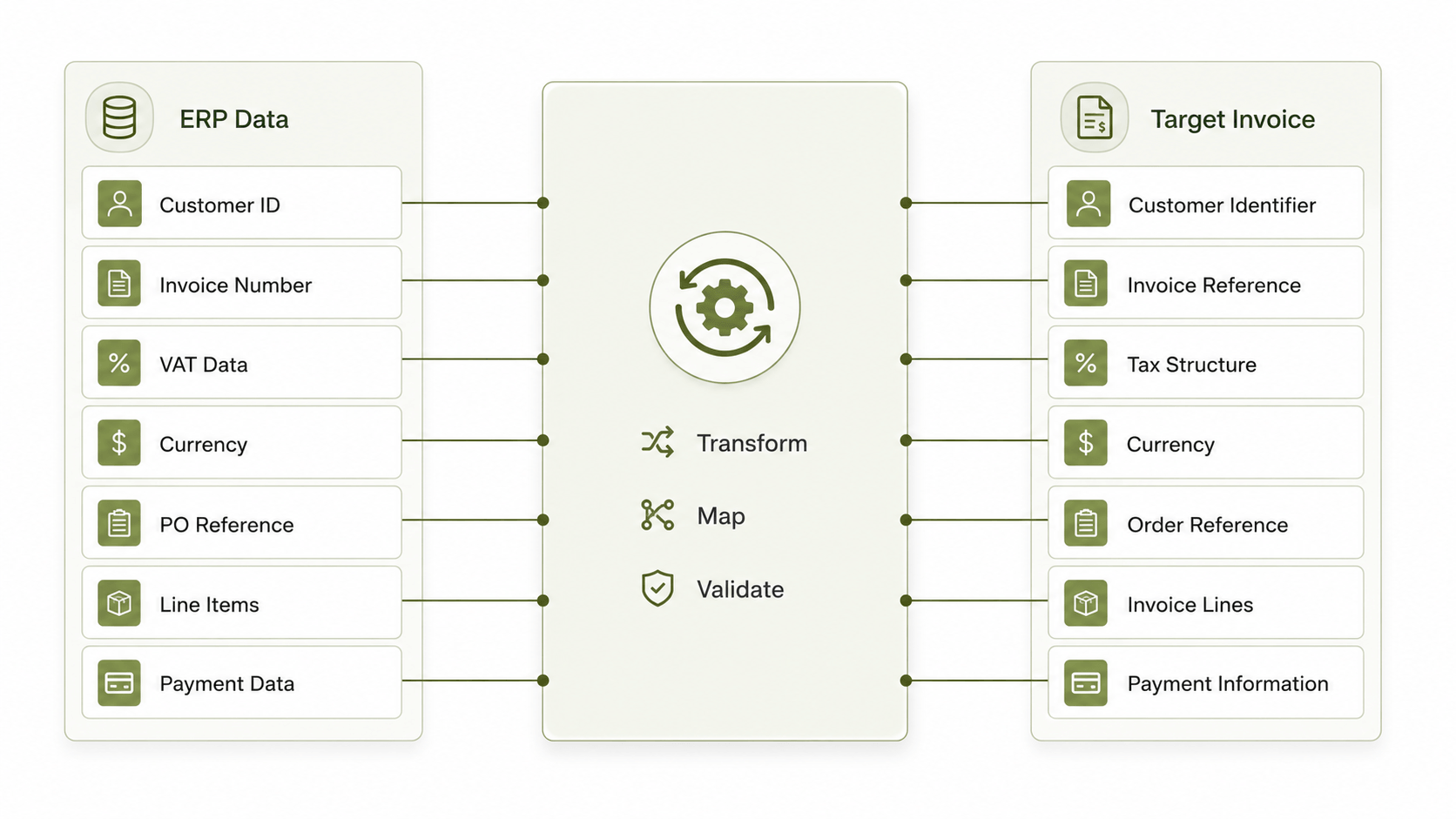
For international businesses, this becomes even more important. The same ERP may also be sending invoices to Germany, France, Denmark, Italy and other markets. Instead of asking your ERP team to create separate logic for every connection, the provider should be able to transform ERP invoice data into the structure required by each destination. This can make the overall setup easier to manage as more countries or customers are added.
Do Not Forget Swiss Payment Processes
Electronic invoicing and payment information often sit quite close together, but they are not exactly the same process. Switzerland uses the QR-bill for structured payment information. eBill provides a digital invoicing process connected with participating financial institutions. Both are related to invoice-to-payment process, but they should not simply be treated as one thing. For companies using eBill, SIX states that businesses connect to its infrastructure through network partners. Businesses can also receive eBill invoices through online banking or, depending on setup, directly in business software.
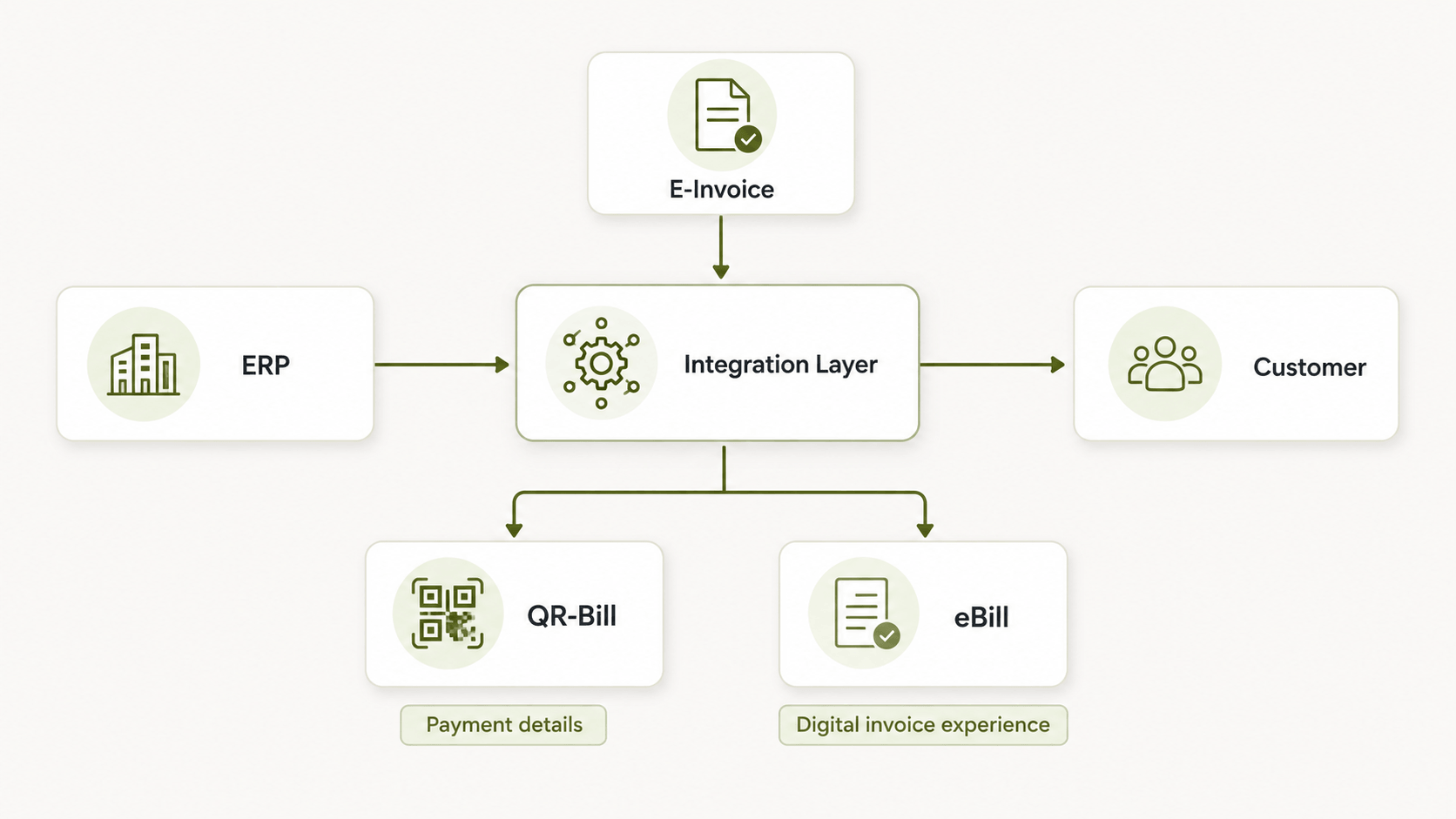
A provider should clearly explain which parts of this process they manage and when another network or service partner is needed. This avoids confusion later when the integration is already being built.
What Happens When an E-Invoice Fails?
This is an important question, but it can easily get missed when companies compare providers. An invoice can fail for several reasons. Some required data may be missing, customer identifiers can be incorrect, a field may not map properly or receiving platform could reject the invoice.
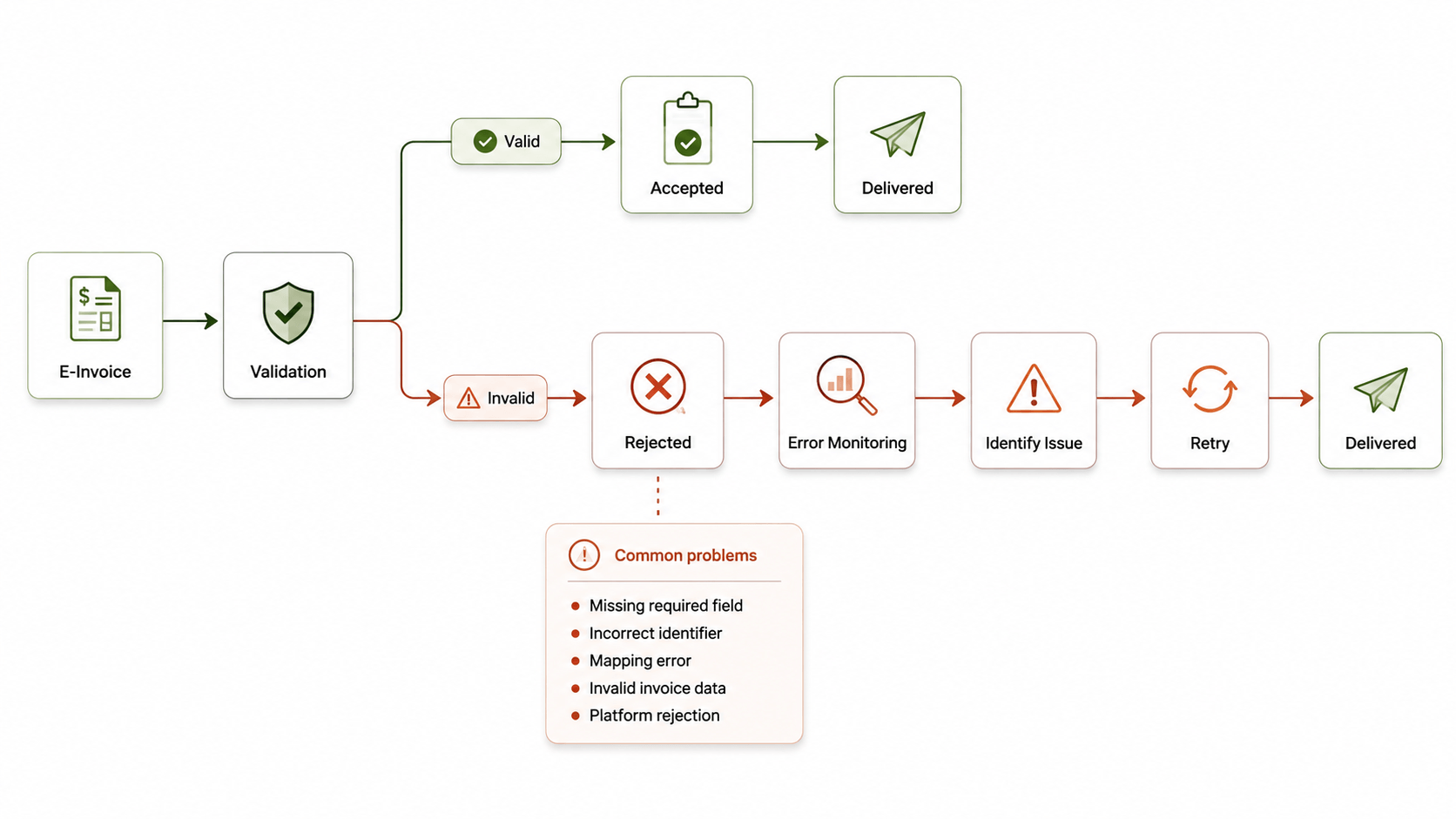
Look for a setup that gives you:
➡ Error monitoring
➡ Clear rejection information
➡ Message status tracking
➡ Retry handling
➡ Audit trails
➡ Visibility for finance or support teams
Without these features, automation does not really remove the problem. It may only change manual invoice processing into manual error checking. Finance and support teams should be able to see what happened, understand the reason and take action without searching through different systems.
Choosing a Provider for Multiple Countries
International businesses should not always treat Switzerland as completely separate integration project. If the same ERP is also sending invoices to customers across Europe or other regions, it often makes more sense to create one main integration approach. From there, the required country-specific, network-specific or customer-specific channels can be connected.
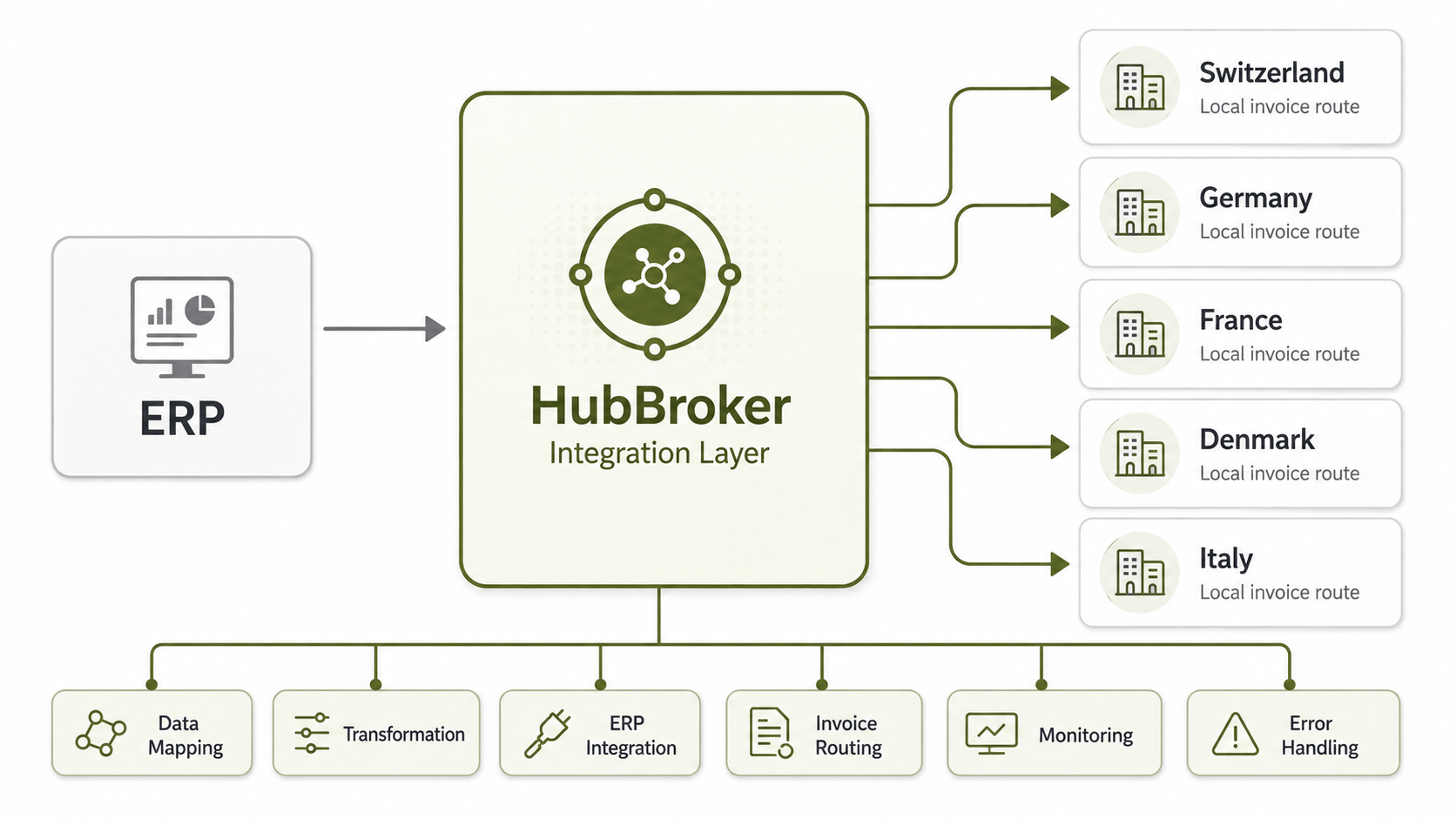
This helps keep ERP mappings, monitoring and invoice workflows more centralised. It can also reduce the amount of custom work required when another country or customer is added later.
Switzerland E-Invoicing Integration with HubBroker
HubBroker can work as an integration layer between ERP systems, business applications and the required e-invoicing platforms or networks. Depending on the business setup, HubBroker can support data mapping, ERP and API integration, invoice transformation, automated workflows, inbound and outbound invoice processing, monitoring and error handling. The goal is to keep invoice processing connected with the systems that finance team already works with.
At the same time, businesses can support different customer, network and market requirements without creating separate manual processes for every invoice route.
Final Thoughts
Choosing a Switzerland e-invoicing provider should involve more than checking if they can send an electronic invoice. Look at how the provider connects with your ERP, which Swiss invoice routes they support, how invoice data is transformed and what happens when an invoice fails. For international businesses, it is also useful to check whether the same integration approach can support invoicing in other markets.
If you are planning e-invoicing in Switzerland or need to connect Swiss customers with your existing ERP.
Talk with HubBroker about your current invoicing setup and integration requirements.
