
Slovakia E-Invoicing 2027: How the Five-Corner Peppol Model Will Work
A Slovak supplier completes a normal sale and creates an invoice in its ERP. Today, the finance team may simply export a PDF and send it by email. Under Slovakia e-invoicing 2027, this process changes for in-scope domestic business transactions. The invoice becomes structured data, moves through certified delivery providers, and required tax information also goes toward the Slovak Financial Administration.
What Actually Changes for a Slovak Company in 2027?
Confirmed: Slovakia’s approved rules take effect on 1 January 2027. For domestic transactions, Slovak VAT payers will need to issue structured electronic invoices, while businesses and other taxable or legal persons must be able to receive them. The Financial Administration makes an important point: a PDF alone is not an e-invoice. The invoice needs to be structured XML that systems can process automatically. Peppol BIS, based on EN 16931 and UBL 2.1, is the main delivery format.
Public-sector invoicing also needs attention. Slovakia already has B2G e-invoicing rules, and public authorities are moving into the new national eFA approach from 1 January 2027. A supplier working with government should not assume the old B2G route will stay exactly same. ERP and finance teams need to confirm how public-sector invoices will connect with the Peppol-based setup. Cross-border invoicing follows a different timeline. The wider EU cross-border phase is planned from 1 July 2030 under ViDA. B2C sales to individuals for private use are outside the Peppol mandate.
Still developing: Slovakia is still working on some implementation details. Another VAT amendment, parliamentary print 1454, was submitted on 27 August 2026 and is still going through the legislative process. Companies should not treat proposed changes as final rules yet.
How Does the Five-Corner Peppol Model Move One Invoice?
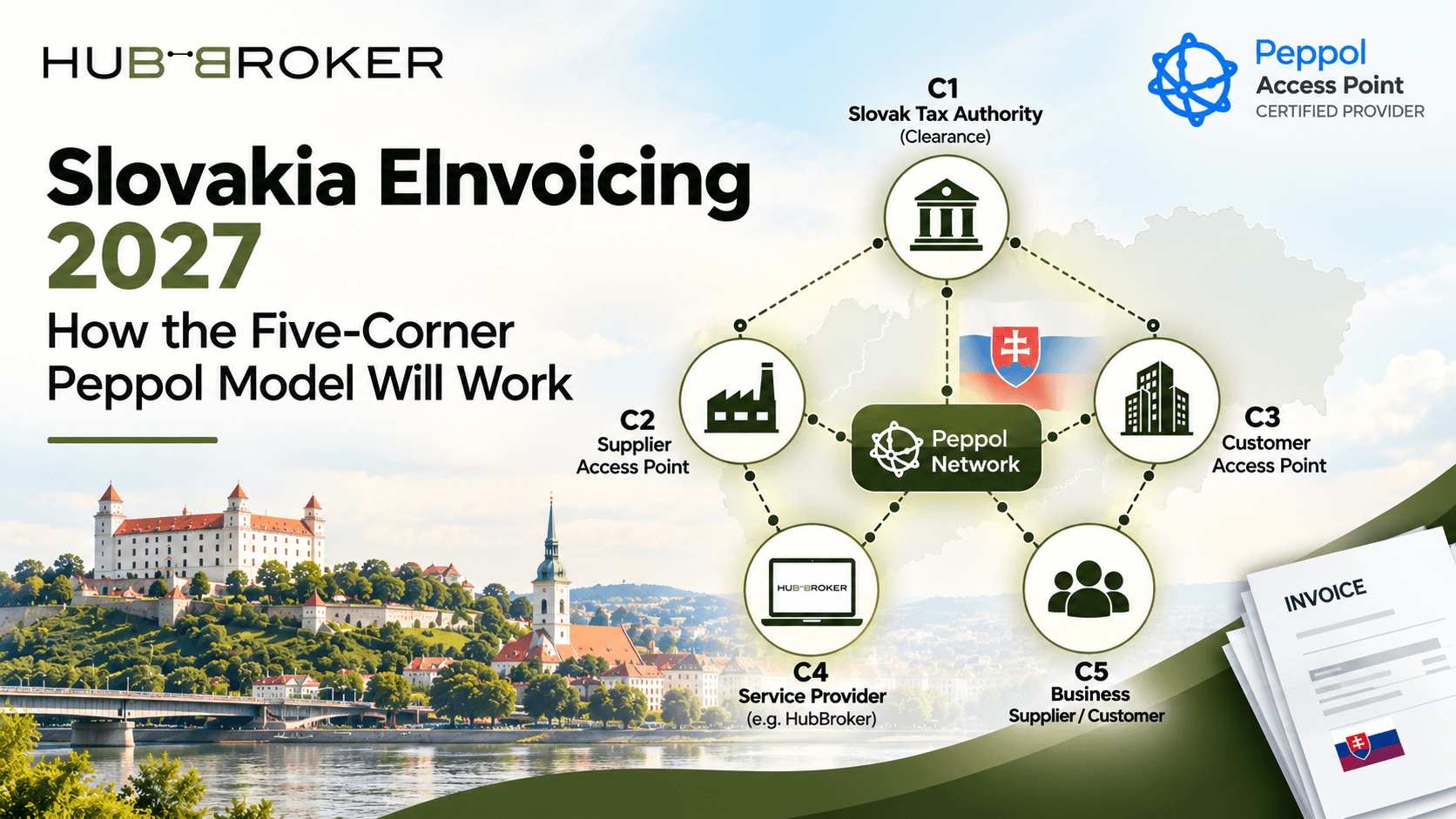
Standard Peppol normally works with four corners: supplier, supplier Access Point, customer Access Point, and customer. Slovakia adds tax reporting into this wider flow. The official Slovak design is actually described as a decentralised 5/6-corner model. C5 is the tax-reporting Access Point, while C6 is the tax authority backend. For normal business users, it can still be understood as five practical steps.
Corner | Participant | What Happens |
|---|---|---|
C1 | Supplier | Invoice created in ERP |
C2 | Supplier provider | Validates and sends invoice |
C3 | Customer provider | Receives and validates invoice |
C4 | Customer | Invoice enters ERP/accounting |
C5 | Tax-reporting AP | Receives SK Tax Data Document |
The C5 service sends validated tax data further to the tax administration backend. It does not replace the normal supplier-to-customer invoice route.
Scenario: Slovak Supplier → Slovak Business Customer
Imagine a supplier in Bratislava sells office equipment to a customer in Žilina. SAP, Dynamics 365, Business Central, or another ERP creates the invoice.
The main flow is:
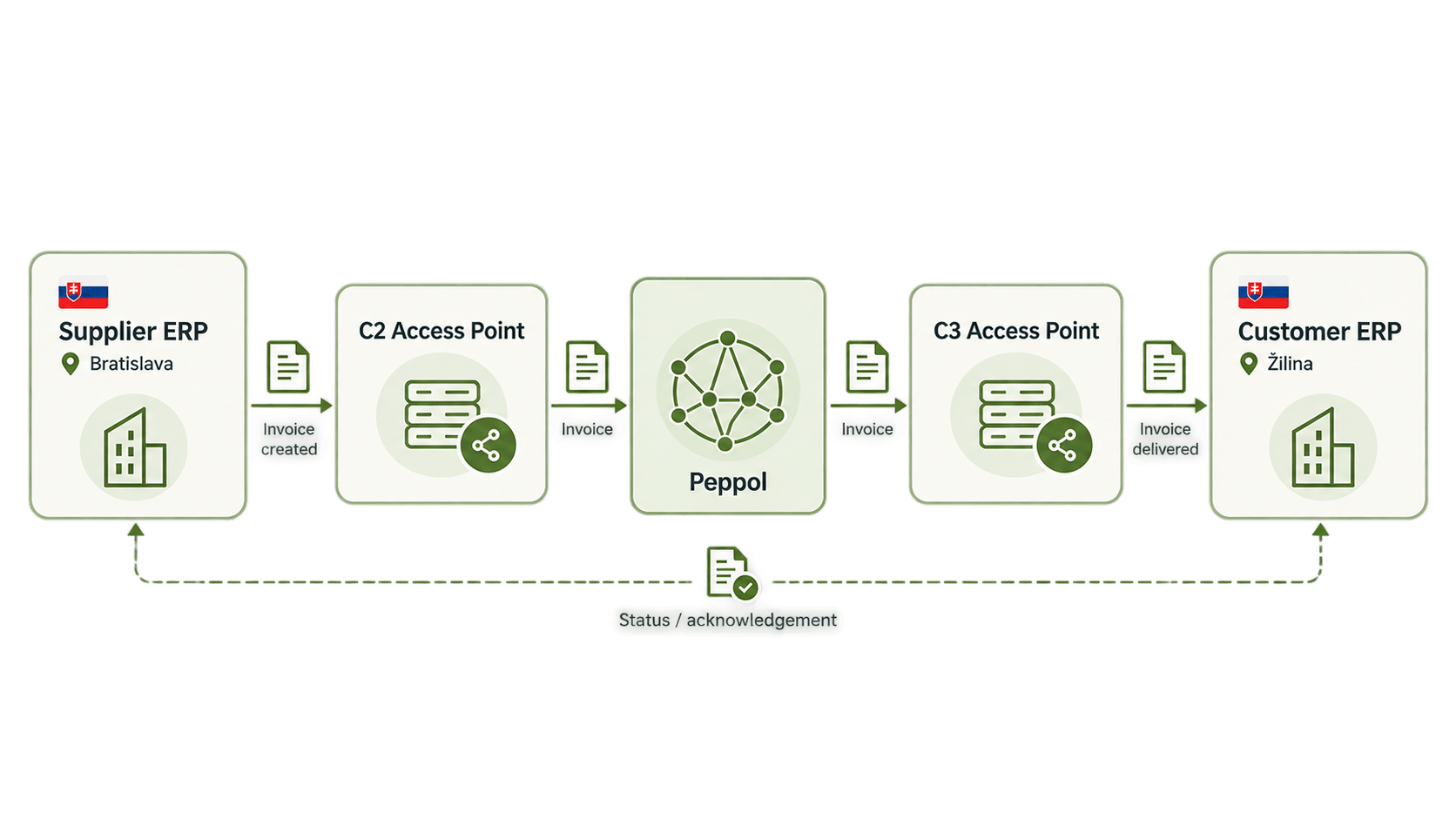
During the same process, selected invoice information is converted into Slovakia’s Tax Data Document, or TDD, for the government reporting flow. The technical design supports reporting from Peppol service providers to C5, including status messages when validation or delivery fails. So finance team sends one structured invoice, but behind that transaction there is both commercial delivery and tax reporting.
Why Is Slovakia Adding the Reporting Corner?
One reason is better VAT visibility. European Commission VAT-gap data shows Slovakia has improved over time, but a gap still remains.
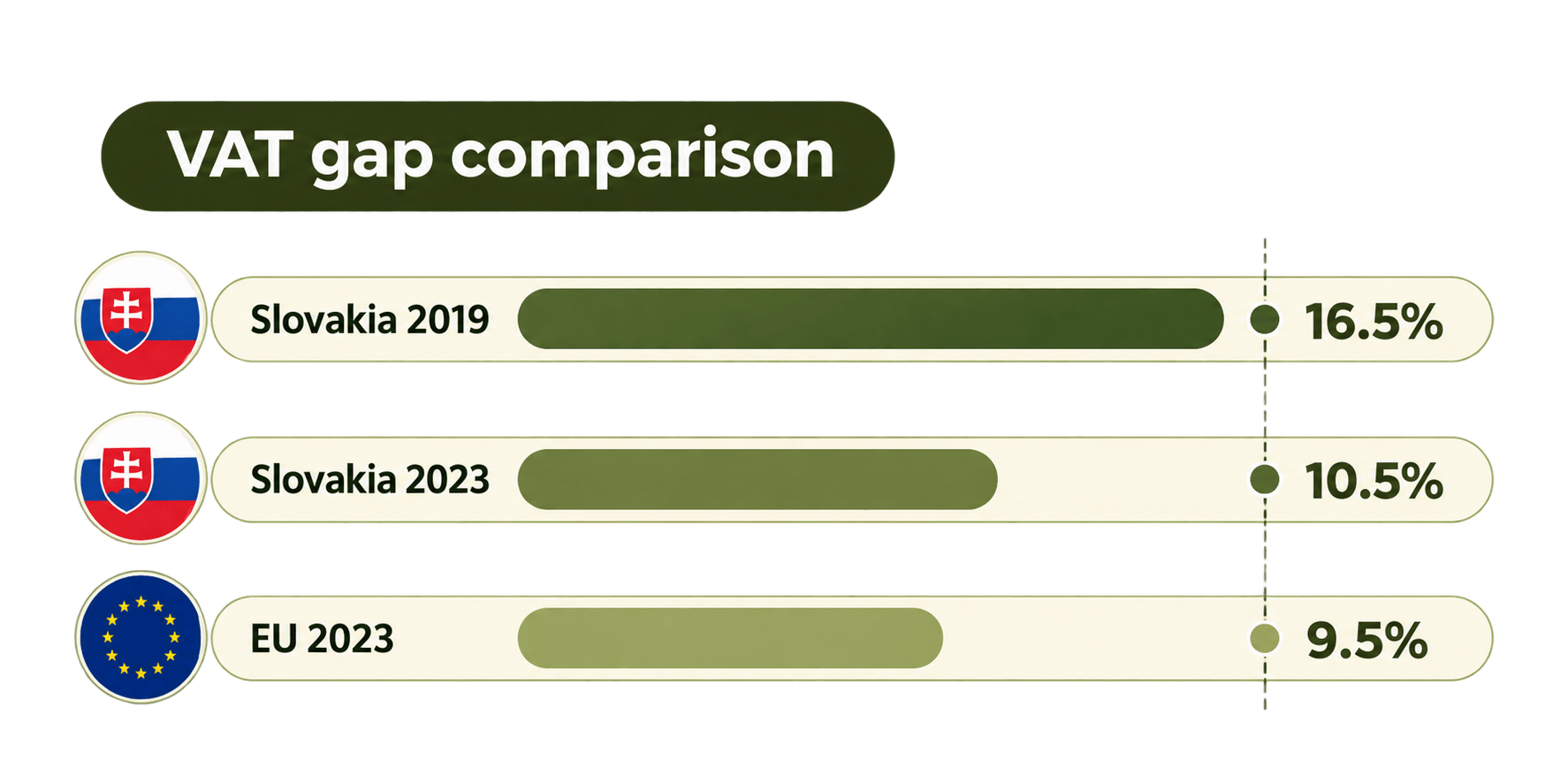
This does not mean e-invoicing alone will close the VAT gap. It does show why tax authorities want faster and more structured transaction data instead of depending only on checks done later.
Can Your ERP Support Slovakia E-Invoicing?
ERP teams should review VAT numbers, supplier and customer identifiers, invoice numbers, dates, tax codes, line items, VAT amounts, totals, payment details, and Peppol identifiers. The mapping also needs to create the correct structured invoice format, not just a readable PDF. Common problems can be quite simple: wrong VAT ID, incorrect Peppol Participant ID, missing mandatory field, invalid XML, VAT calculation mismatch, Access Point delivery failure, mapping error, or rejected tax data.
What Should Companies Prepare Before January 2027?
✔ Check which Slovak entities and transactions are in scope.
✔ Review ERP invoice fields and Peppol identifiers.
✔ Select a certified delivery service provider.
✔ Map and validate Peppol BIS invoices and credit notes.
✔ Test inbound, outbound, rejection, and status handling.
✔ Keep checking final Slovak technical and legal updates.
Companies may not want to build and maintain Peppol connectivity, TDD reporting, ERP connectors, mapping, validation, and monitoring separately.
HubBroker can work as one integration layer between ERP systems, structured e-invoicing, Peppol routing, national reporting connections, and invoice status monitoring. The practical point is simple: do not wait until January to find missing ERP fields or broken Peppol routing. Businesses can discuss Slovakia e-invoicing 2027 and Peppol integration with HubBroker before production testing becomes urgent.