
SAP Integration Services: What to Look for in an Integration Provider
Two providers may both offer SAP integration services but the final result can be very different. One may build only a simple point-to-point connection, while another may create a reusable integration layer with mapping, API/EDI connectivity, monitoring and support. If you are comparing SAP integration services Denmark, it is better to look at the architecture and how the provider actually works, not only the sales presentation.
Start With the Integration Landscape, Not the Provider’s Feature List
Before comparing providers, first map what SAP need to connect with. This may include:
Ecommerce
CRM
Warehouse systems
Logistics providers
Banks
EDI partners
Peppol / e-invoicing networks
Supplier APIs
Internal applications
Then decide what type of integration is actually needed. Is it one simple connection, real-time API integration, EDI/B2B exchange, batch processing, cross-country e-invoicing or a larger multi-system setup?
Define the system landscape first, then compare the provider against it.
How to Evaluate SAP Integration Services Denmark Providers
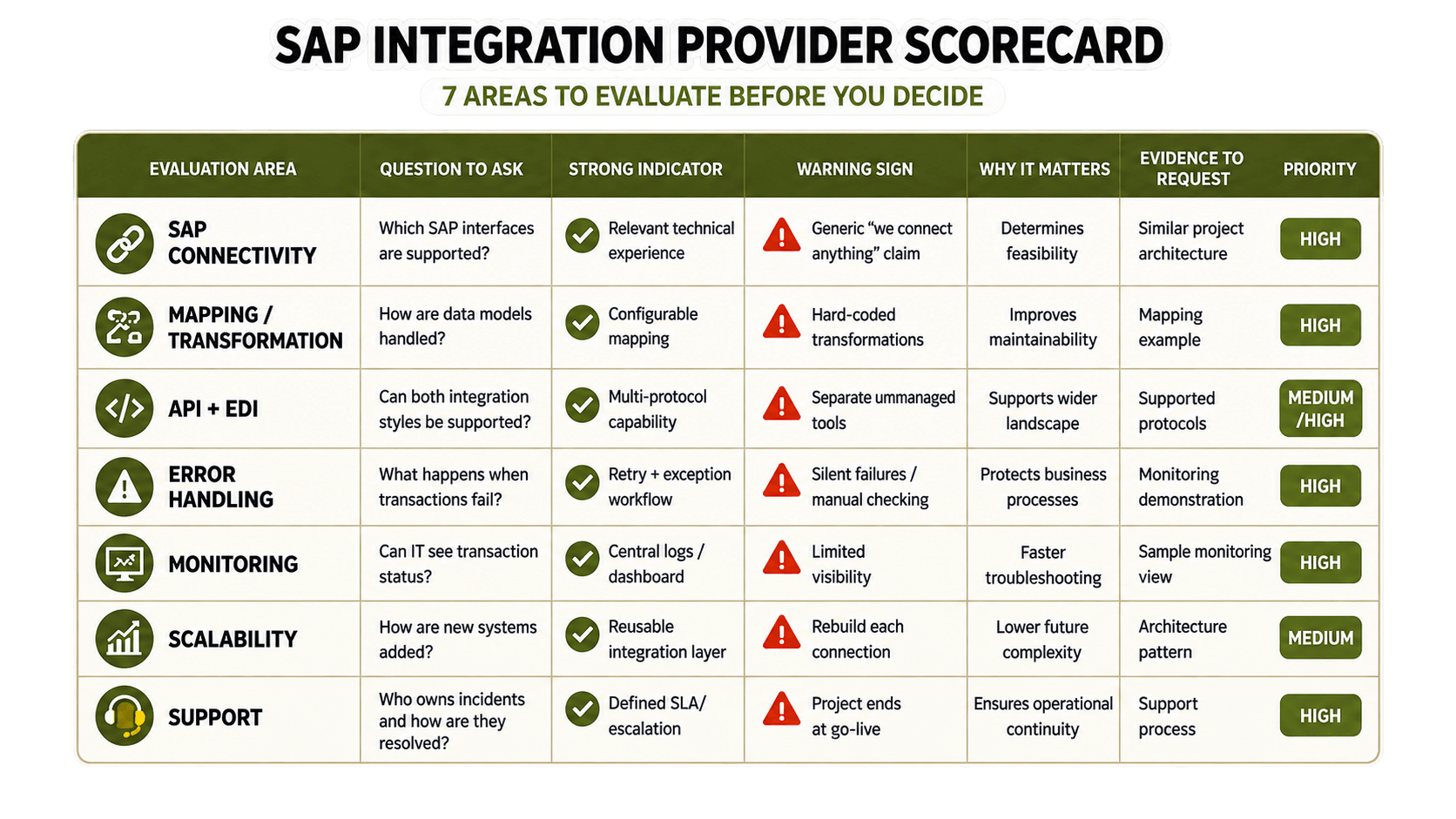
What Should the Integration Delivery Process Look Like?
A good provider should explain the complete process, not only the connector. A normal delivery process can look like:
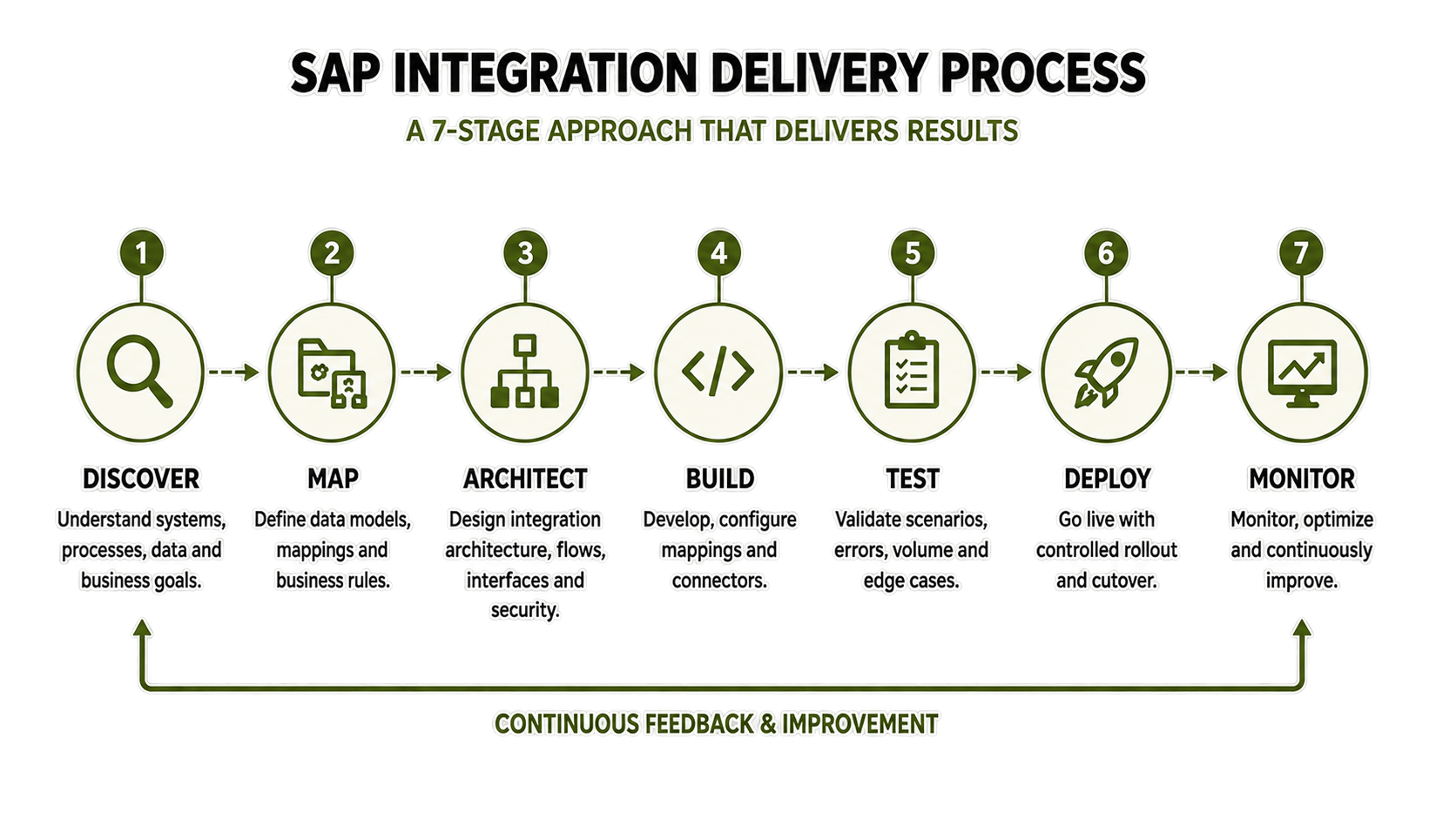
✔ Discovery is about understanding systems, business process and scope.
✔ Mapping defines source data, target data and transformation rules.
✔ Architecture covers APIs, middleware, EDI, security, routing and failure handling.
✔ Testing should also include invalid data, retry, duplicate transactions and volume testing, not only perfect cases.
✔ Provider quality should be judged across this full process, not only whether first message reaches SAP.
Point-to-Point Connector or Integration Platform?
Point-to-point integration can make sense when only one system connects to SAP and the process is simple. Middleware or iPaaS becomes more useful when there are:
Multiple systems
API and EDI together
Complex mappings
Central monitoring needs
Multi-country rollout
More integrations expected later
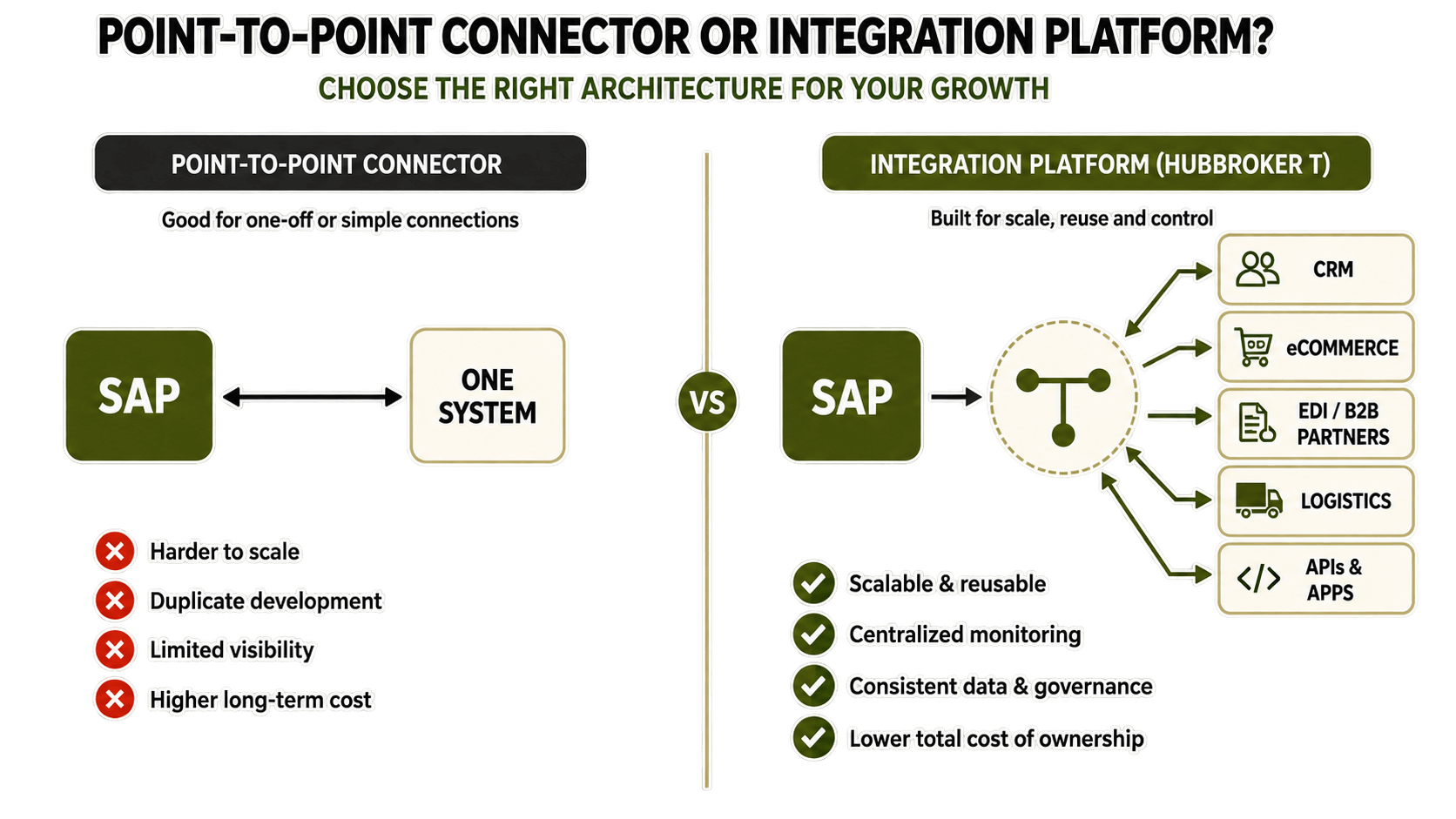
The difference is quite simple. A direct connector may reduce initial work, while a reusable integration layer can reduce complexity later when more systems are added.
Ask How Failures Are Handled Before You Ask About Speed
Successful transactions are expected. The real test is what happens when something goes wrong. Ask what happens when:
SAP is unavailable
API times out
Data is wrong
Required field is missing
Duplicate transaction comes
Connection fails
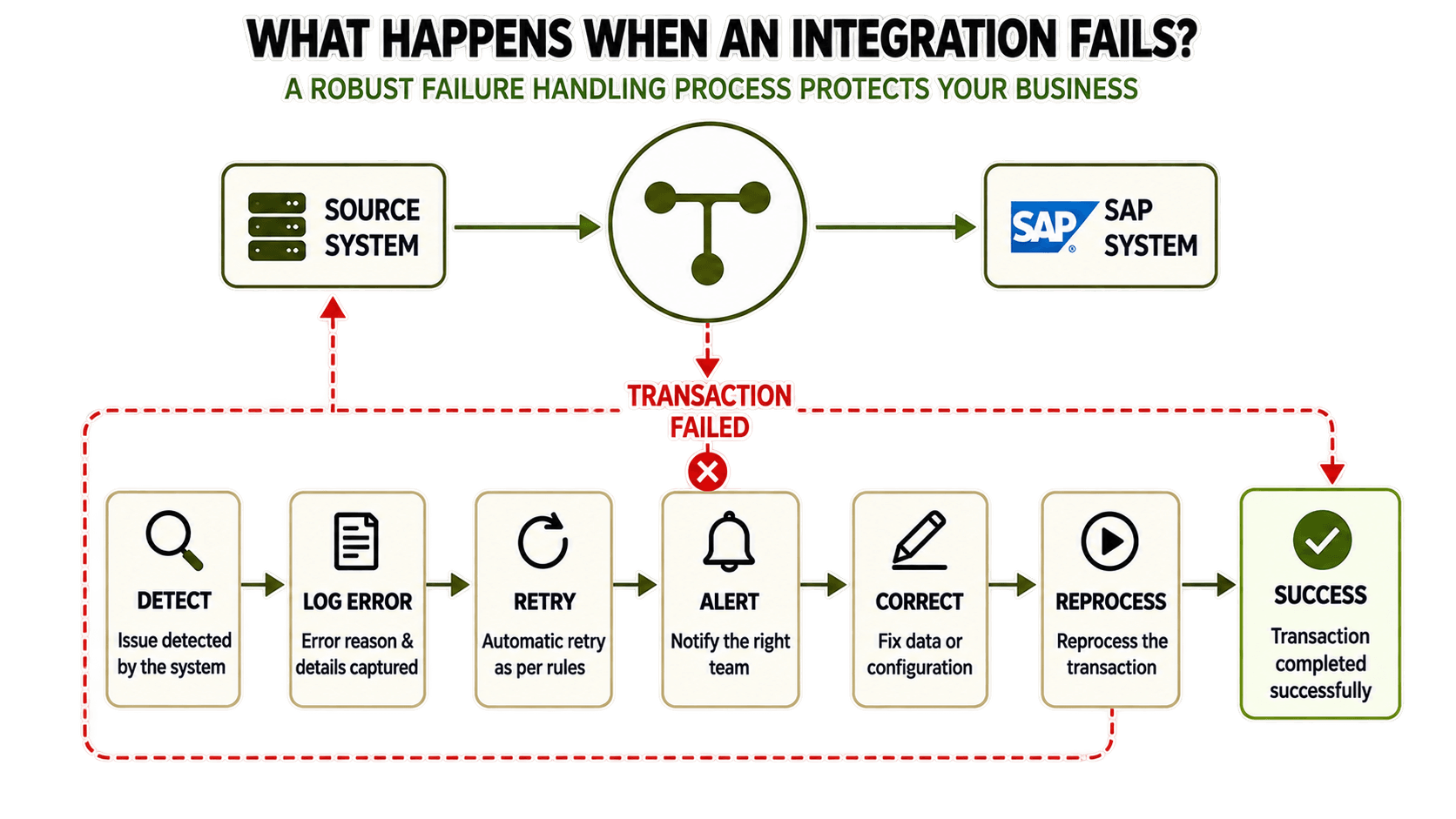
Check if the provider supports automatic retry, correction and reprocessing, payload visibility, clear error reasons and alert ownership. If provider cannot show how a failed transaction is found and fixed, that can become a serious issue after go-live.
What SAP Experience Should You Verify?
Do not accept only “we have SAP experience.” Ask which SAP environments they have actually worked with:
SAP S/4HANA
SAP ECC
SAP Business One
Also ask which interfaces they have used, such as APIs, IDocs, BAPIs or OData where relevant. Then ask for examples close to your own requirement. This may include:
EDI
Ecommerce
Logistics
CRM
E-invoicing
API integration
A strong provider should be able to explain how your SAP system will connect, not just put an SAP logo on the proposal.
What Matters Specifically for Danish Businesses?
For Denmark, check whether the architecture supports the networks and formats your business actually use. The Danish Business Authority identifies NemHandel as the shared national infrastructure and supports OIOUBL and Peppol BIS. Denmark does not currently have a general B2B e-invoicing mandate, although digital bookkeeping systems need to support e-invoicing capabilities. Also check:
Nordic trading-partner connectivity
Data location
Access controls
Retention rules
Support expectations
These areas can become important when integrations are running across different countries.
What Should Be Included After Go-Live?
SAP integration does not finish when the connection goes live. Make sure it is clear who handles:
Monitoring
Incidents
Retries
Mapping changes
SAP upgrades
API changes
Certificates and credentials
Trading-partner changes
Documentation
New integrations
SAP integration is an ongoing business capability, not only a one-time development project.
Red Flags When Comparing Providers
Some warning signs are easy to notice if you ask the right questions. Be careful with providers that:
Cannot explain the architecture
Have weak monitoring
Do not show failure handling
Hard-code every connection
Have no clear testing process
Cannot explain duplicate prevention
Leave support ownership unclear
Choose the architecture before understanding your needs
A connection can work today and still become very difficult to manage later.
How Can HubBroker Support SAP Integration?
HubBroker provides B2B integration and e-invoicing services that can connect SAP ERP with trading partners and Peppol-based workflows. Depending on the requirement, the integration layer can handle:
Mapping and transformation
EDI connectivity
API connectivity
Monitoring
Error handling
Exception workflows
This can reduce the need to manage many separate connections between SAP and external systems.
Evaluating SAP integration services Denmark? First map your SAP environment, connected systems, transaction types and support responsibilities.
HubBroker can help review those requirements and define an integration setup around the actual business landscape.
