
Factur-X: Why Your ERP Must Be Ready Before French E-Invoicing Blocks Your Invoice Flow
Many businesses preparing for French e-invoicing focus on the mandate timeline but overlook the invoice format requirements behind it. If your ERP creates invoices only as PDFs or depends on manual data extraction, invoice processing can slow down, payments can be delayed, and incoming invoices may fail validation. Factur-X provides the bridge between human-readable invoices and structured electronic data, but your systems need the right integration approach to support it.
What is Factur-X and why does it matter for French e-invoicing?
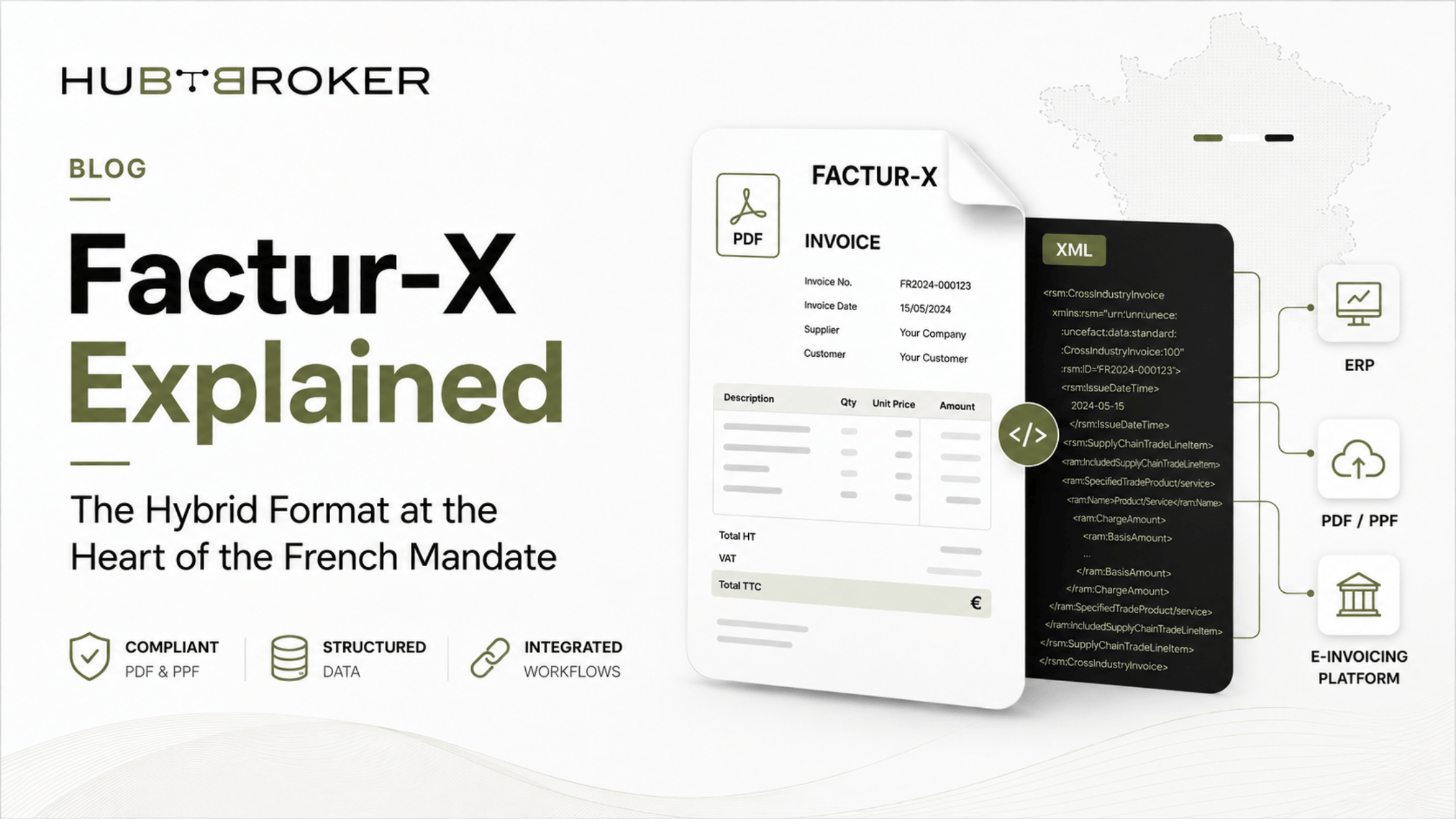
Factur-X is a hybrid electronic invoice format that combines a traditional PDF invoice with embedded structured XML data. This allows the invoice to remain readable for finance teams while also allowing automated systems to process the information.
Unlike a standard PDF, a Factur-X invoice contains machine-readable information such as supplier details, customer information, invoice lines, tax amounts, and payment data. This structured approach helps businesses reduce manual invoice handling and improve automation.
Factur-X follows the European invoice standard EN 16931, making it part of the wider move toward structured electronic invoicing across Europe.
For companies operating in France, understanding Factur-X is essential because e-invoicing compliance is not only about sending a document. It is about ensuring invoice data can be exchanged, validated, and processed between systems.
How does Factur-X work compared with a traditional PDF invoice?
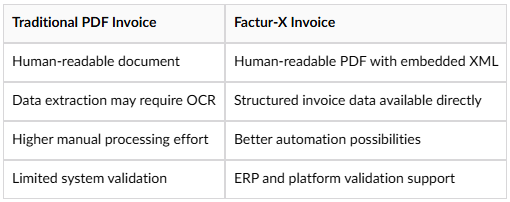
A traditional PDF invoice is designed mainly for people to read. Finance teams often need additional tools such as OCR solutions or manual processes to extract invoice information before it can enter an ERP system.
A Factur-X invoice contains both:
The PDF remains the visible invoice document, while the embedded XML provides structured invoice data for automated processing.
This combination makes Factur-X useful for organisations that want to improve invoice automation without removing the familiar invoice format used by finance teams.
What happens if your ERP cannot handle Factur-X?
Many companies assume their ERP is ready because it can generate invoices. However, invoice generation alone does not guarantee compliance with modern e-invoicing requirements.
Common challenges include:
ERP systems generating only PDF invoices
Missing mandatory invoice fields
Manual XML creation before submission
Different invoice data between ERP and external platforms
Limited visibility into invoice acceptance or rejection status
These issues can create operational problems. Invoices may require manual correction, approval processes can slow down, and finance teams may spend additional time resolving data quality issues.
For organisations preparing for French e-invoicing, the key question is not only "Can we create invoices?" but also "Can our systems exchange and process compliant invoice data automatically?"
What does Factur-X mean for your ERP and existing systems?
Supporting Factur-X does not require replacing your existing ERP. The right approach is usually to connect the systems you already use with an integration layer that manages data transformation, validation, and communication.
HubBroker helps organisations connect their ERP systems with e-invoicing requirements through its e-invoicing integration solutions.
The integration layer can help with:
Converting ERP invoice data into compliant electronic invoice formats
Validating required invoice information before sending
Connecting ERP systems with Peppol and other e-invoicing networks
Managing invoice status responses and processing feedback
Whether your business uses SAP, Microsoft Dynamics 365, Business Central, or another ERP platform, the goal is to extend existing systems rather than replace them.
For companies also managing multiple document formats, HubBroker’s EDI Intelligent Document Processing solution can help automate document extraction and validation across different business processes.
How should companies prepare for Factur-X adoption?
Preparation should begin with understanding how invoice data currently moves through your organisation.
A practical preparation approach includes:
1. Review your invoice creation process
Identify whether your ERP produces structured invoice information or only creates documents for manual handling.
2. Check receiving capability
E-invoicing requirements affect both sending and receiving invoices. Your systems should be able to receive, validate, and process incoming structured invoices.
3. Validate invoice data quality
Check that important information such as VAT numbers, customer details, invoice totals, and tax information are complete and consistent.
4. Test integration workflows
Before requirements become mandatory, test how invoices move between your ERP, integration platform, and external networks.
A connected approach also helps organisations prepare for different European requirements. Solutions such as a certified Peppol Access Point can support secure exchange of electronic documents across supported networks.
Why Factur-X is becoming a foundation for automated invoice processing
Factur-X is more than a compliance format. It supports a broader shift toward automated financial operations.
With structured invoice data, organisations can improve:
Automated invoice validation
Approval workflows
Invoice tracking
Data accuracy
Processing visibility
As more countries introduce electronic invoicing requirements, businesses need systems that can adapt to different formats and networks without creating separate manual processes for every market.
France is one example of this wider change. Companies that prepare their ERP and integration architecture early can reduce disruption when new invoice exchange requirements apply.
Prepare your ERP for Factur-X and French e-invoicing
Factur-X changes how invoices are created, exchanged, and processed, but businesses do not need to rebuild their existing systems. A strong integration layer can connect current ERP platforms with new e-invoicing requirements.
If you want to review your current ERP readiness for Factur-X and French e-invoicing, Contact HubBroker for an assessment of your integration setup.
