
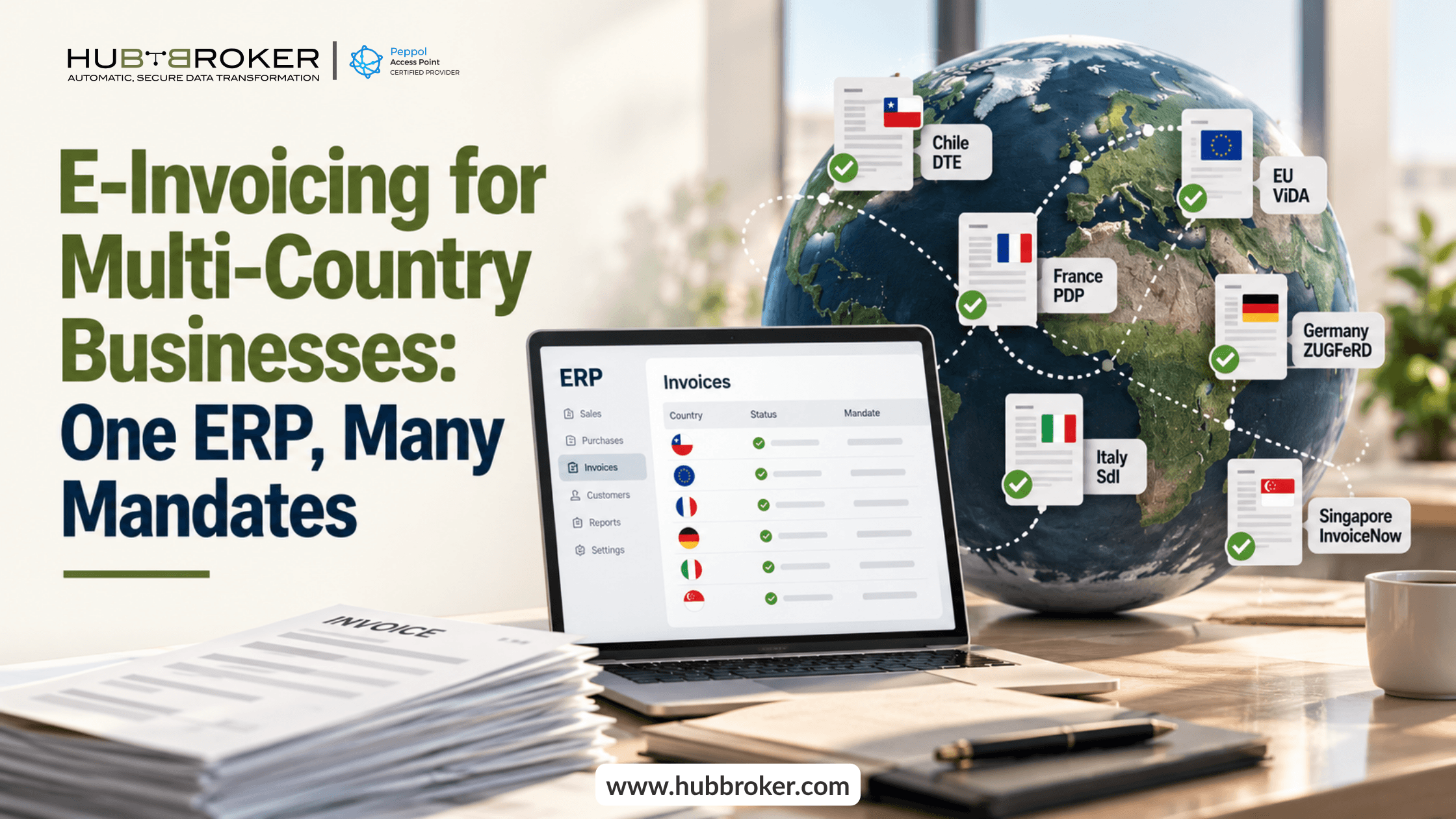
E-Invoicing for Multi Country Businesses One ERP, Many Mandates
A business can send invoices from one ERP and still face different rules across Europe. An invoice for a Belgian customer may need Peppol, while a French subsidiary has another process to follow. For finance teams, multi-country e-invoicing compliance means dealing with these differences without building a separate manual routine for every office. The job goes beyond changing file formats. Tax details, delivery methods, responses, and records must all be checked, especially when an invoice fails.
Why Is E-Invoicing Different Across European Countries?
Europe doesn't have one identical invoicing rule for every country. Local requirements vary by invoice type, accepted format, reporting method, and delivery channel. A domestic business invoice may follow different rules from a cross-border sale or an invoice sent to a government buyer. Belgium made structured B2B e-invoicing compulsory for most transactions between VAT-liable Belgian businesses in January 2026.
France started its phased reform in September 2026. Affected businesses must receive electronic invoices, while larger companies also began issuing them through approved platforms. Smaller French businesses follow in September 2027. EU ViDA rules introduce digital reporting for cross-border transactions based on e-invoices from July 2030. So a process that works in Brussels might not work in Paris. Finance teams should also check whether foreign sales bring separate reporting duties. That means checking the seller, buyer, and transaction type instead of assuming every invoice sent from the same office has the same obligations.
Can One ERP Manage Multiple E-Invoicing Mandates?
Yes. Your ERP can remain the main place where staff prepare invoices and record sales.
But it may not support every country's format, validation checks, delivery network, or tax reporting process on its own. An integration layer can read invoice data, decide where the document needs to go, and convert it into the required structure. A group using SAP or Microsoft Dynamics across subsidiaries, for example, should not need employees to export spreadsheets country by country. Shared customer records, local checks, and status messages returned to the ERP can help the finance team follow each invoice. That also makes reconciliation easier. When a document comes back with an error, staff can see which route failed instead of searching through different portals. Still, individual companies must confirm registration, approved platform arrangements, and their own legal responsibilities.
How Can Businesses Set Up Multi-Country E-Invoicing in Seven Steps?
Begin with your actual business transactions, not a software product list. Then build a process that staff can repeat.
Step 1: List your entities. Record countries, VAT registrations, customer types, and invoices issued by each company.
Step 2: Check local rules. Confirm the transactions covered, deadlines, formats, and platforms using official guidance.
Step 3: Review ERP data. Look for missing buyer identifiers, VAT details, payment references, and other required fields.
Step 4: Choose delivery channels. Identify where Peppol, an approved national platform, or another permitted route is needed.
Step 5: Map the data. Convert ERP fields into each required document structure without changing the sale's meaning.
Step 6: Test common cases. Try invoices, credit notes, rejections, and returned status messages with partners or platforms.
Step 7: Watch live invoices. Give someone responsibility for failed documents and save confirmations against the original records.
Which Country Requirements Should Finance Teams Compare?
Before choosing a provider, make a country checklist. It gives your team questions to ask during a demonstration rather than relying on a general promise of European coverage.
Market | Requirement to review | Question to ask |
|---|---|---|
Belgium | Structured domestic B2B invoices | Does Peppol work? |
France | Approved platforms and phased rules | Which platform connects? |
Poland | KSeF invoicing process | Are responses tracked? |
Germany | Domestic B2B invoice rules | Which formats work? |
Italy | SDI invoice exchange | Are notices captured? |
Denmark | Public-sector e-invoicing | Are buyer IDs checked? |
Cross-border EU | ViDA digital reporting plans | How will changes be handled? |
Keep the checklist current as national instructions change. A Peppol connection can solve one delivery need without covering every tax reporting or clearance rule. Ask providers to explain exactly what each country connection includes.
What Should Businesses Ask an E-Invoicing Integration Provider?
Ask the provider to demonstrate two invoices going to different countries. Watch what happens to the data, which validation checks run, and whether errors return to your ERP. Discuss security, setup costs, ongoing support, and updates when national specifications change. A rejected invoice needs a clear reason and an owner who knows what to fix. Otherwise, automation simply hides the problem in another system.
HubBroker offers ERP connections, Peppol exchange, document mapping, validation, and transaction tracking to help businesses manage different invoice routes.
European companies can discuss their country coverage and required local platform connections with HubBroker before implementation.
Book a demo & discuss how to keep existing ERP workflows useful while avoiding unnecessary manual steps, without assuming that one connection meets every national mandate.
