
Your French Customer Changed Plateforme Agréée. Here's What Breaks?
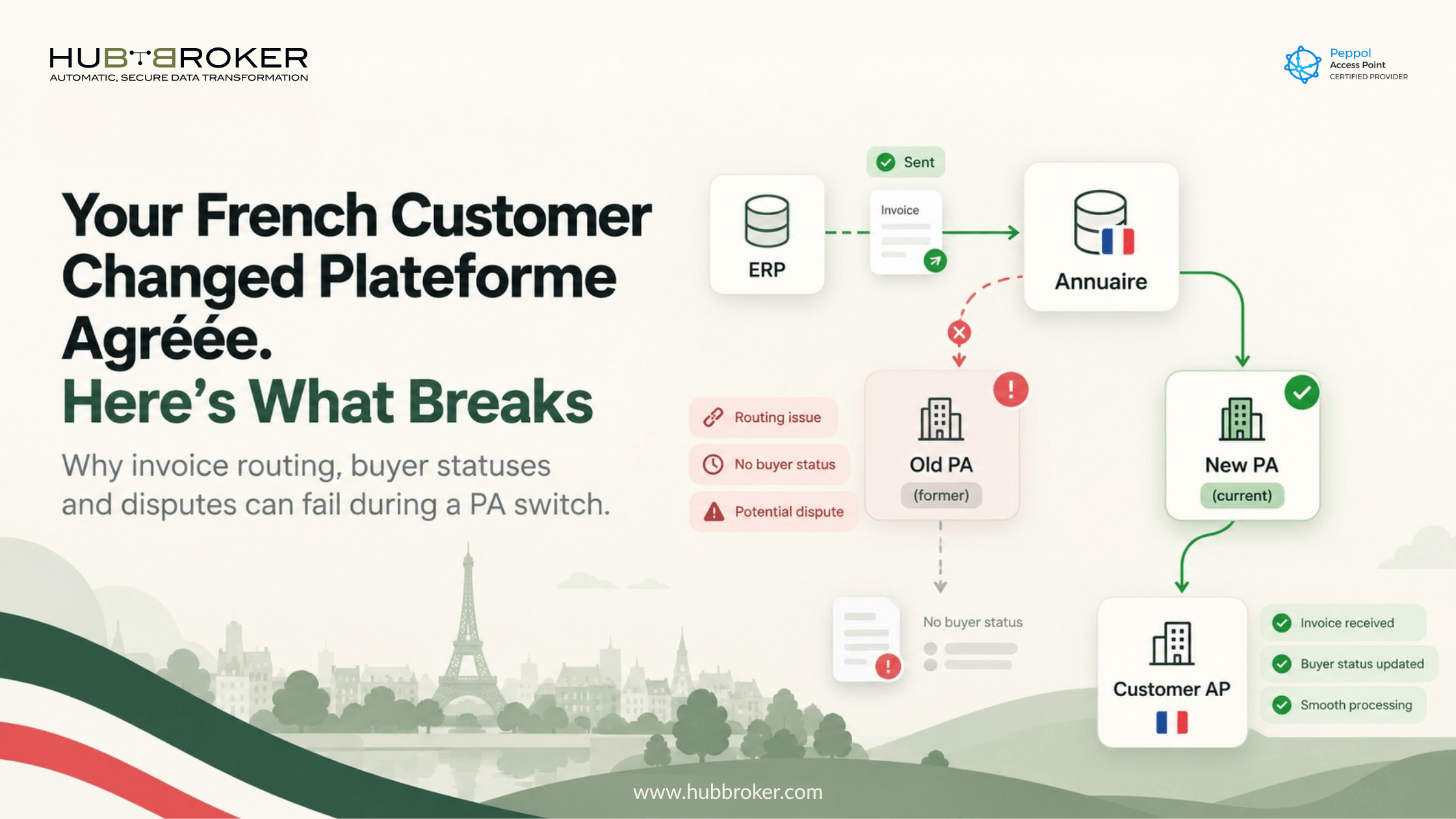
The invoice left your ERP on the 3rd. Your platform marked it as sent. Thirty days later, your French customer's accounts payable team says it never arrived.
Nothing went wrong on your side. Your customer changed its plateforme agréée, and for a few weeks your invoices were addressed to a platform that no longer receives on its behalf.
Since September 2026, French companies receive electronic invoices through a plateforme agréée (PA). Customers can switch PA, and some will. This post covers what changing plateforme agréée means for the supplier's accounts receivable team, what breaks, and how to catch it before it shows up in your DSO.
Why French customers are changing plateforme agréée right now
Many French companies picked their PA in a hurry before the September 2026 start. A few months in, some are finding the fit is wrong: pricing, ERP connectivity, support, or how the platform handles their volumes.
The rules now make switching straightforward. Décret n° 2026-677 of 27 July 2026 added article 242 nonies E ter to annexe II of the CGI. It lets a company ask for its invoice addressing in the central directory to be changed at any time.
The same decree also took the public portal out of the reception picture. Every company now receives through a private PA, so a switch always means one platform handing over to another.
How the switch works (and where the gap opens)
The annuaire decides where your invoice lands
You never pick your customer's platform. When you send an invoice, your PA looks up the customer's addressing line in the central directory (the annuaire) and delivers it to whichever PA is registered there.
The customer doesn't edit that entry either. Only its receiving PA can update the directory, and only with a signed, dated formal agreement from the customer.
The handover timeline
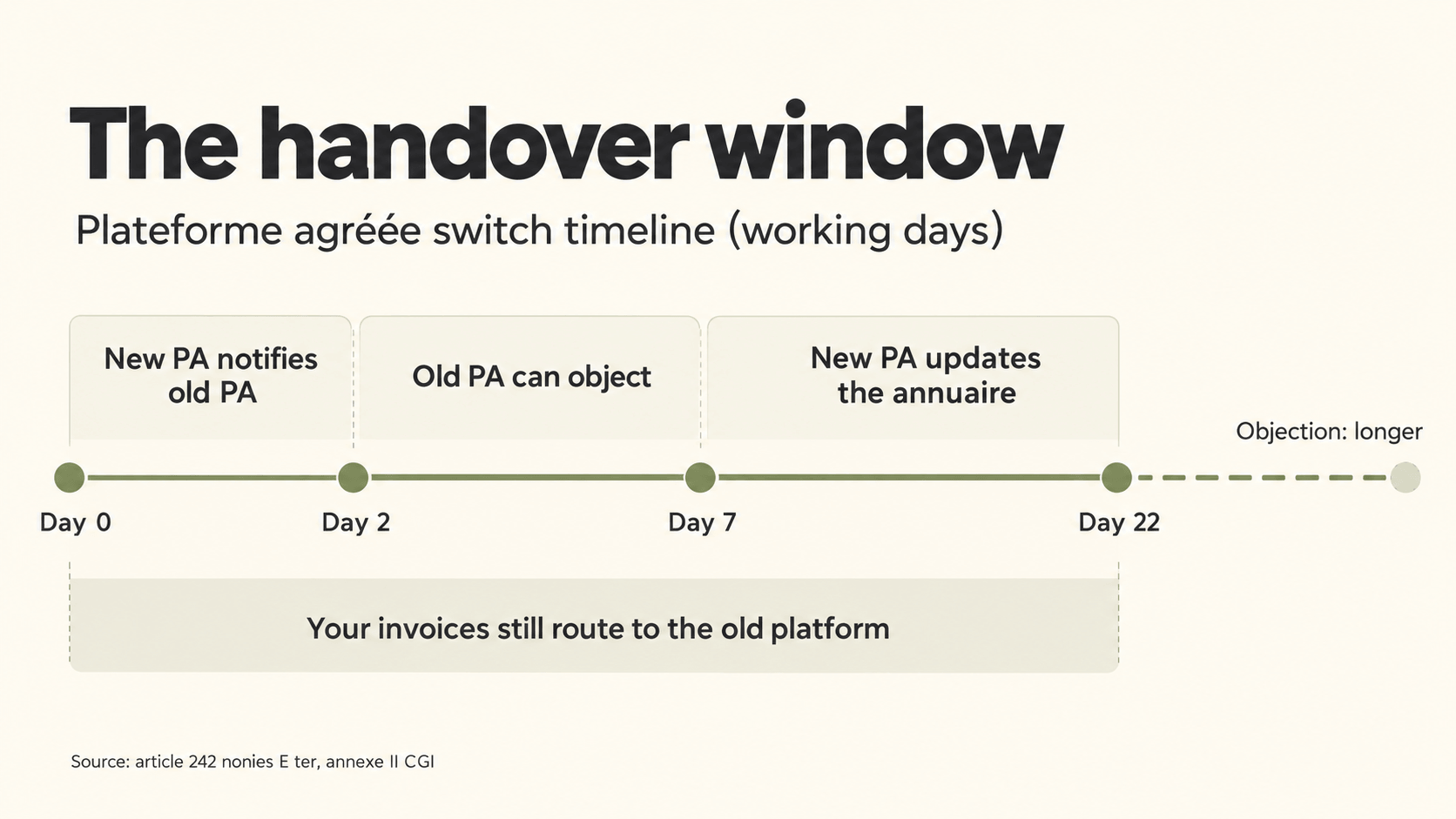
Under article 242 nonies E ter, a change runs in three steps, all in working days:
The new PA has 2 days to notify the old PA after receiving the customer's agreement.
The old PA has 5 days to object.
The new PA then has up to 15 days to register the new addressing in the annuaire.
That is up to 22 working days, around a month, before the directory points to the new platform. An objection pauses the process further. Throughout that window, your invoices follow whatever the directory says.
What breaks for AR
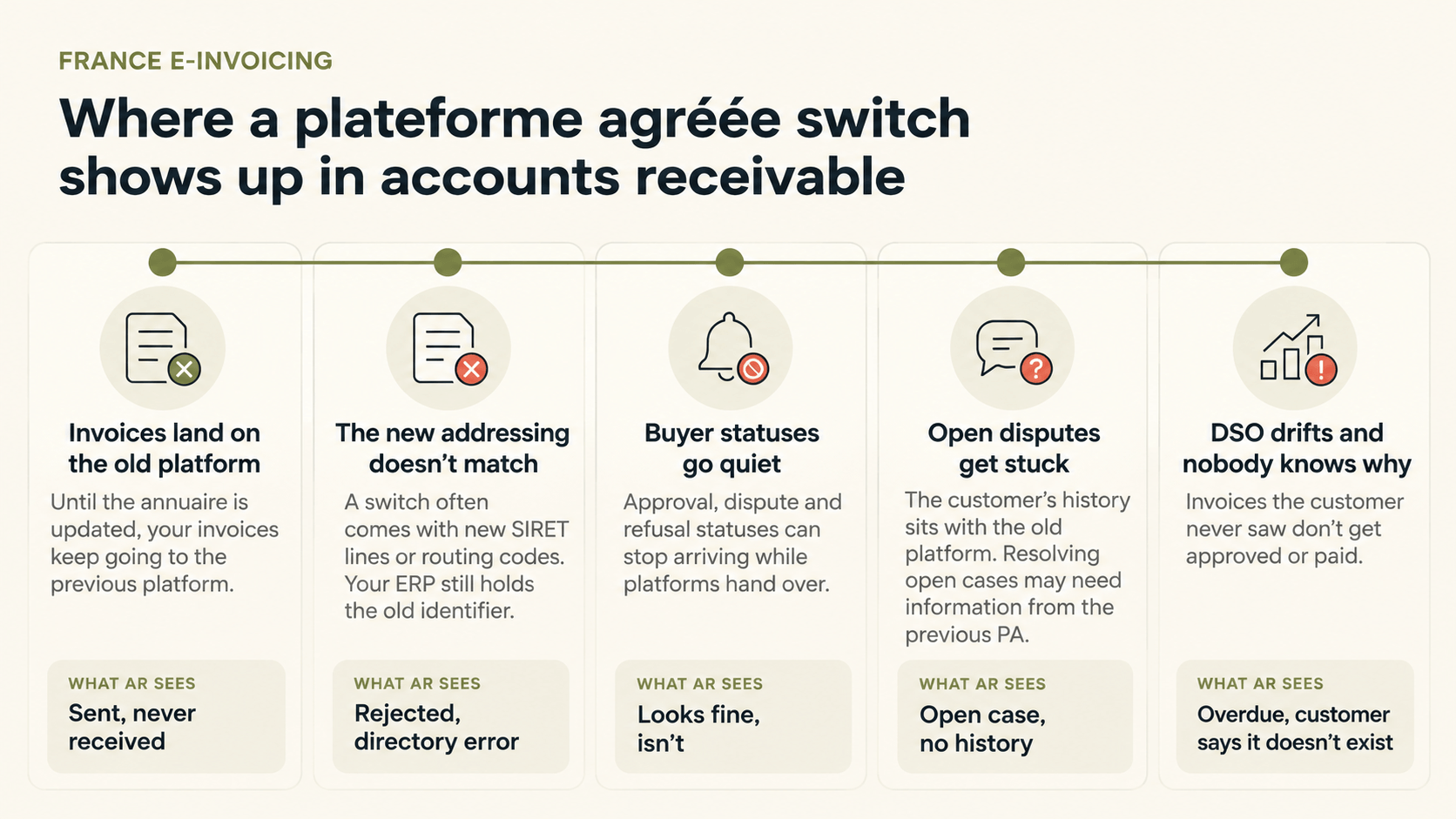
Invoices land on the old platform
Until the directory is updated, your PA keeps delivering to the old platform. Your system records the invoice as deposited, so it looks sent. If the customer has already stopped working in the old platform, nobody on their side picks it up.
The new addressing doesn't match your master data
A switch is a natural moment for a customer to restructure its addressing. One SIREN line can become several SIRET lines, or routing codes per department. Your ERP still holds the old identifier, the lookup fails, and the invoice comes back rejected. Our post on why annuaire routing fails covers these patterns in detail.
Buyer statuses go quiet
Approval, dispute and refusal statuses come from your customer's side of the network. While platforms hand over, those statuses can stop arriving. An invoice with no status looks fine in the ERP, so collections doesn't chase it. Our guide to France invoice lifecycle statuses explains what each one should trigger in AR.
Open disputes get stuck between platforms
An invoice that was in dispute before the switch still has to be resolved. The customer's history sits with the old PA. The decree requires the old platform to keep certain services running for a year and to hand over information within five working days on request. That helps, but it adds a step to every open case.
DSO drifts and nobody knows why
Invoices the customer never saw don't get approved, scheduled or paid. Your ageing report shows them overdue, while the customer's AP team says they don't exist. Resending under pressure risks duplicates, which slows payment further.
How to spot a switch before it costs you
The switch procedure notifies the platforms and your customer, not you. Your PA routes by directory lookup, so you may only find out when payments stop. Three habits close that gap.
First, watch for status anomalies. A sudden run of directory rejections, or a key account that stops sending buyer statuses, is often the first sign.
Second, check the directory for your top French accounts on a schedule. A change of receiving platform or addressing level tells you something is moving.
Third, don't hardcode routing in the ERP. Hold SIREN, SIRET and routing code as master data, and let your PA resolve the address at send time.
An AR checklist for when a customer changes PA
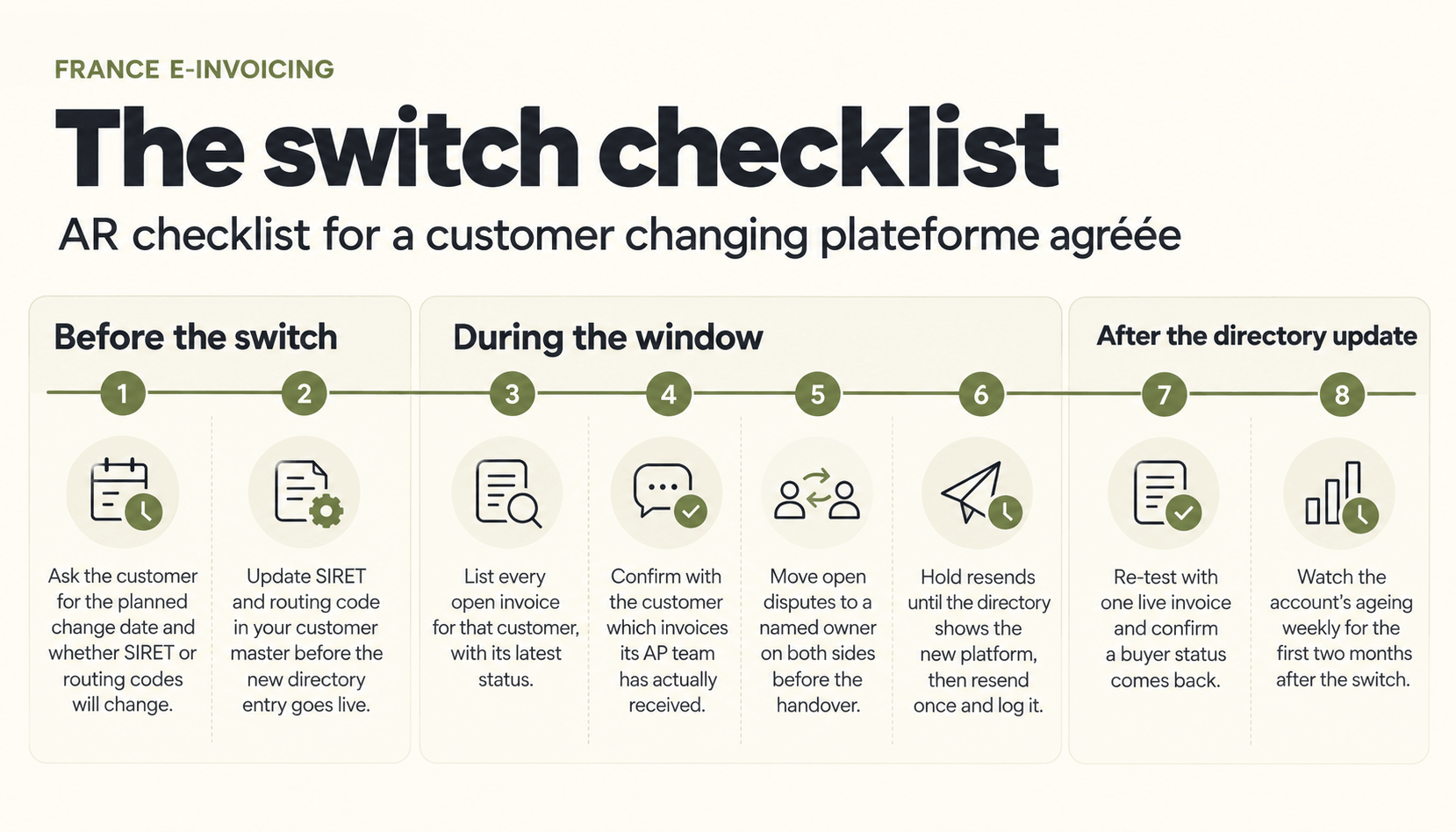
When you learn that a French customer is changing plateforme agréée, work through these steps:
Ask the customer for the planned change date and whether its addressing level or routing codes will change.
Update SIRET and routing code in your customer master before the new directory entry goes live.
List every open invoice for that customer, with its latest status.
Confirm with the customer which invoices its AP team has actually received.
Move open disputes to a named owner on both sides before the handover.
Hold resends until the directory shows the new platform, then resend once and log it.
Re-test with one live invoice and confirm a buyer status comes back.
Watch the account's ageing weekly for the first two months after the switch.
Where an integration layer helps
Most of what breaks during a switch shows up in your ERP, not in a platform portal. Routing failures surface as rejections. Missing buyer statuses surface as invoices that look fine but aren't. Disputes surface as overdue items in the ageing report.
An integration layer between your ERP and your PA keeps those signals in one place. HubBroker connects the ERP you already run to your chosen platform. It validates buyer identifiers before an invoice is sent, and writes delivery and lifecycle statuses back to the invoice record. AR sees a switch as an exception queue, not a mystery. See how our e-invoicing solution and ERP integration services fit around your current setup.
If a French customer has just changed plateforme agréée and your receivables are drifting, talk to our integration team. We'll help you work out where the flow is breaking.
FAQ
Can a French customer change plateforme agréée at any time? Yes. Article 242 nonies E ter of annexe II to the CGI lets a company request a change to its directory addressing at any time. The switch needs a formal agreement signed by the company.
How long does changing plateforme agréée take? Up to 22 working days in the standard case: 2 for notification, 5 for the old platform to object, and 15 for the directory update. An objection can extend that.
Who updates the annuaire: me, my customer, or the platform? The customer's new PA updates it, on the strength of the customer's signed agreement. As the supplier, you don't touch it. Your PA simply reads it when you send.
Are invoices sent during the switch lost? They go to whichever platform the directory names at the time of sending. They aren't deleted, but they can reach a platform your customer no longer works in. The old platform must provide information that ensures continuity on request, within five working days.
Does anything change if my own PA stays the same? Your sending setup stays the same. Delivery and buyer statuses still depend on your customer's side, so a switch there can affect you even when nothing changes on yours.
What happens to invoices already in dispute? The dispute doesn't disappear with the platform. Resolving it may need history held by the old PA, which must keep certain services running for one year after the switch.
Don't wait for the ageing report to tell you
A French customer changing plateforme agréée is a routine event now. What it costs your AR team depends on whether you see it coming. If your French invoices are bouncing, or buyer statuses have stopped arriving, we can map where your flow breaks and how to bring those signals back into your ERP. Book a demo or talk to our integration team.
