
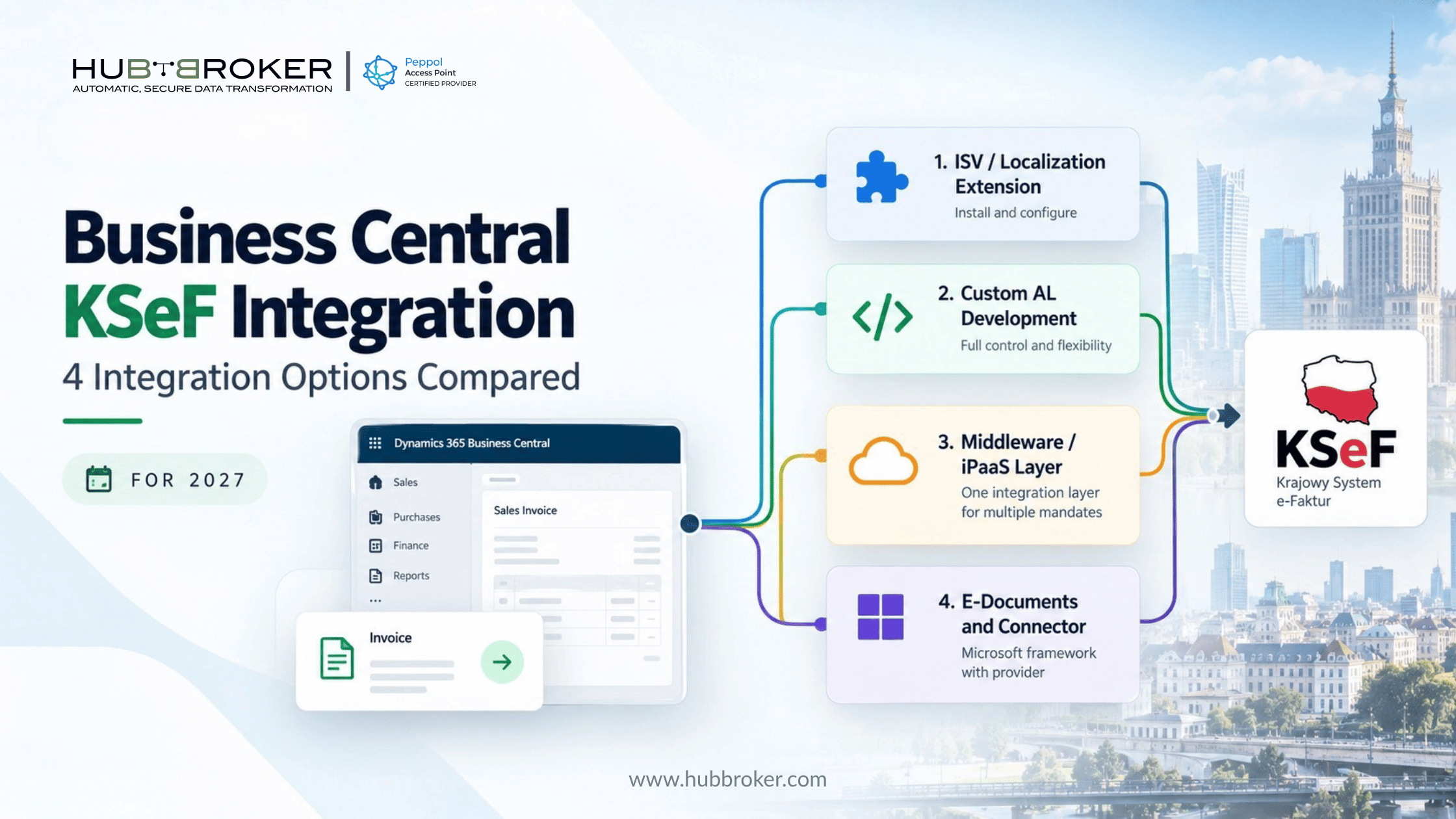
Business Central KSeF: 4 Integration Options Compared Before Penalties Start in 2027
Poland's KSeF obligation is live. It applied from 1 February 2026 to taxpayers with 2024 gross sales above PLN 200 million and from 1 April 2026 to other taxpayers, with monthly sales under PLN 10,000 following on 1 January 2027. Sources report that no KSeF penalties apply in 2026 and that sanctions begin on 1 January 2027. For ERP consultants, that leaves a short window to fix weak Business Central KSeF setups.
This post compares the four routes. Each one fits a different client profile.
What KSeF requires from a Business Central environment
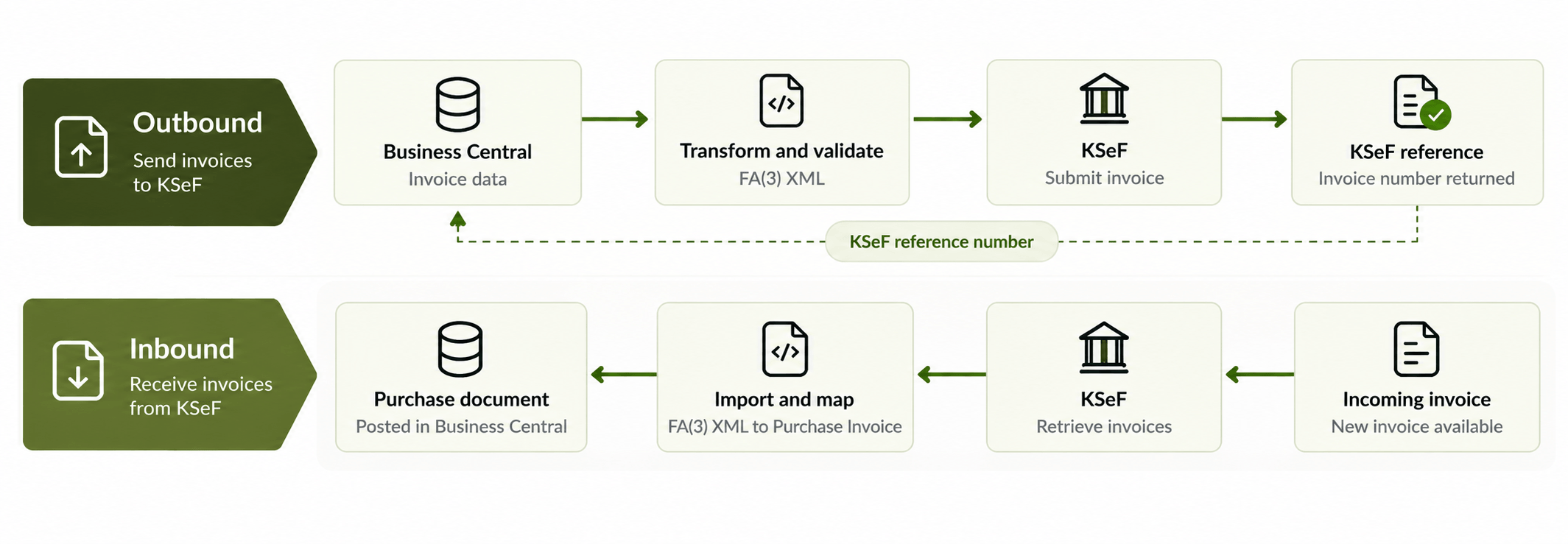
Outbound: structured XML, submission and the KSeF number
Business Central must produce the invoice in the schema KSeF expects, submit it, and store the KSeF reference against the posted document. A PDF is only a copy.
Inbound: receiving purchase invoices from KSeF
Inbound invoices come from KSeF. Your setup must import them, match vendors and create purchase documents without manual keying.
Offline modes, corrections and credentials
An invoice issued offline must be added to KSeF no later than the next business day. Your design needs queueing, retries, correction handling and secure credential storage.
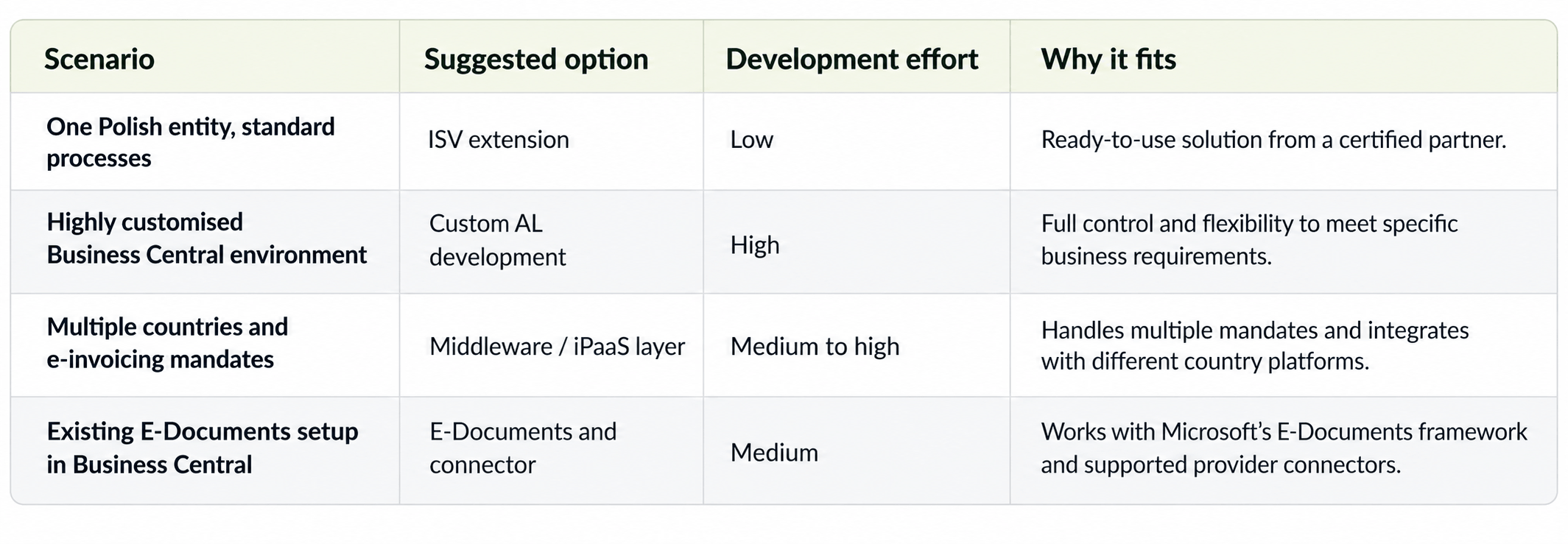
Business Central KSeF integration options at a glance
Option 1: Localization or ISV extension
Where it fits
Install, configure, test. For one Polish entity on standard sales and purchase flows, this is the shortest path.
Where it breaks
Heavy customisation, many legal entities and other countries' mandates all strain a single-country extension. Check the upgrade path for each Business Central release.
Option 2: Custom AL development against the KSeF API
What you own
Schema changes, session and token handling, retries, monitoring and every Ministry of Finance update. You gain control. You also carry the maintenance for the life of the client.
Option 3: Middleware or iPaaS layer
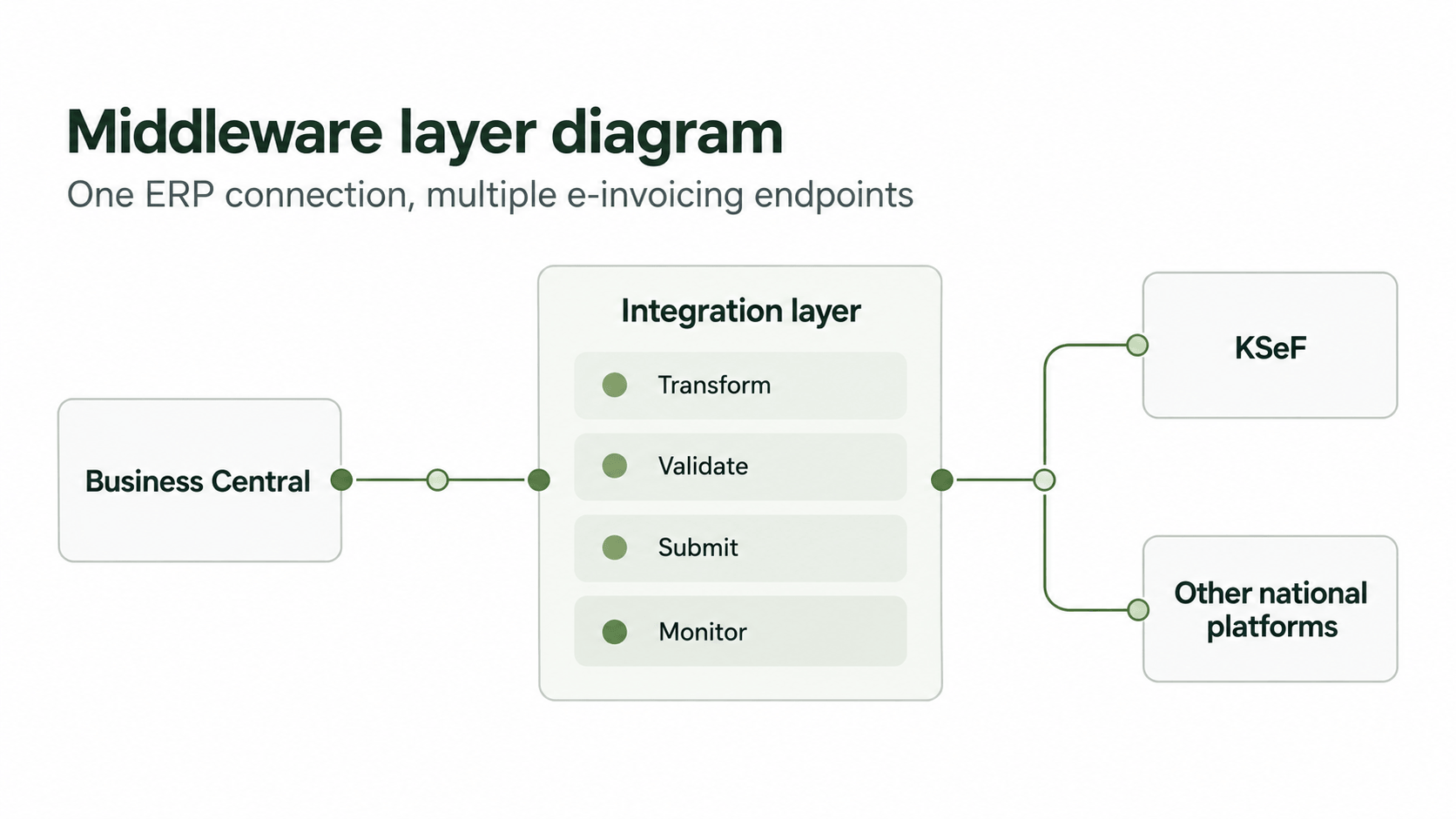
One connection for KSeF and other mandates
An integration layer sits between the ERP and national platforms. Business Central posts the document, and the layer transforms it, submits it and returns the status. HubBroker, for example, connects Business Central through a connector or API, and its ERP API integration layer adds central logging of calls, errors and exceptions.
The ERP stays untouched
Fewer AL changes mean fewer problems at the next Business Central upgrade. A format change in one country is handled in the layer, not in the ERP.
Option 4: Microsoft-native e-invoicing service
Microsoft's release plan describes an Electronic Invoicing service for Poland that generates KSeF XML, submits it automatically and imports incoming vendor invoices. It carries a notice that some described functionality had not yet been released. That plan sits under Dynamics 365 Finance, so confirm what applies to Business Central before recommending it. HubBroker's guide to Dynamics 365 e-invoicing compliance gaps covers where standard configurations stop short.
How to choose: five questions for your next scoping call
How many legal entities issue or receive invoices in Poland?
Does the client trade in other mandate countries? Compare them on the e-invoicing by country overview.
How customised is the sales and purchase posting?
What invoice volume will the setup carry?
Who owns support after go-live?
Common pitfalls in Business Central KSeF projects
Testing outbound only and discovering inbound gaps after go-live.
Treating the PDF as the legal invoice.
Leaving credential and token handling undocumented.
Planning for Poland only when the client has other mandates coming.
FAQ
Does Business Central support KSeF out of the box? Not as a complete solution. You need an extension, a custom build, a middleware layer or a Microsoft service whose scope is confirmed for Business Central.
Which Business Central KSeF option suits a multi-country group? Usually a middleware layer, because one connection can handle several national formats.
What happens if KSeF is unavailable? Offline invoicing is allowed. The invoice must be added to KSeF by the next business day.
Do inbound purchase invoices have to come from KSeF? Receiving runs through KSeF, so the ERP needs an inbound import flow, not only outbound issuing.
When do KSeF penalties start? Sources report sanctions from 1 January 2027. Confirm against the Ministry of Finance before quoting a client.
Planning a Business Central KSeF rollout?
If you are comparing these options for a client, we can talk through the scenario. Contact the HubBroker team.
