
How do we send DESADV with GS1-compliant SSCC labels to German retailers' distribution centres?
A delivery may arrive on time, yet still face receiving delays. Often, the information sent electronically does not match the labels on the pallets or cartons. Suppliers asking how to send DESADV with GS1-compliant SSCC labels German retailers can process need both sides to agree. That requires accurate records, unique identifiers, readable labels and timely messages.
Why German retailers need DESADV and SSCC together
Retail warehouses receive goods from many suppliers each day. Staff need to know which shipment has arrived, what is packed inside and where each unit belongs. DESADV stands for Despatch Advice. It is an EDI message that tells the retailer what the supplier has shipped, including the products and how they are packed.
An SSCC, called NVE in Germany, identifies a single logistics unit, such as a pallet. It contains 18 digits and is usually printed in a GS1-128 barcode. It identifies the specific delivered unit. When staff scan that barcode, the warehouse system can find the matching unit in the DESADV. Without it, staff may need manual checks. Accurate information can make receiving more straightforward.
Need to Automate DESADV and SSCC Label Compliance?Simplify deliveries to German retailers with automated DESADV messages and GS1-compliant SSCC data. HubBroker helps you connect your ERP, map shipment details, validate EDI messages, and meet retailer-specific requirements. |
What information must match between DESADV and GS1 labels?
The key is matching each physical unit to its electronic record. If a pallet carries one SSCC but the DESADV lists another, the receiving system may not recognise it. The message normally includes order references, dispatch details, supplier and buyer identifiers, product numbers, quantities and packaging relationships. A GS1 logistics label identifies the unit, with other details added when required by the retailer.
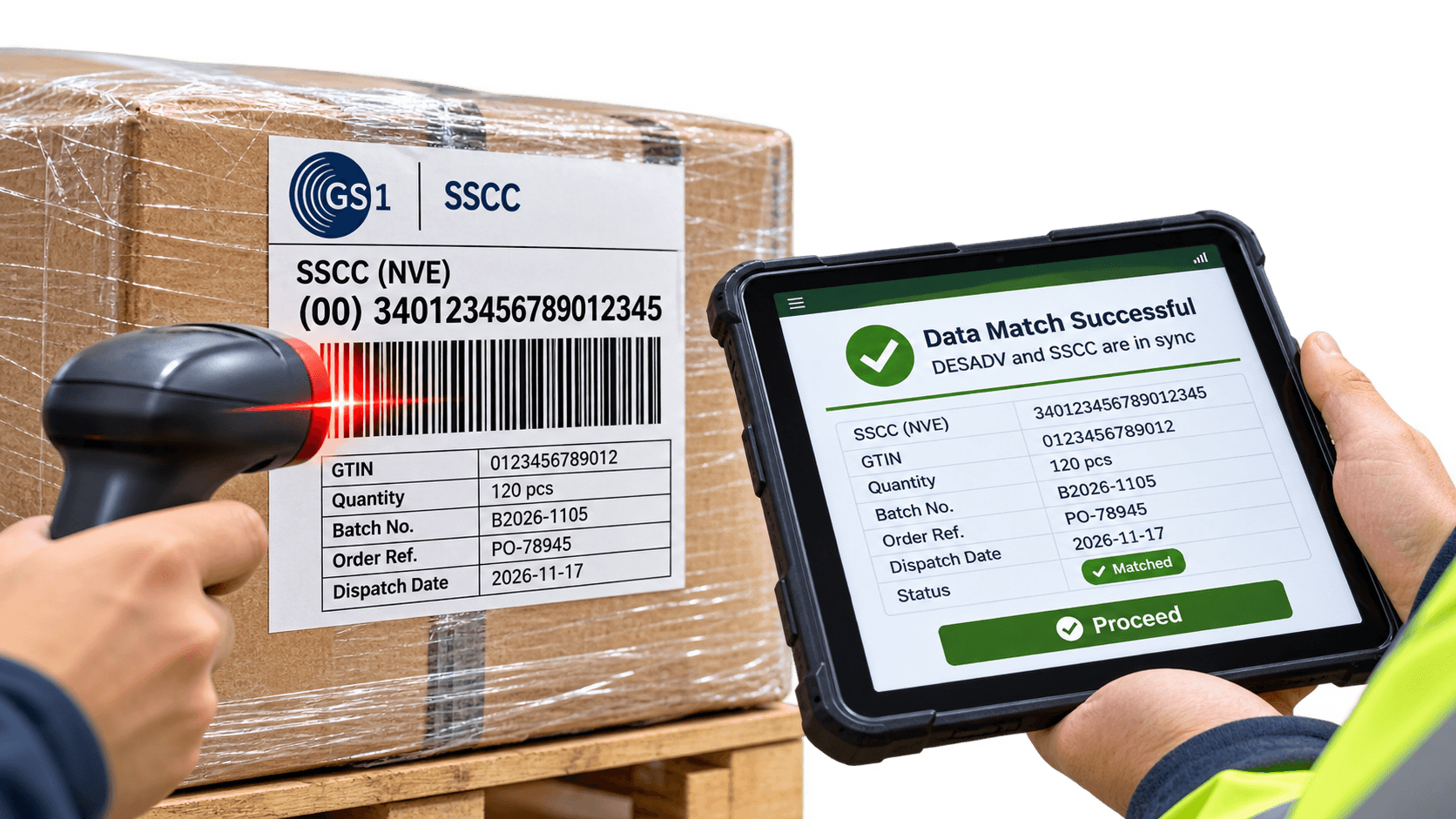
A mixed pallet may contain several products, each with different quantities. The DESADV should describe those contents under the right SSCC. The barcode does not need to carry the full packing list. Always check the retailer's implementation guide for mandatory fields and label content.
Which DESADV formats and GS1 rules matter in Germany?
Many German retailers use EDIFACT DESADV based on GS1 EANCOM. But two retailers may accept different message versions or require different details, even when both use the same standard. In EDIFACT, CPS describes the packaging hierarchy and PAC provides packaging information. PCI and GIN are used for markings and identification.
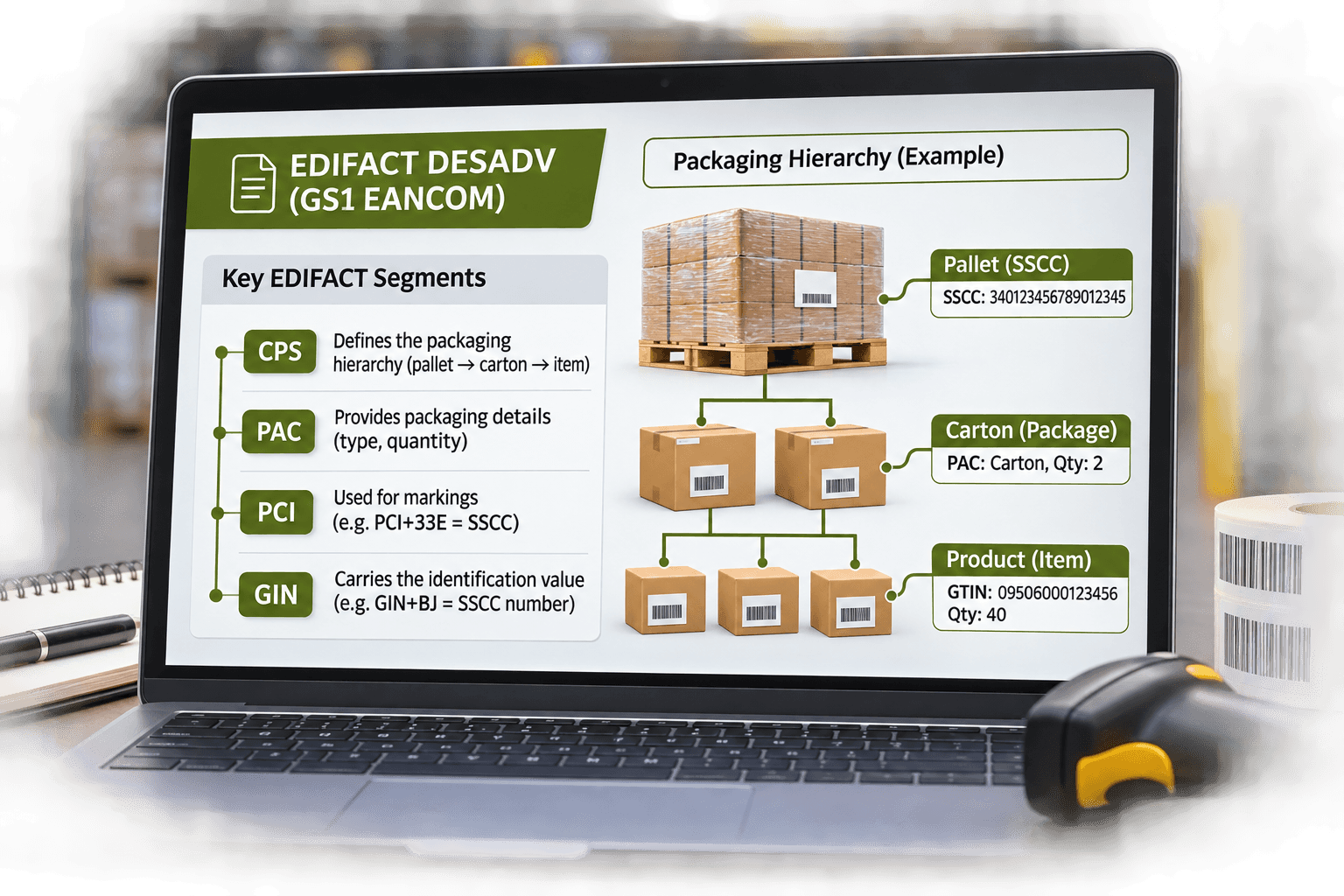
For example, PCI+33E indicates SSCC marking, while GIN+BJ can hold the SSCC value. These codes matter during testing. A message can follow EDIFACT syntax and still fail a retailer's checks because a required segment is missing, an identifier is in the wrong place or the packaging structure differs from its specification. Follow the recipient's own EDI guide rather than assuming one template works everywhere.
How to prepare and send DESADV with SSCC-labelled shipments
The process starts when goods are packed. Packing records, ERP data, labels and messages must describe the same delivery.
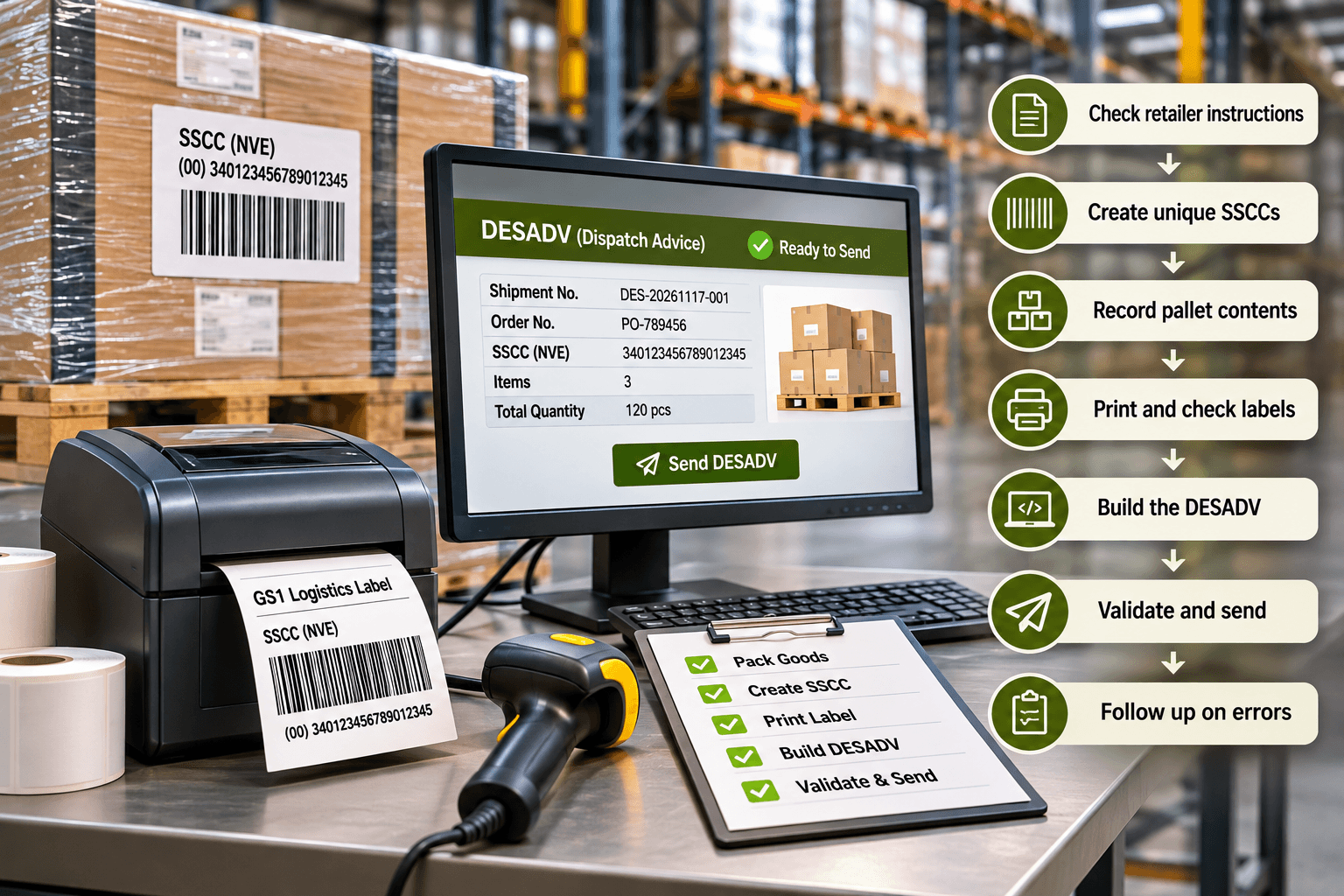
Check retailer instructions. Collect its DESADV guide, label specifications and communication requirements before setting up the connection.
Create unique SSCCs. Use an authorised GS1 Company Prefix, assign one SSCC to each identified logistics unit and verify its check digit.
Record pallet contents. Link each SSCC to the correct GTINs, cartons and quantities, especially for mixed pallets.
Print and check labels. Encode the SSCC with Application Identifier (00) in GS1-128. Check barcode readability, position and retailer requirements.
Build the DESADV. Take shipment records from the ERP or warehouse management system and map them to the required EDI format.
Validate and send. Check identifiers, quantities, packaging levels and mandatory fields. Transmit within the agreed timeframe, before delivery.
Follow up on errors. Monitor acknowledgements and rejected messages. Correct problems before the shipment reaches the receiving dock.
Test full pallets, mixed pallets, split deliveries and corrections when relevant. These situations often reveal mismatches that a simple test shipment would miss.
How HubBroker Connects DESADV Messages with SSCC-Based Retail Deliveries
HubBroker helps suppliers connect their ERP and warehouse information with the EDI requirements of German retail partners. Its integration services cover document mapping, format conversion and EDI communication, so shipment records can be prepared as retailer-specific DESADV messages. The setup can carry packaging levels, product quantities and SSCC references created by the supplier's warehouse or labelling system.
Message validation and transmission monitoring can also help teams identify errors before delivery. Suppliers working with several retail chains may need different mappings for each partner, but they should not need to prepare each message manually. HubBroker can help review the existing data flow, configure DESADV exchange and discuss testing requirements with trading partners. The goal is simple: the electronic shipment record should match the labelled goods arriving at the warehouse.
