
What 1,000 Manually Keyed Invoices Really Cost Your Factory
It's the last week of the month. Your AP team has a folder of supplier PDFs, a stack of scanned delivery notes and an inbox full of "where's our payment?" emails. Each invoice gets opened, read, typed into the ERP, matched to a purchase order and a goods receipt, and then sent off for approval.
Nobody has ever added up what that costs. It's worth doing, because the cost of manual invoice processing grows with every new supplier you take on.
Why manufacturers feel invoice costs more than most
Three-way match turns every invoice into a puzzle
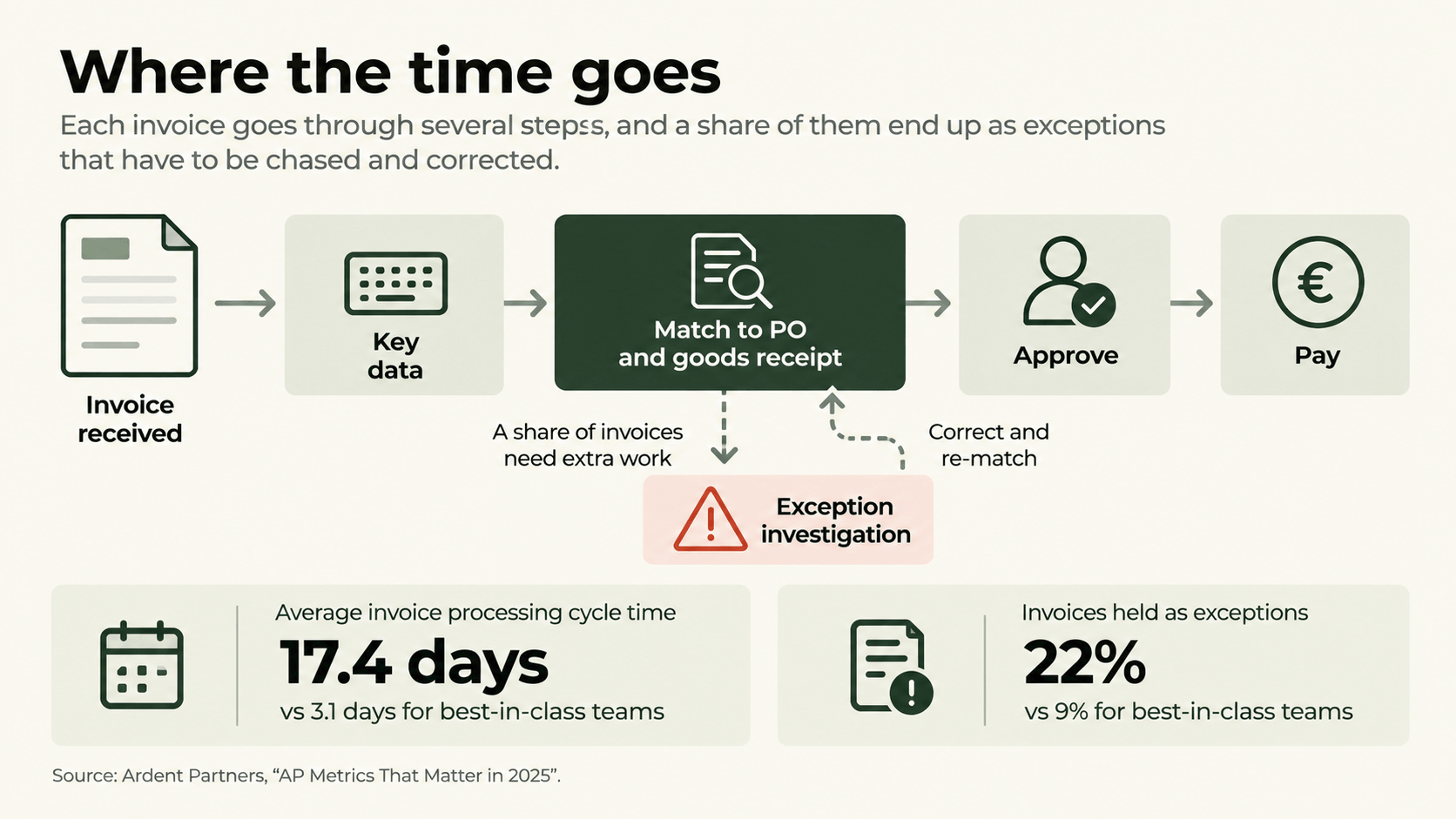
Manufacturers rarely pay an invoice on its own merits. It has to agree with the purchase order and with what the warehouse actually received. One wrong quantity, unit price or missing PO number stops the whole line, and someone has to chase it.
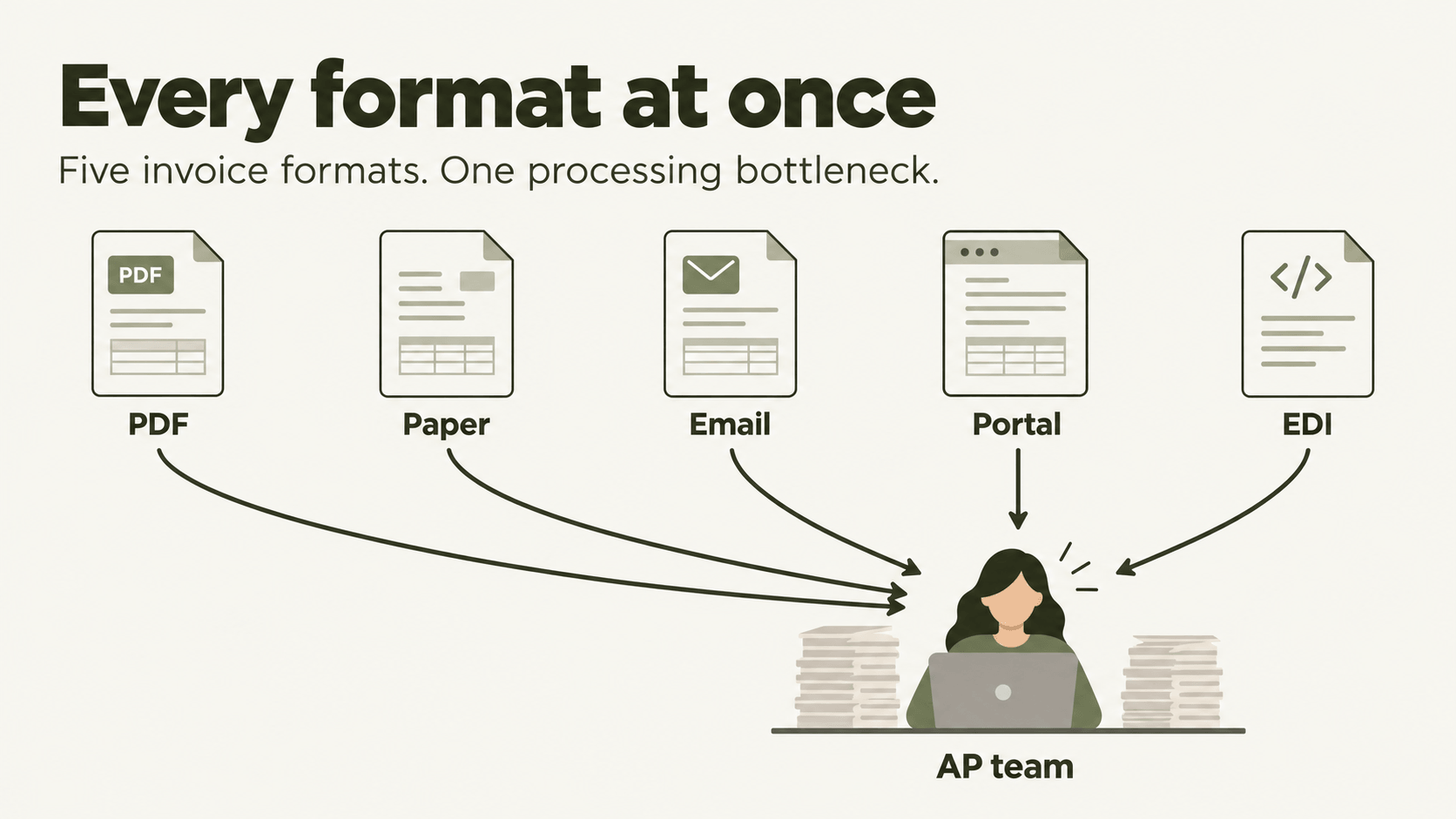
Invoices arrive in every format at once
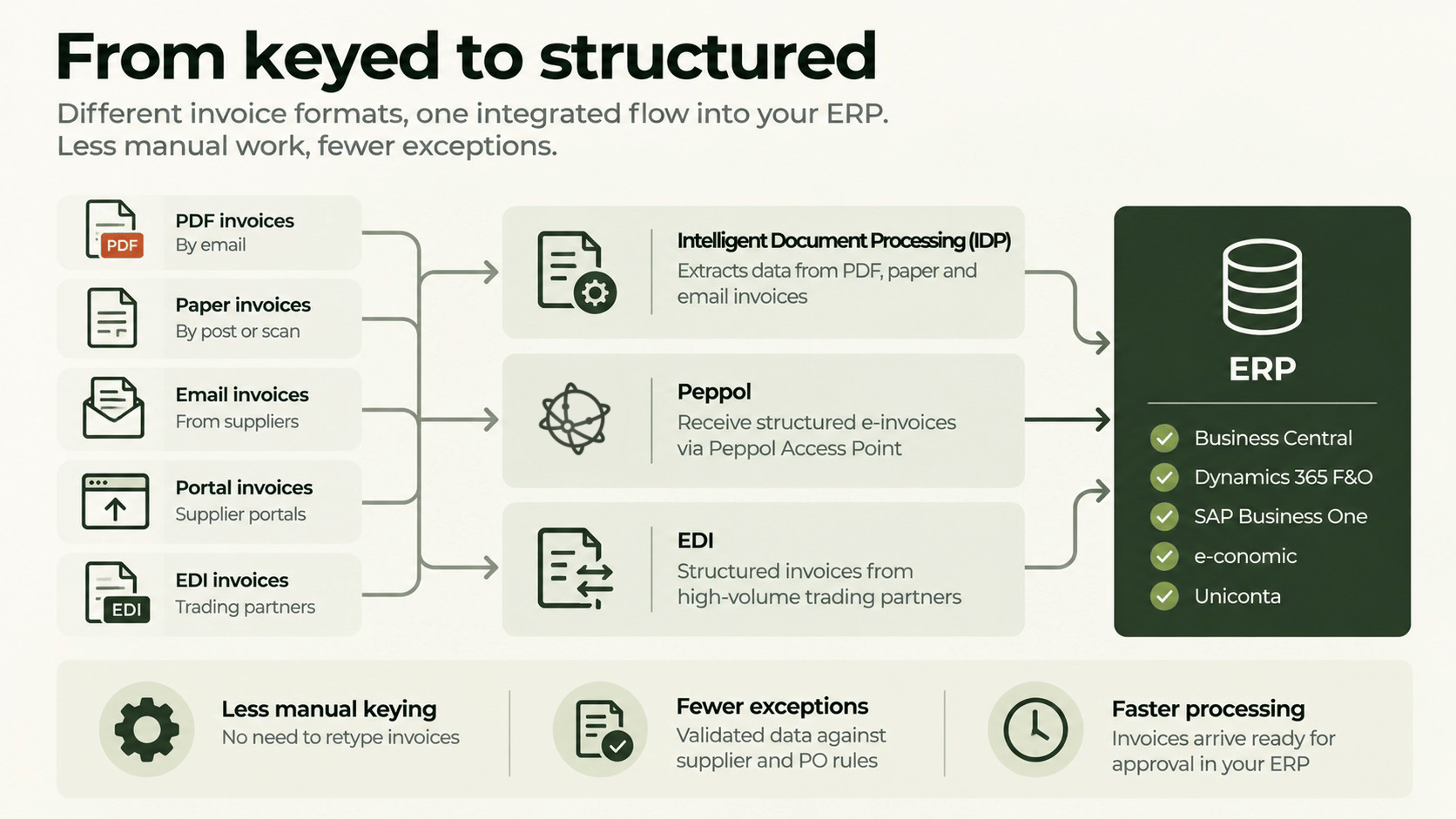
Raw-material suppliers, subcontractors, freight forwarders and utilities all send invoices differently: PDF by email, paper by post, portal downloads, and the occasional EDI file. Each format has its own handling routine. Turning those PDFs into structured invoice data is where most of the manual hours go.
Breaking down the cost of manual invoice processing per 1,000 invoices
Start with the benchmarks, then look at what drives them.
APQC measures the full cost of AP, covering labour, systems, outsourcing and overhead, per invoice processed. Across the 1,485 organisations in its database, the least efficient quarter spend almost five times more per invoice than the most efficient quarter. APQC also links manual keying of invoices into the general ledger to a higher cost per invoice.
Ardent Partners' 2025 research shows the same pattern in time: an average cycle of 17.4 days from receipt, against 3.1 days for best-in-class teams.
The lesson is that two companies processing the same 1,000 invoices can spend very different amounts on them. Where you land depends far more on how much of the work is done by hand than on the invoices themselves.
Labour: keying, coding and matching
This is the cost you can see: minutes per invoice multiplied by the loaded hourly cost of the people doing the work.
Exceptions and error correction
Exceptions are where the cost multiplies. Ardent found best-in-class teams hold exceptions to 9% of invoices, compared with 22% for everyone else. At 1,000 invoices, that's roughly 90 invoices needing a human versus 220.
Approval delays and missed discounts
A 17-day cycle means invoices can sit past early-payment discount windows. Even where suppliers offer discounts, slow processing means the business doesn't capture them.
Late fees, duplicates and supplier friction
Late fees, duplicate payments that slip through, and the time spent answering supplier status queries all count. None of them appear on the AP team's timesheet.
A simple model you can run on your own numbers
Benchmarks only tell you where you might sit. Your own figures tell you where you actually are. You need five inputs:
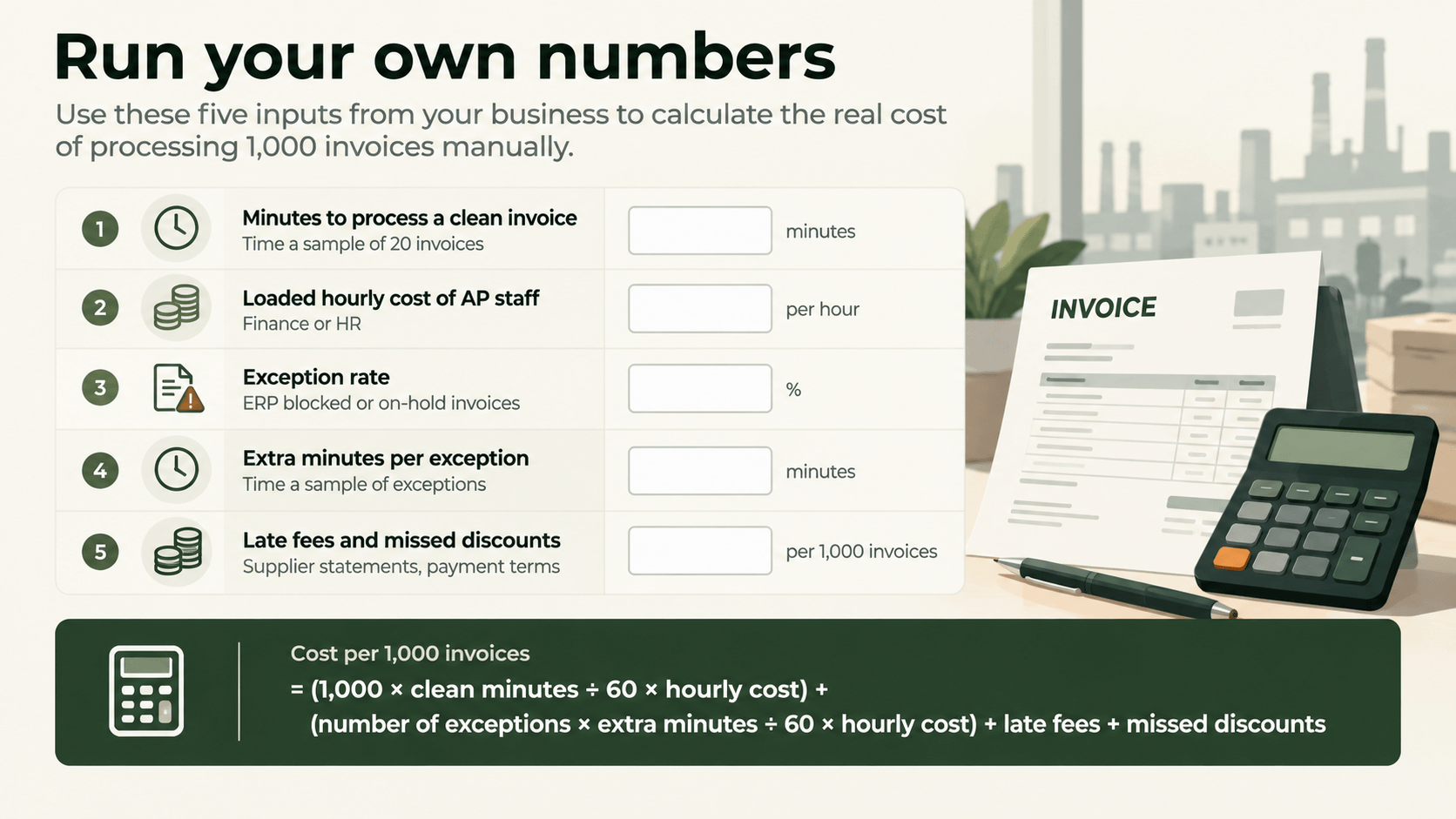
Cost per 1,000 invoices = (1,000 × clean minutes ÷ 60 × hourly cost) + (number of exceptions × extra minutes ÷ 60 × hourly cost) + late fees + missed discounts
Run it once and you have a baseline for the business case.
The costs that don't show up on a spreadsheet
Month-end close slows down
Unposted invoices mean accruals, estimates and a later close. Controllers end up waiting for AP.
Key-person risk
When one or two people know which supplier sends what and how to code it, holidays and resignations become operational risk.
A weaker audit trail as mandates arrive
More European countries are moving B2B invoices onto structured e-invoicing formats. A process built on rekeying PDFs gives auditors a thin trail and leaves you with a bigger change project later. Check where your trading countries stand on our e-invoicing by country pages.
What changes when invoices arrive as structured data
PDF and paper: capture instead of rekeying
Intelligent Document Processing extracts header, VAT and line-item data from PDFs and scans. It validates the data against supplier and PO rules and sends only genuine exceptions to a person.
Suppliers who can send structured invoices
Where suppliers are on the Peppol network, invoices arrive as structured data through a Peppol Access Point, with nothing to scan or type. EDI does the same for high-volume trading partners.
Your ERP stays where it is
HubBroker works as an integration layer on top of Business Central, F&O, SAP Business One, e-conomic or Uniconta. AP keeps its familiar screens and approval flows, and the data simply arrives already filled in.
FAQ
What is the average cost of manual invoice processing?
It varies widely. In APQC's data, the least efficient organisations spend almost five times more per invoice than the most efficient, and manual keying is one of the drivers. The reliable way to know your own cost is to run the model above on a month of invoices.
How long does it take to process an invoice manually?
Ardent puts the average cycle at 17.4 days from receipt, compared with 3.1 days for best-in-class teams. Hands-on time per invoice depends on your matching rules, so time a sample yourself.
Which costs are most often overlooked?
Exception handling, missed early-payment discounts, supplier status queries and slower month-end close.
Do I need to replace my ERP to automate AP?
No. An integration platform can feed structured invoice data into the ERP you already run.
How does e-invoicing affect AP costs?
Structured e-invoices remove keying and reduce format-related exceptions. They don't remove PO or price mismatches, so matching rules still matter.
Ready to put a number on it?
Run the model above on one month of invoices. If you'd like to see how the same volume would look with IDP, Peppol and EDI feeding your ERP, book a short demo and bring your numbers.
