
Chile E-Invoicing System Explained SII Rules for Business and Government Invoices
Chile is one of the pioneers of electronic invoicing in Latin America, with a mature and strictly regulated system governed by the Servicio de Impuestos Internos (SII). The country mandates electronic tax documents for most business transactions, ensuring transparency, tax compliance, and real-time reporting.
For businesses operating in or trading with Chile, understanding the framework of Documentos Tributarios Electrónicos (DTEs) is essential. This guide explains how the system works, key document types, and compliance requirements.
How the Electronic Invoicing System Works in Chile
Chile’s e-invoicing system is a clearance model, meaning invoices must be validated by the SII before they are legally valid.
Key Steps:
Invoice Creation
The supplier generates an electronic invoice in XML format following SII specifications.
Digital Signature
The document is digitally signed using an authorized certificate to ensure authenticity and integrity.
Submission to SII
The invoice is sent to the SII for validation.
SII Authorization (Folio Assignment)
Once validated, the SII authorizes the invoice and assigns a unique folio number.
Delivery to Buyer
The approved invoice is sent to the customer.
Customer Acknowledgment
The buyer must accept or reject the invoice within a defined timeframe.
This real-time validation ensures tax compliance and reduces fraud.
Types of Electronic Tax Documents (DTE)
Chile’s system includes several types of DTEs, each serving a specific business purpose:
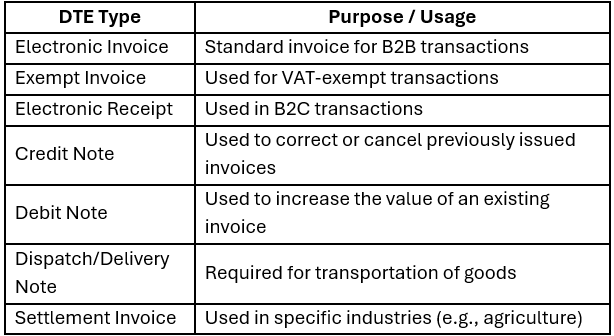
Each document must comply with SII’s XML schema and validation rules.
How to Accept or Dispute an Electronic Invoice with the SII
Buyers in Chile are required to actively manage incoming invoices.
Acceptance Process:
Review the invoice received
Confirm goods/services were delivered correctly
Submit acceptance electronically via SII systems
Dispute/Rejection:
If discrepancies exist (price, quantity, or service issues), the buyer can reject the invoice
Rejection must be done within the legally defined period (typically 8 days)
Failure to respond may result in automatic acceptance, which has legal and tax implications.
Invoices Not Received but Reported to the SII: How to Manage Them
A common issue arises when invoices are registered with the SII but not received by the buyer.
Recommended Actions:
Regularly check the SII portal for incoming DTEs
Compare supplier records with SII-reported invoices
If an invoice is unknown:
Mark it as “not received” or dispute it within the allowed timeframe
Maintain internal controls to reconcile all invoices
This process helps prevent fraudulent claims and incorrect tax credits.
Electronic Delivery Note: When and How It Must Be Issued
The Guía de Despacho Electrónica is mandatory when goods are physically transported.
When It Is Required:
Movement of goods between locations
Delivery to customers
Transfers between warehouses
Key Requirements:
Must be issued before goods are transported
Must include:
-> Sender and receiver details
-> Description of goods
-> Transport information
-> Must be validated by the SII
It ensures traceability and compliance during logistics operations.
DTE Archiving: Deadlines and Formats
Chile enforces strict archiving rules for electronic tax documents.
Requirements:
Retention Period: Minimum of 6 years
Format: XML (original format submitted to SII)
Must ensure:
-> Integrity
-> Accessibility
-> Security
Businesses must be able to present documents to the SII upon request, making proper digital storage essential.
Electronic Receipt: Technical Requirements and Current Regulations
Electronic receipts (Boletas Electrónicas) are mandatory for most retail transactions.
Key Features:
Issued in real-time
Reported to the SII daily or immediately
Must include:
-> Unique folio number
-> Seller identification
-> Transaction details
Technical Requirements:
XML format compliance
Digital signature
Integration with POS or ERP systems
This requirement ensures visibility into B2C transactions and improves tax collection efficiency.
HubBroker: Global Provider of Electronic Invoicing and Tax Compliance
Navigating Chile’s e-invoicing regulations can be complex, especially for businesses operating across multiple jurisdictions.
HubBroker simplifies this process by offering:
Seamless EDI and e-invoicing integration
Full compliance with SII requirements
Support for DTE generation, validation, and reporting
Integration with ERP systems like Microsoft Dynamics 365 Business Central
Scalable solutions for global tax compliance
As a certified PEPPOL Access Point provider, HubBroker enables businesses to manage both local and international e-invoicing requirements through a unified platform.
