
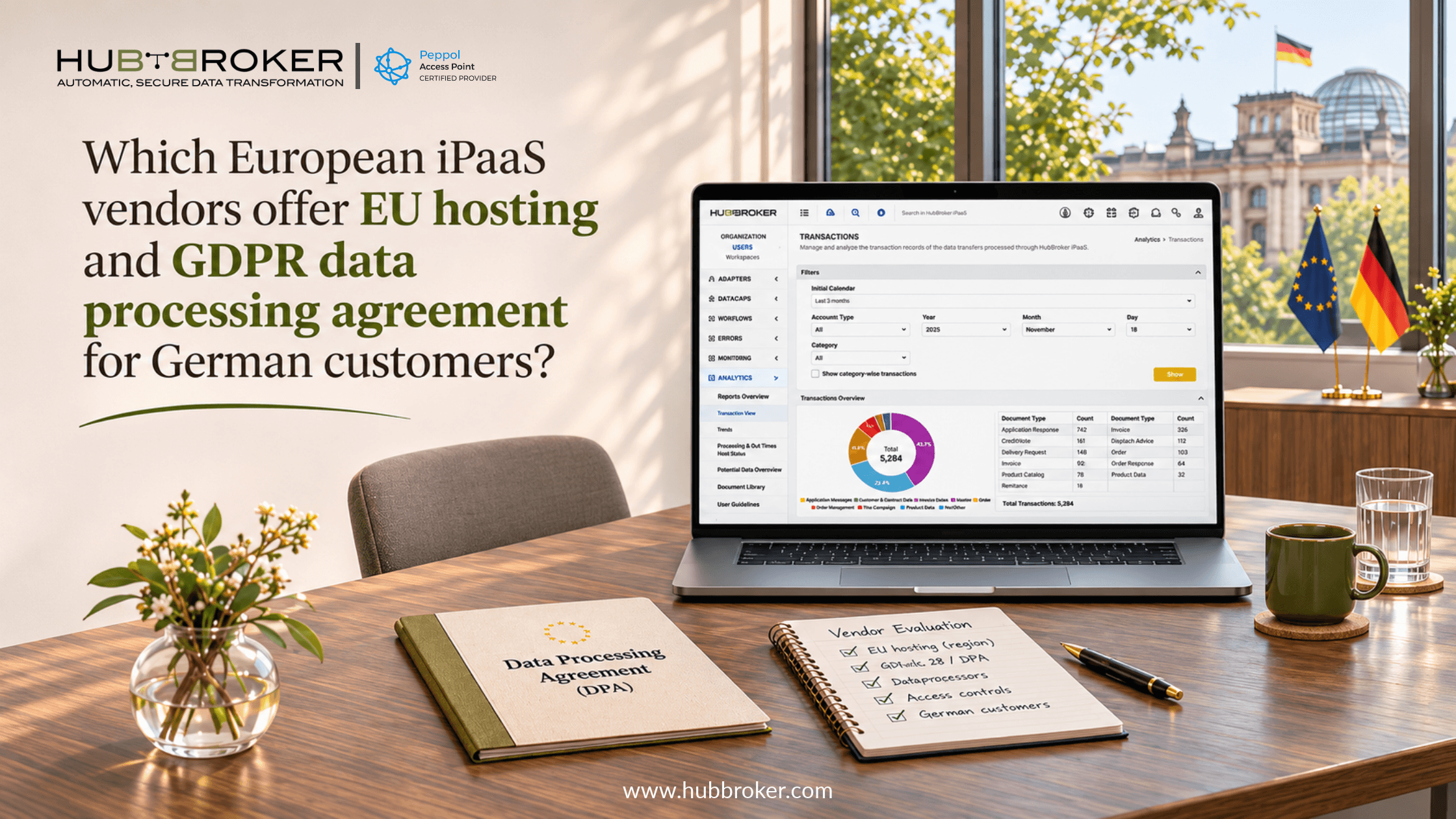
Which European iPaaS vendors offer EU hosting and a GDPR data processing agreement for German customers?
A German company connecting ERP, suppliers, and cloud applications may move personal data through several systems. Invoices can contain names, addresses, and payment references. So,
Which European iPaaS vendors offer EU hosting and a GDPR data processing agreement that German customers can examine?
HubBroker provides the actual hosting setup, contract, subprocessors, and support access. A European address alone doesn't answer them.
Why EU hosting and a GDPR agreement matter in Germany
Integration platforms often process personal information on behalf of their customers. Under the General Data Protection Regulation (GDPR), businesses need to assess whether the provider offers suitable safeguards for that processing. Article 28 requires a binding arrangement between the controller and processor where those roles apply. German companies commonly call this an Auftragsverarbeitungsvertrag (AVV), or data processing agreement (DPA).
It should explain why data is processed, whose instructions apply, confidentiality requirements, security measures, subprocessor arrangements, and what happens to information when the service ends. EU hosting can help with data residency requirements, but it doesn't automatically mean GDPR compliance. Backups, remote support, connected services, and access from outside the European Economic Area (EEA) also deserve attention.
Looking for a GDPR-Conscious iPaaS Solution for Germany?Connect your ERP, EDI, and e-invoicing workflows with data protection in mind. HubBroker helps German businesses evaluate integration requirements, hosting arrangements, data processing agreements, and secure document exchange. |
What should German businesses expect from an EU-hosted iPaaS?
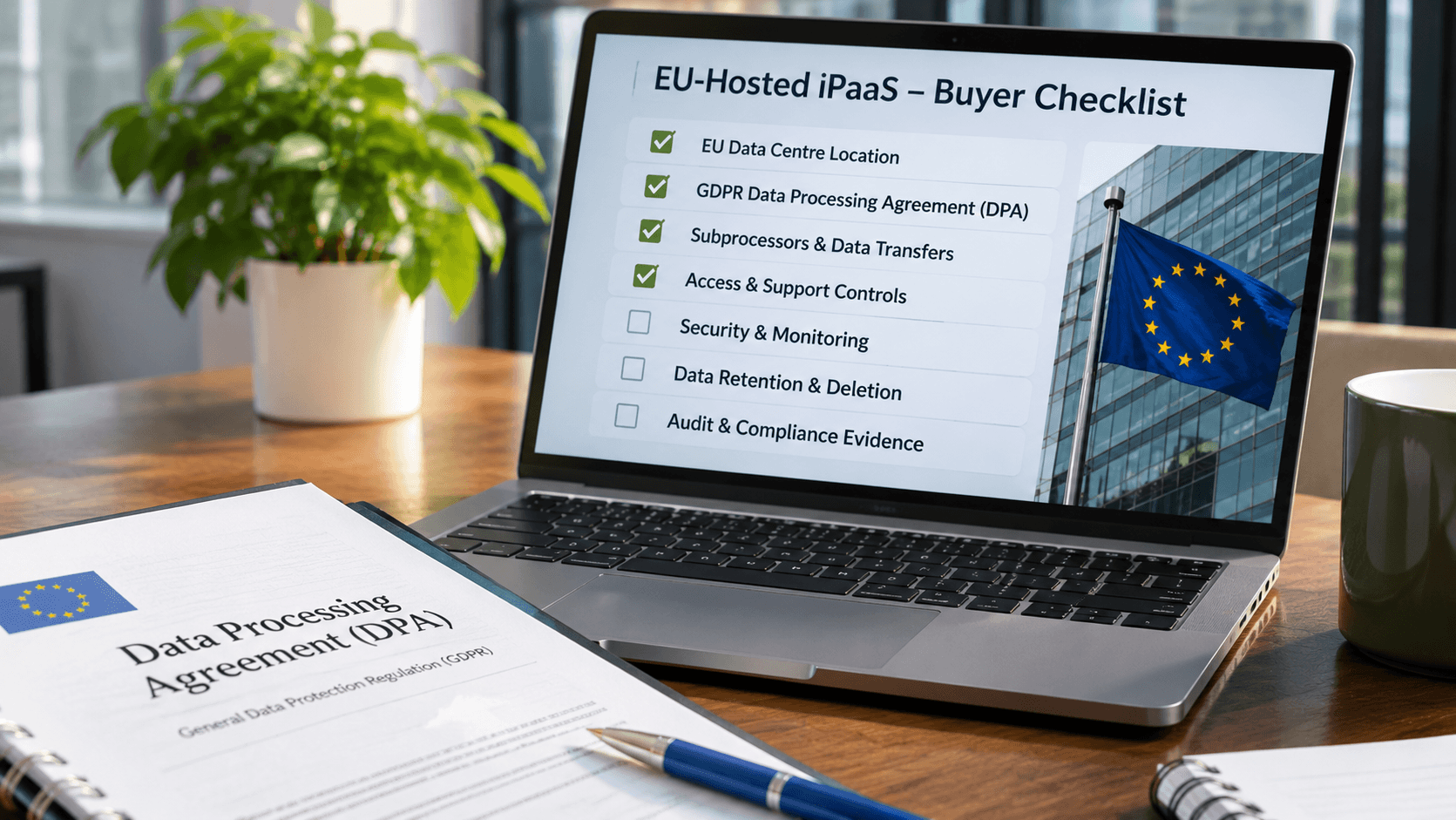
Ask for details about the service you're actually buying. A claim such as "European cloud" tells you little unless the provider can show where the relevant information goes.
Production systems, stored files, activity logs, and backups may run in different locations. Check whether an EU region is available and whether that choice applies across the proposed deployment. The DPA should be available for review before signing, together with relevant technical and organisational security measures.
The following questions help keep the discussion practical:
Area to review | What to ask | Why it matters |
|---|---|---|
Production hosting | Which EU region is used? | Locates active processing |
File storage | Where are documents kept? | Clarifies stored data |
Backups | Where are copies stored? | Checks residency scope |
Activity logs | Where do logs go? | Covers operational records |
DPA | Can we review Article 28 terms? | Defines processor duties |
Subprocessors | Who else handles data? | Shows other parties involved |
Support access | Who can view our files? | Reveals access arrangements |
Security also matters in daily use. Ask about permissions, encryption, monitoring, and audit records. If support staff can open documents, find out when that's allowed and whether their actions are logged. A compliance page cannot replace specific answers.
Does EU data residency cover every integration activity?
No. Documents might stay on an EU server while selected details travel to a connected API, monitoring service, or support tool. Someone outside the EEA might also access information stored inside it. Whether this creates an international transfer issue depends on the circumstances, including who receives the data and the legal relationship involved.

Separate storage location from processing location, access permissions, and the destinations of connected systems. For example, an ERP workflow sending customer details to an overseas application needs its own review, even if the integration platform itself uses EU hosting. That makes EU-only hosting more than a pricing option. Technical design and contract wording should describe the same arrangement. Otherwise, a reassuring location statement could leave important parts of the workflow unexplained.
How to assess EU hosting and GDPR documentation before selecting an iPaaS
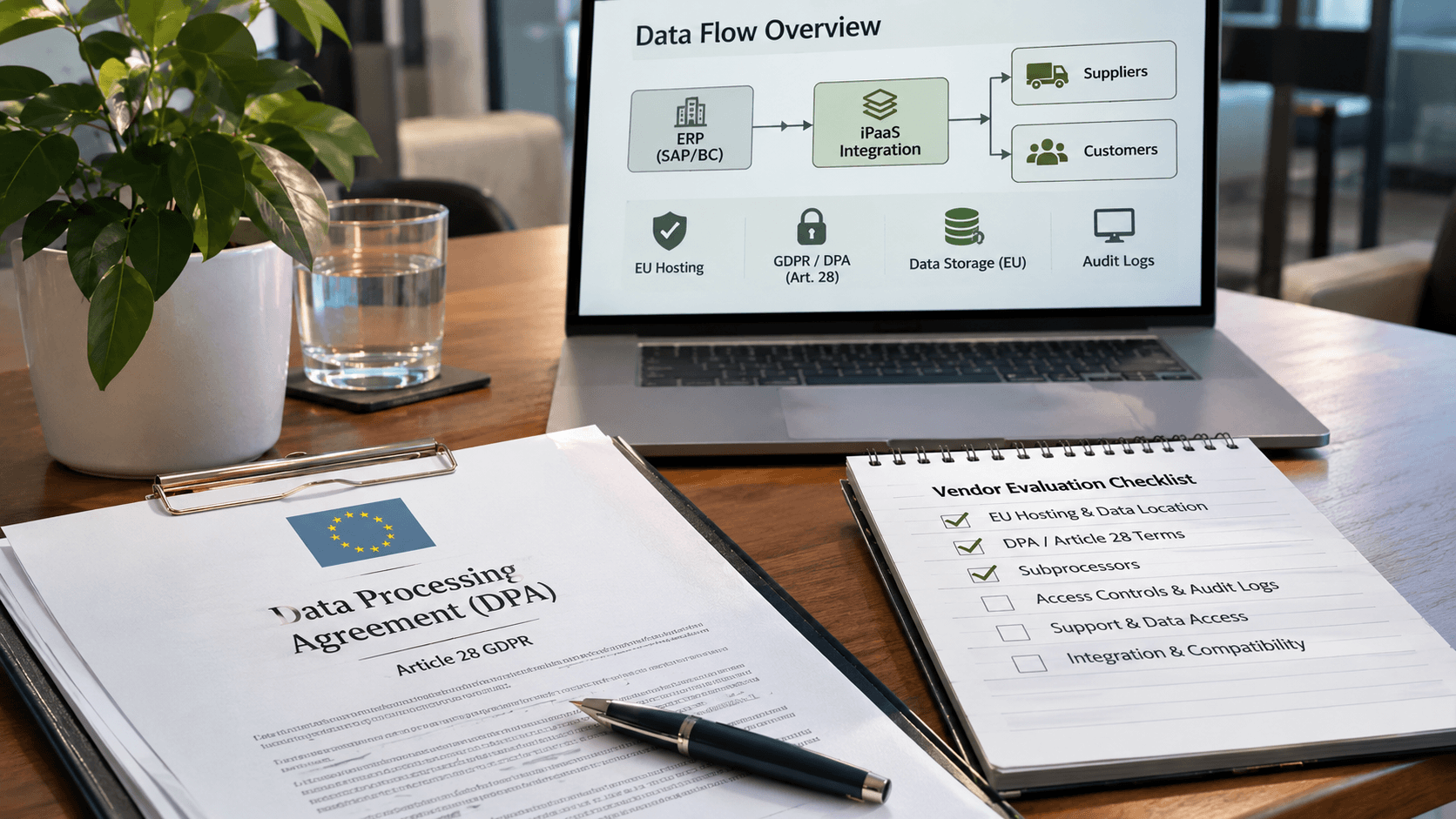
Involve procurement, IT, and privacy colleagues early. Use written evidence rather than relying on a sales presentation.
Map data flows. Identify personal information, connected applications, destinations, and which parties handle each activity.
Confirm locations. Ask where production services, backups, disaster recovery, logs, and optional tools operate.
Read the DPA. Check Article 28 provisions, retention, deletion, security, audits, and subprocessor authorisation.
Review access. Find out where support teams work, what they can see, and which transfer safeguards apply when needed.
Test integrations. Try representative business data and examine ERP connections, document mapping, errors, permissions, and processing history.
Document unanswered questions before approving a provider. Where personal data is transferred outside the EEA, assess any relevant adequacy decision or other appropriate safeguards. EU hosting doesn't remove that obligation.
How HubBroker Supports GDPR-Conscious Integration for German Businesses
HubBroker helps organisations connect ERP applications, exchange electronic business documents, and automate processes through iPaaS, EDI, and API integrations. For German companies, these services can support structured exchanges and reduce the need to move information manually between systems. HubBroker can discuss document processing, integration architecture, and access requirements as part of deployment planning.
Customers should still request confirmation of the applicable hosting locations, DPA, subprocessors, and support-access arrangements. Those details must match the proposed service rather than being assumed from general product information.
Choosing an iPaaS means checking both integration functions and data protection responsibilities.
Ask HubBroker to review your workflows and supply the relevant hosting and contractual details before you make a purchasing decision.
