
German E-Invoicing Checklist 2027: 60 Days to Get Receiving and Sending Ready
On 1 January 2027, a PDF invoice from a larger German business stops counting as a compliant invoice. If your company crossed €800,000 in turnover this year, you have about 60 days to change how invoices leave your ERP.
Your 2026 accounts won't close until after the deadline. So waiting for final figures to confirm you're in scope is not a plan. If you're close to the threshold, prepare as if you're in.
This German e-invoicing checklist 2027 covers both sides of the mandate: receiving, which already applies, and sending, which starts in January.
What changes on 1 January 2027, and who it hits
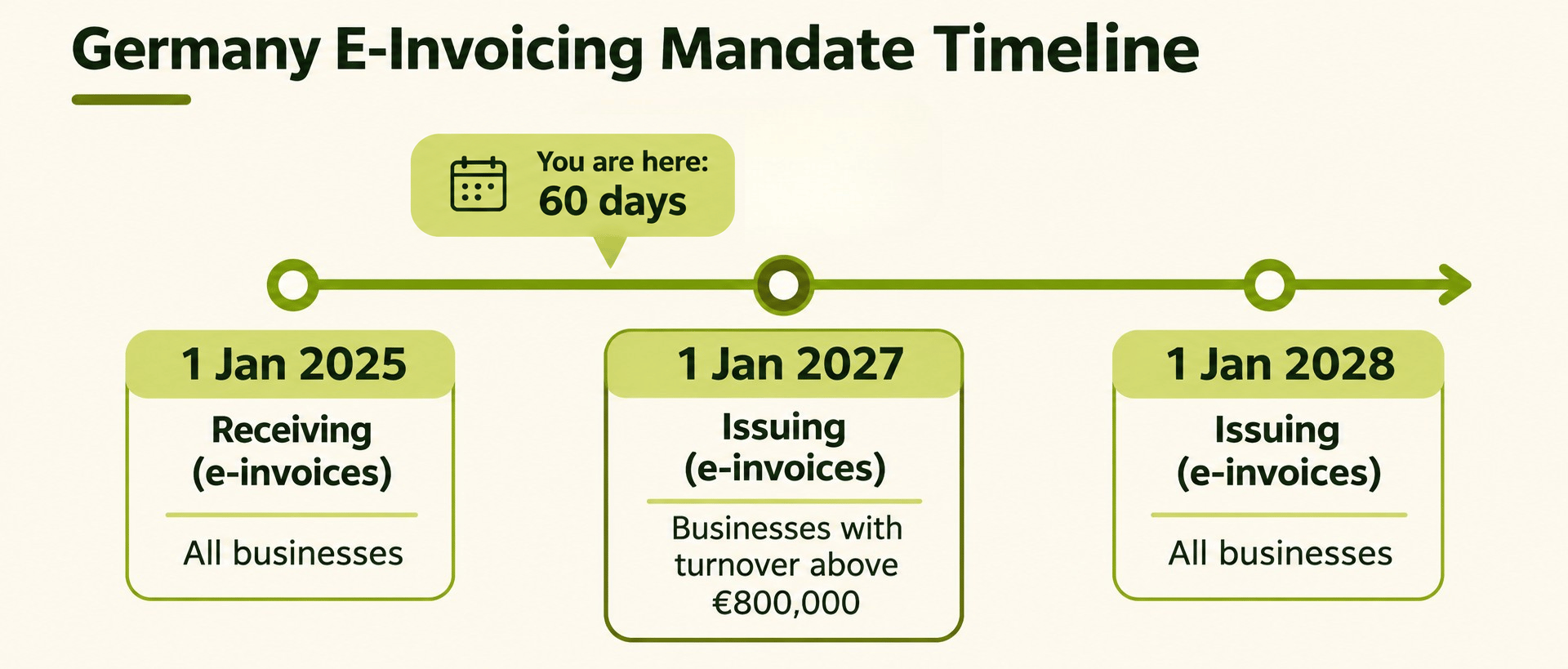
Germany's B2B mandate comes from the Wachstumschancengesetz, passed in March 2024. Every business established in Germany has had to be able to receive structured e-invoices since 1 January 2025. Issuing is the next step. For the full timeline, see our Germany e-invoicing overview.
The €800,000 test runs on 2026 turnover
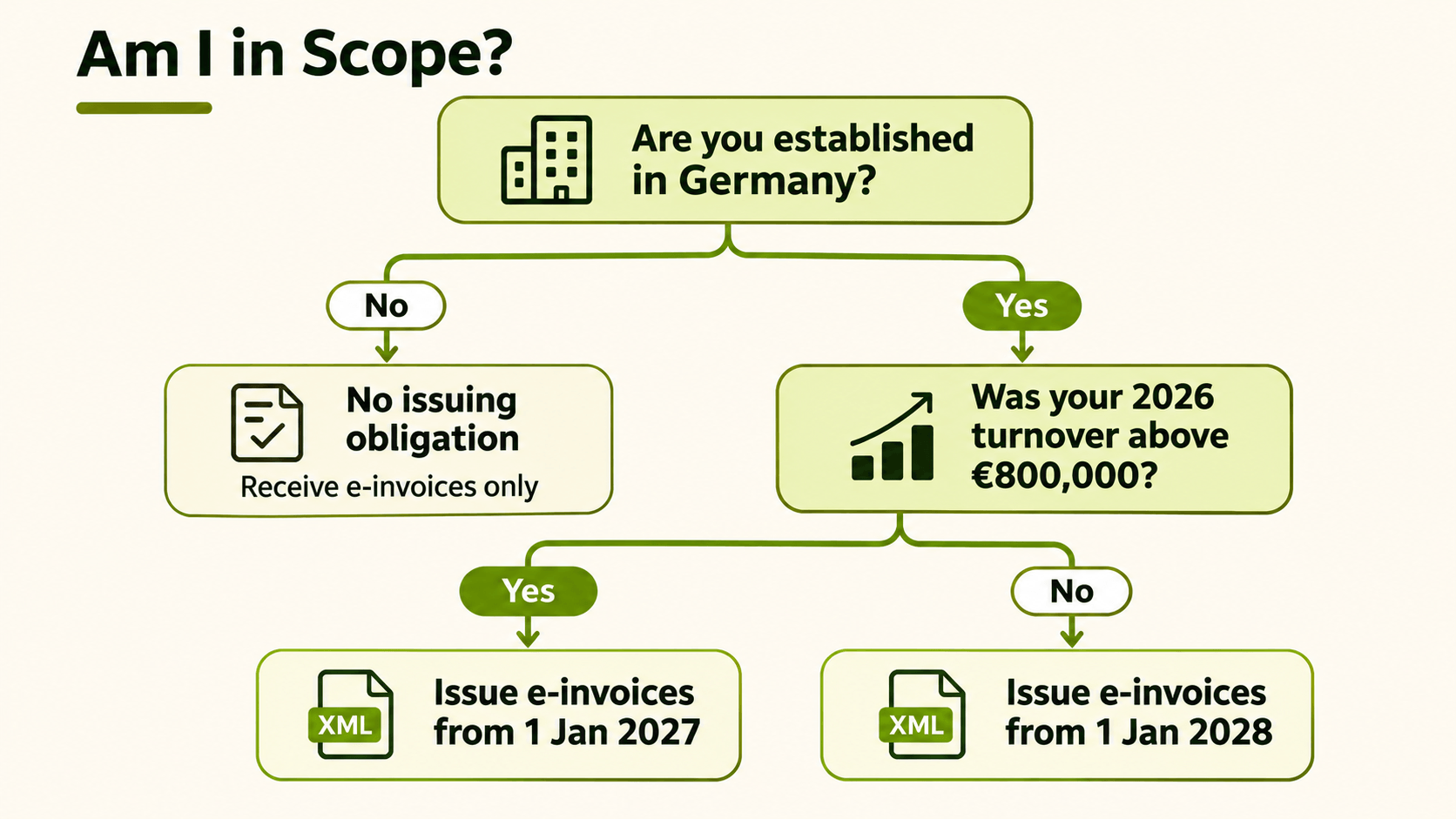
If your 2026 turnover was above €800,000, the domestic B2B invoices you issue from 1 January 2027 must be e-invoices unless an exemption applies. If it was €800,000 or less, you can keep using other invoice formats through 2027. From 1 January 2028, the obligation covers all businesses.
Established in Germany vs. only VAT-registered there
The obligation depends on being established in Germany. If one party to the transaction is not established there, the domestic B2B e-invoicing obligation does not apply. A Danish supplier with only a German VAT number is therefore outside the issuing rule. It will still receive structured invoices from German suppliers.
What counts as an e-invoice
An e-invoice must be structured data that meets the European standard EN 16931. XRechnung, which is pure XML, and ZUGFeRD, a PDF with embedded XML, are the two main formats. A plain PDF sent by email does not qualify.
Part 1: Receiving readiness (the obligation you already have)
Many companies technically "receive" e-invoices by saving the XML file and keying the data by hand. That passes on paper and fails in practice. Volumes will rise sharply in January as your larger suppliers switch.
Storing XML is not the same as processing it
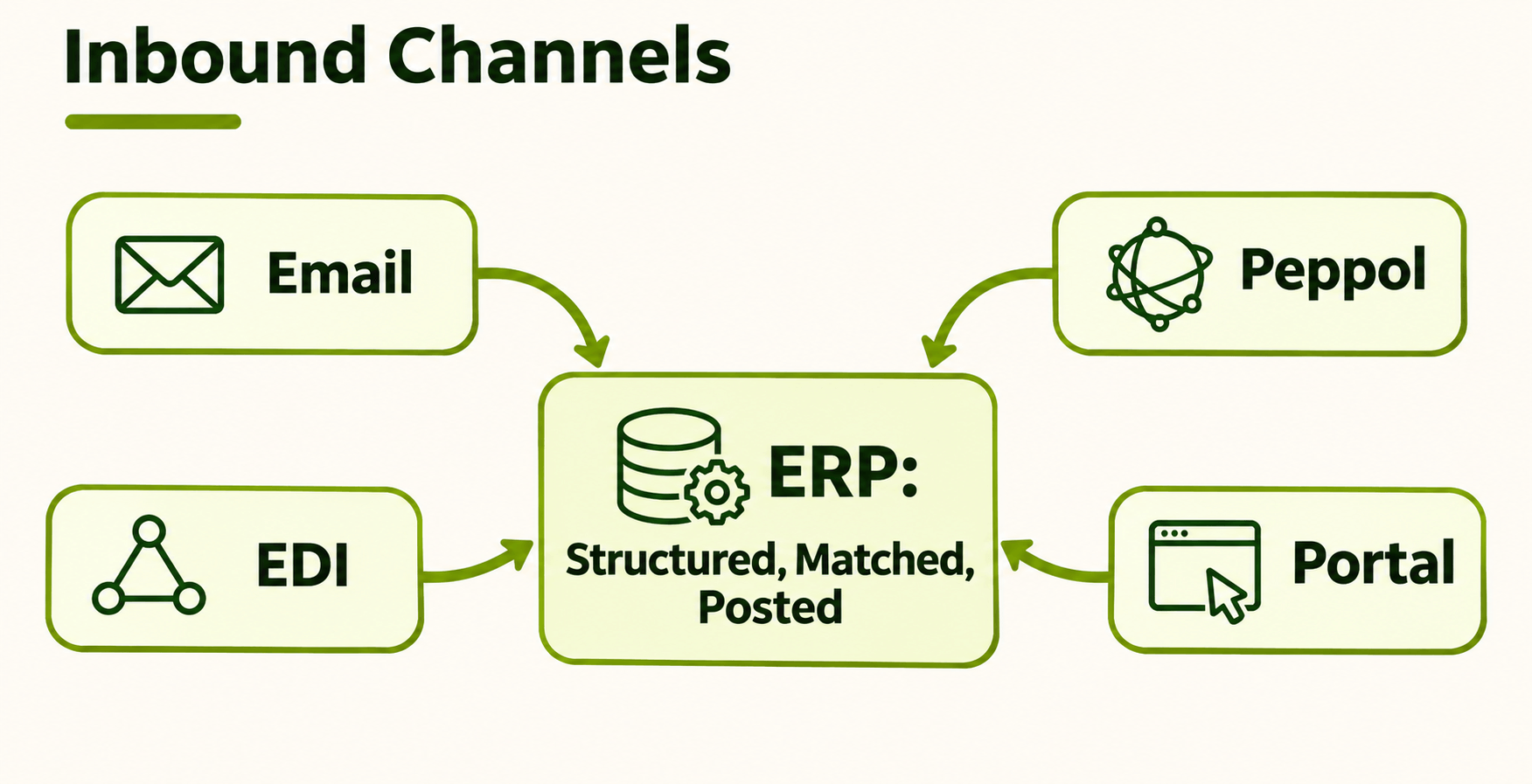
Check whether inbound XRechnung and ZUGFeRD files land in your ERP as structured data, matched to purchase orders and ready to post. If your AP team opens a viewer and retypes the data, that is the gap to close.
Inbound channels: email, Peppol, EDI, portals
Germany has no central B2B exchange platform. Suppliers can send by email, Peppol, EDI or a portal. Map which channel each high-volume supplier will use, and make sure every route ends in the same processing flow.
Suppliers below the threshold can keep sending PDFs through 2027. PDF to XML invoice conversion brings those documents into the same structured flow, so AP doesn't run two processes.
Validation and GoBD-compliant archiving
Store the structured original, not a printout or PDF view, for the full retention period required under GoBD. Confirm that your archive keeps the XML file itself.
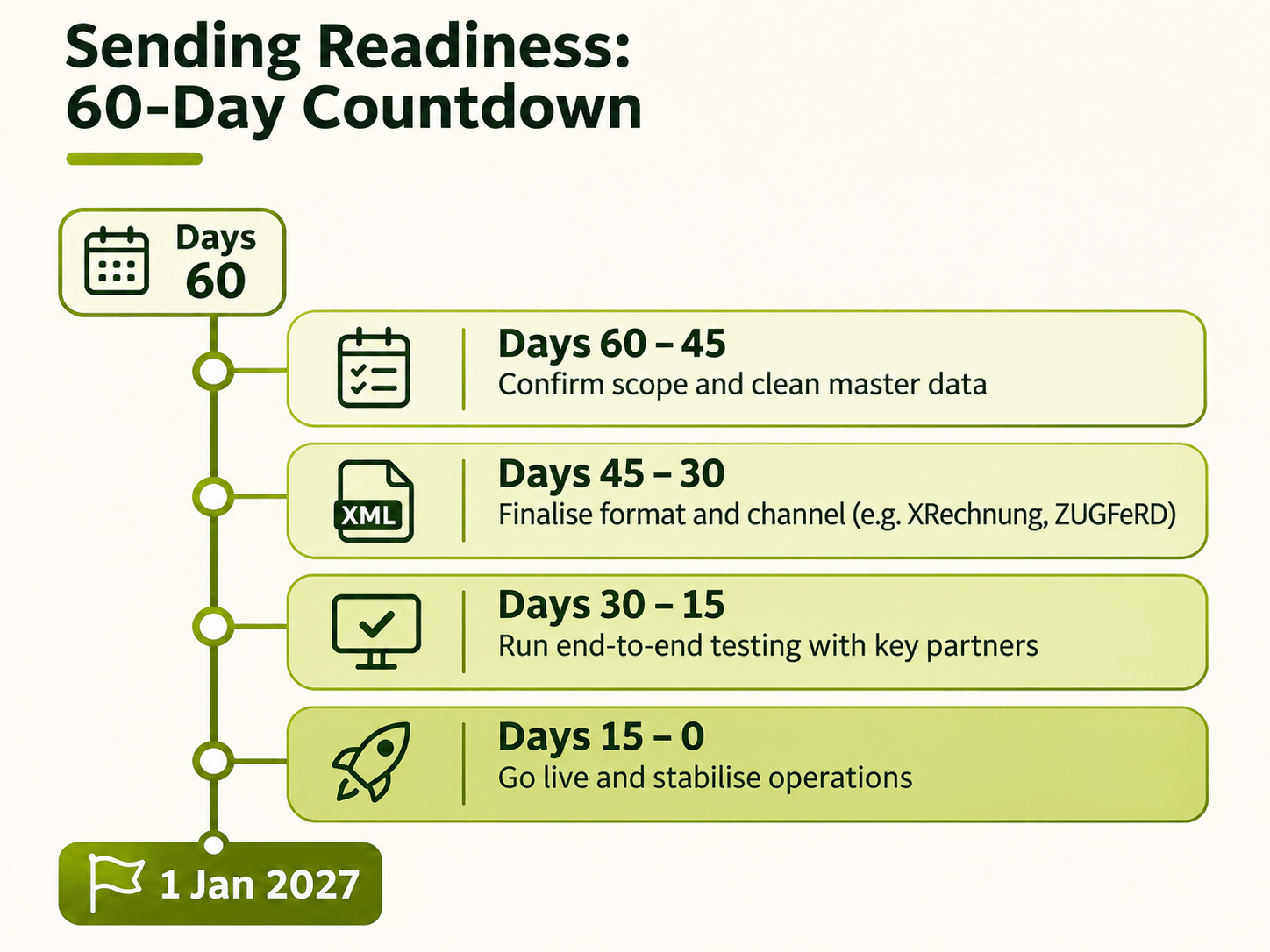
Part 2: Sending readiness, the 60-day checklist
Days 60–45: confirm scope and clean master data
Confirm your 2026 turnover position with your tax advisor. List every German B2B customer you invoice. Audit customer master data: VAT IDs, unit-of-measure codes, tax codes, payment terms and buyer references. Most validation failures start here.
Days 45–30: pick a format and channel for each customer
Ask your largest customers which format they accept and how they want to receive it. Plan to support both XRechnung and ZUGFeRD, because buyers decide, not you. If you run SAP Business One, our SAP B1 XRechnung guide lists the ERP-specific gaps to close.
Peppol e-invoicing is not legally required for German B2B. It is often the simplest channel if you also invoice public-sector buyers or trade across borders.
Days 30–15: test with your top customers
Run real invoices and credit notes through an EN 16931 validator, not a visual check. Then send test documents to two or three key customers and confirm they post cleanly on their side.
Days 15–0: cutover, fallback, monitoring
Agree who handles a rejected invoice and how fast. Set up monitoring so failed documents surface the same day. Go live with your tested customers first, then extend to the rest.
The EDI transition window runs to end-2027
EDI procedures that don't meet the e-invoice definition can be used until the end of 2027. That buys time for existing EDI flows, not a pass. Partner-specific EDI layouts that are not EN 16931-compliant need a plan during 2027.
Add compliance without replacing your ERP
None of this requires a new ERP. Format mapping, validation and transmission can sit in an integration layer on top of the system you already run. Your ERP stays the system of record, and the integration layer produces XRechnung, ZUGFeRD or Peppol output for each customer.
FAQ
Does the mandate apply if we're under €800,000? Not for issuing in 2027; you get until January 2028. The receiving obligation already applies to you.
Is a PDF by email acceptable in 2027? For an in-scope company issuing domestic B2B invoices, no. A ZUGFeRD file looks like a PDF but carries compliant XML, which makes it a different document.
Do we need Peppol? Not legally for German B2B, because sender and buyer agree the channel between them. Many businesses choose it because one connection reaches many buyers.
We're a Nordic supplier selling into Germany. What does this mean for us? If you're not established in Germany, the issuing obligation doesn't apply to your invoices. Expect structured invoices from your German suppliers, and expect German customers to ask for structured invoices anyway.
What happens if we miss 1 January? An invoice that should have been an e-invoice is treated as non-compliant. That creates risk for your customer's VAT position and puts your payment at risk. Talk to your tax advisor about your exposure.
Ready for January?
If you're not sure your invoice data would pass EN 16931 validation, start there. HubBroker can review your current receiving and sending setup and show where the gaps are, before your customers find them.
