
France E-Invoicing 2026: What Businesses Must Prepare Before September
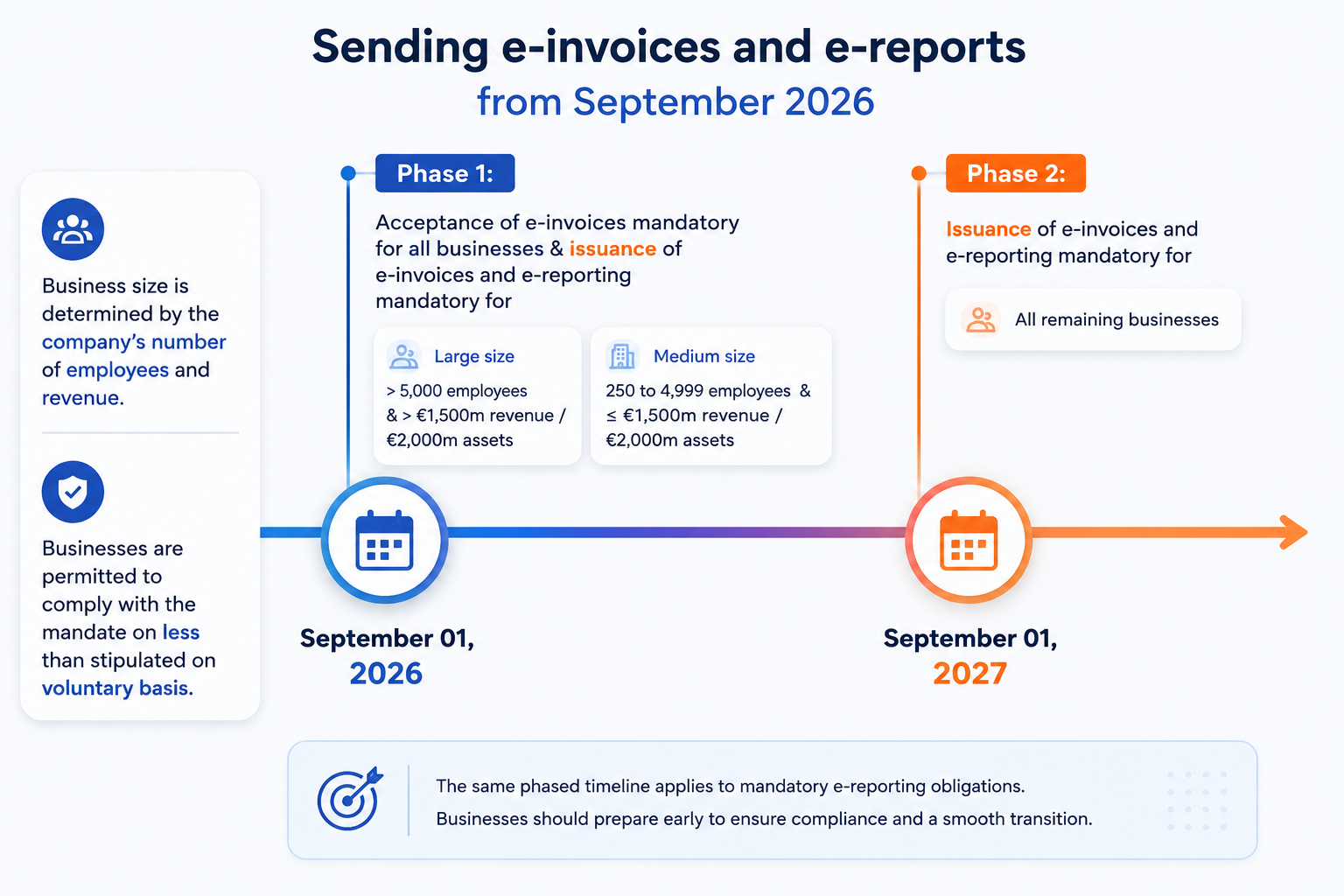
As of September 1, 2026, France introduces mandatory B2B e-invoicing and e-reporting for businesses established or VATregistered in France. All companies must be able to receive electronic invoices from September 1 2026. Issuing obligations and e-reporting roll out in two waves: from September 1, 2026 for large enterprises and ETI, and from September 1, 2027 for SMEs and micro-enterprises. The reform applies first to large enterprises and ETI, followed by SMEs and micro-enterprises. The reform introduces the transmission of invoice and certain payment data to the tax authority (e-reporting) and the use of invoice lifecycle statuses on platforms. The French government hope that these continuous transaction controls (CTC), will let them effectively combat fraud and tax evasion, reducing the French VAT gap. This was estimated to be worth almost €12.784 billion in 2022, which equals to 6.0% of France’s VAT total tax liability.
Architecture overview: France’s Y-model, scope, and roles
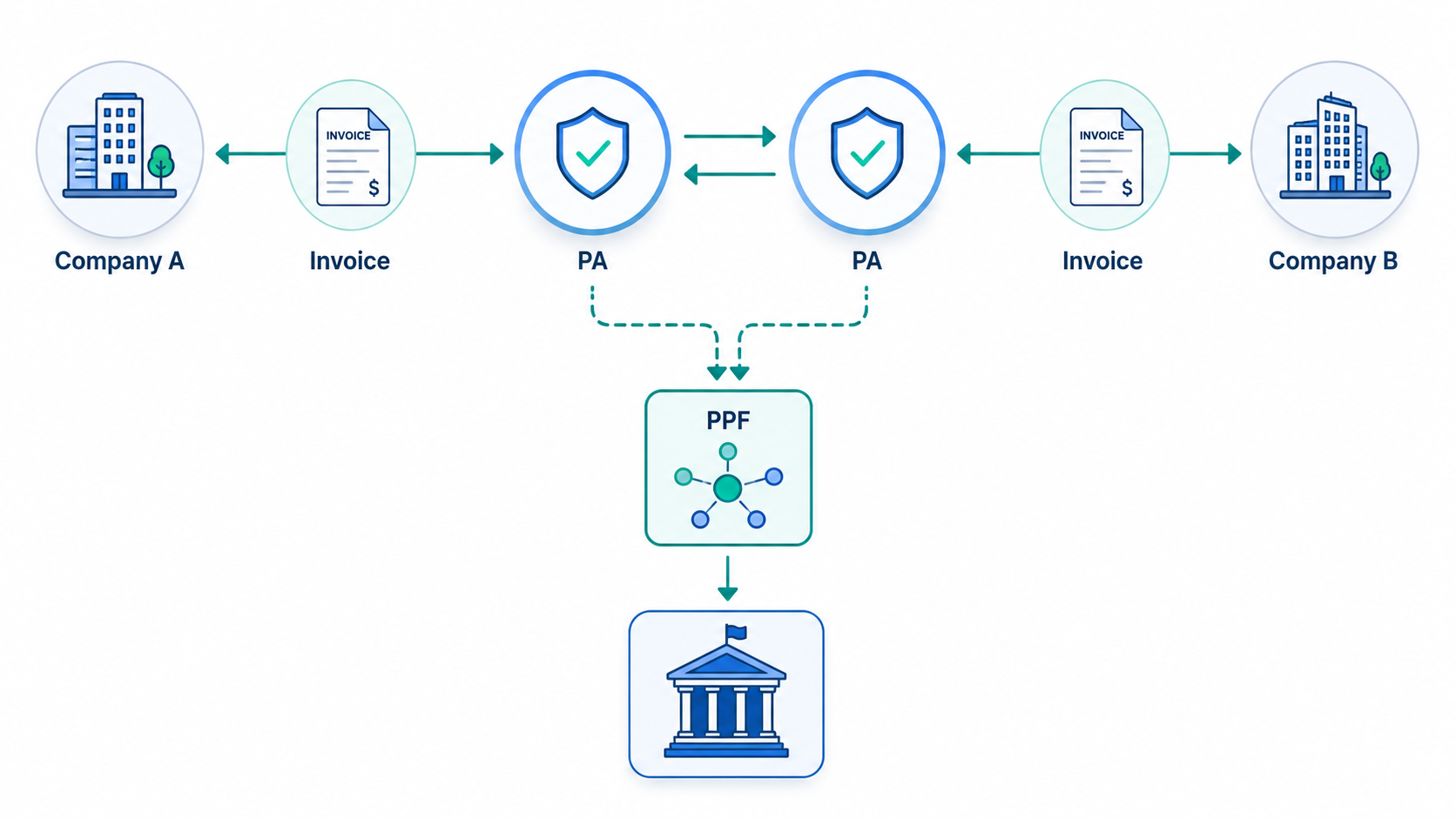
The French mandate is based on a complex Y-model and applies to domestic and cross-border B2B, B2C and B2G transactions, including specified invoice and payment data defined in the decree. Both its Y-model architecture and its scope make it challenging
The Y-model, complex yet resilient and flexible
The French model of mandatory B2B e-invoicing and e-reporting provides flexibility, especially for companies that have already implemented electronic data interchange (EDI) via private platforms. It limits the cost of adapting existing EDI systems and otherwise preparing for this reform. Other companies are given the opportunity to submit invoices directly through the public platform. There are also specialist providers that can help to connect invoicing parties to either the public or a private platform.
PPF
The national public platform (PPF, ‘Chorus Pro next-gen’) provides a public route to both issue and receive e-invoices and serves as the central hub for required invoice, transaction and payment data to the tax administration. It is not a LatAm-style clearance system.
PA
A Plateforme Agréée (formerly PDP) is an immatriculated private platform. It can send, receive and transmit e-invoices in the mandated formats (Factur-X, UBL, CII), and forward required data to the administration. Businesses may choose to use a PA.
Large scope encompassing e-invoicing and e-reporting
The bullet points below detail the scope of the new mandate. B2G e-invoicing is already mandatory since 2017 via Chorus Pro/PPF (not a new scope item of the 2026 reform). I think this minor change makes that clearer.
Businesses established in France and subject to French VAT must issue electronic invoices for domestic B2B transactions with invoice lifecycle statuses and payment data handled per the reform.
All VAT-registered companies in France are required to e-report cross-border B2B and B2C transactions. This applies regardless of whether the company is also based in France.
All VAT-registered companies in France are required to e-report any payments received in B2B, B2C and B2G transactions. This applies regardless of whether the company is based in France.
When this mandate comes into force for a company depends on the size of the company and whether they receive or issue invoices.
Use of a PA is required for B2B exchange and PPF remains the public hub
A common misconception: businesses think they need to "connect to the PPF" directly. In practice, B2B invoices flow through your PA (accredited platform); the PPF's job is the national directory and data reporting layer, plus continued handling of B2G through Chorus Pro.
Your PA looks you up in that directory to know where to route an invoice so being correctly listed matters more than which platform you connect to.
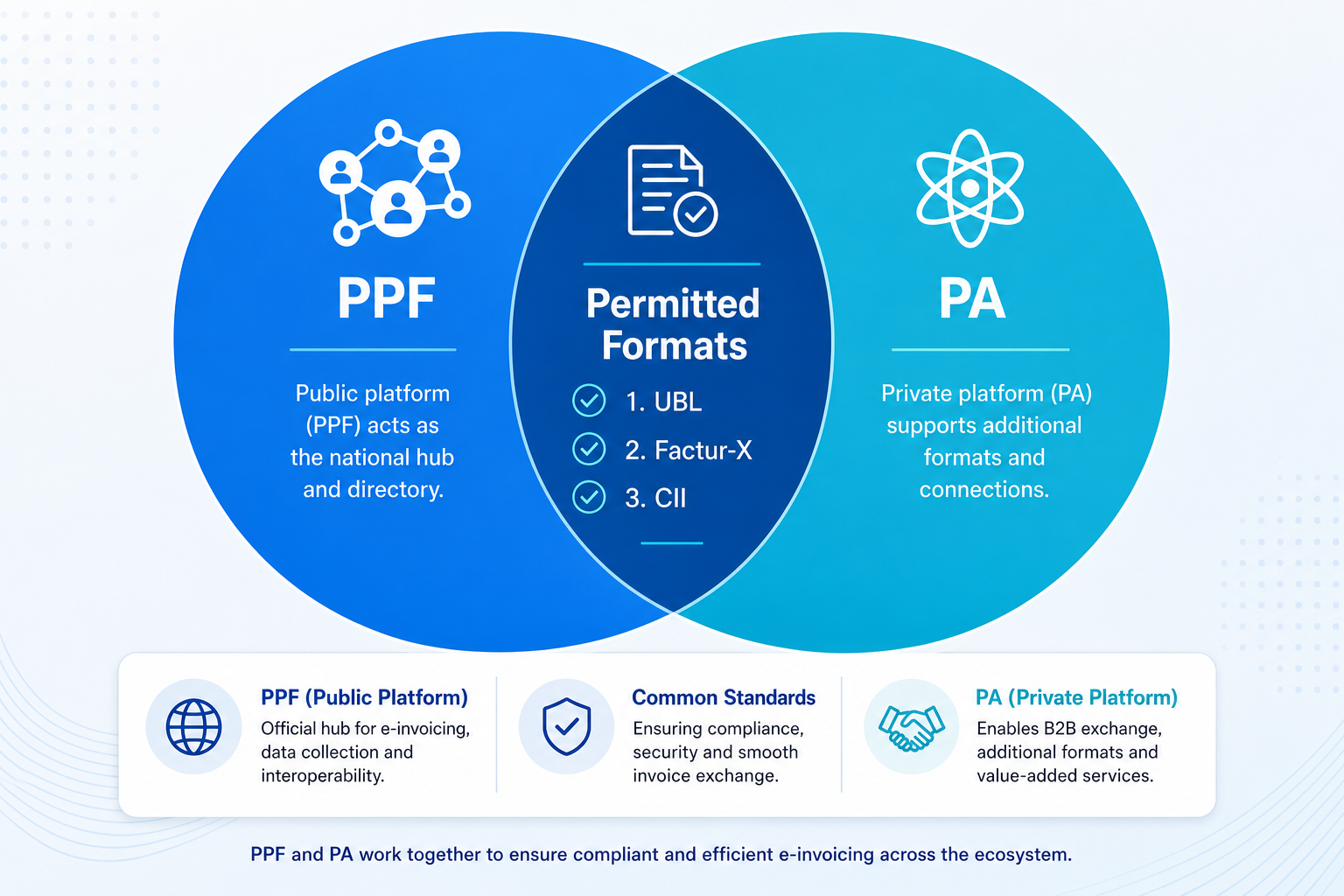
Legally, senders only need to issue in the three accepted formats: UBL, CII, or Factur-X. If a buyer specifically wants an older format like EDIFACT, that's still possible, but it has to go through a PA for conversion standard invoices can still move via the PPF route, with only the non-standard ones needing that extra step.
Talk to us about your France e-invoicing readiness.
Receiving e-invoices from September 1, 2026 what it actually takes
For most companies, this is simpler than it looks. All you need is:
Support for the three accepted formats (UBL, CII, Factur-X)
A designated PA registered as your receiving route in the national directory
That covers you whether your suppliers send plain PDFs, Factur-X, or a mix of formats including EDIFACT. If a supplier issues EDIFACT, their platform converts it to a mandated format before it reaches your PA. You don't need to handle that conversion yourself.
Only one case adds complexity: if you want to voluntarily receive raw EDIFACT (or another non-standard syntax) rather than have it pre-converted, that specific traffic needs its own PA connection. Standard invoices still arrive through your normal route either way.
A quick note on cost: PA registration involves a certification process by the tax authority, valid for three years with renewal required (filed within five months of expiry). Pricing varies by provider, volume, and service level so the practical move is designating one PA for your standard B2B traffic and letting format conversion happen upstream, rather than building multiple connections.
The directory is what makes routing work. It lists your e-invoicing address and which PA manages your data senders route to you based on that entry. If you have sub-entities needing separate addresses, those still deliver through the same PA on record.
Various standards for e-invoices
Any company can access the public hub free of charge. The PPF permits three standards (UBL, CII and Factur-X [mix of PDF with embedded XML]) for invoices, with portal access for smaller businesses.
If business partners decide on a voluntary basis to use other standards for e- invoicing, such as EDIFACT standard D96A or D07A, they will need to route via an PA. Immatriculation is overseen by the tax administration; pricing is contractual and varies by provider.
An SC can support you by routing your invoices via your designated PA and/or the PPF depending on the format. This helps you optimize costs as PA/SC pricing is contractual.
How HubBroker can help
HubBroker connects your existing ERP and EDI setup to France's e-invoicing infrastructure without requiring you to rebuild your invoicing process from scratch. Whether you run Microsoft Dynamics 365, SAP Business One, Visma e-conomic, or another system, we handle the integration layer: converting invoices into the mandated formats (Factur-X, UBL, CII), routing them to your accredited platform, and keeping your directory registration current.
For companies with legacy EDI flows, that conversion work happens upstream your suppliers and customers can keep working the way they already do, while HubBroker manages the translation into what France's mandate requires.
Our platform also handles the operational side that's easy to underestimate: monitoring invoice status, flagging errors before they become payment delays, and keeping your setup ready as requirements evolve including the later stages of the EU's ViDA rollout.
If you're working out what your business specifically needs before September, that's the conversation worth having now.
