
E-commerce EDI Integration: Why Manual Re-keying Is Costing You Retail Accounts
It's Monday morning. Weekend orders are waiting in Shopify, Amazon has sent a batch of purchase orders, and a retail buyer's EDI order sits in a portal. Someone on your team opens three screens and starts typing everything into the ERP.
That works until it doesn't. A stock figure is out of date and you oversell. A shipping notice goes out late and the retailer deducts it from your payment. A unit of measure is wrong on an invoice and finance spends days reconciling it.
Each mistake is small. Repeated across a peak season, they cost you the retail accounts you worked hardest to win.
An e-commerce EDI integration removes that manual step. Here is what it is, why online sellers end up needing it, and how to approach it without replacing your ERP.
What Is E-commerce EDI Integration?
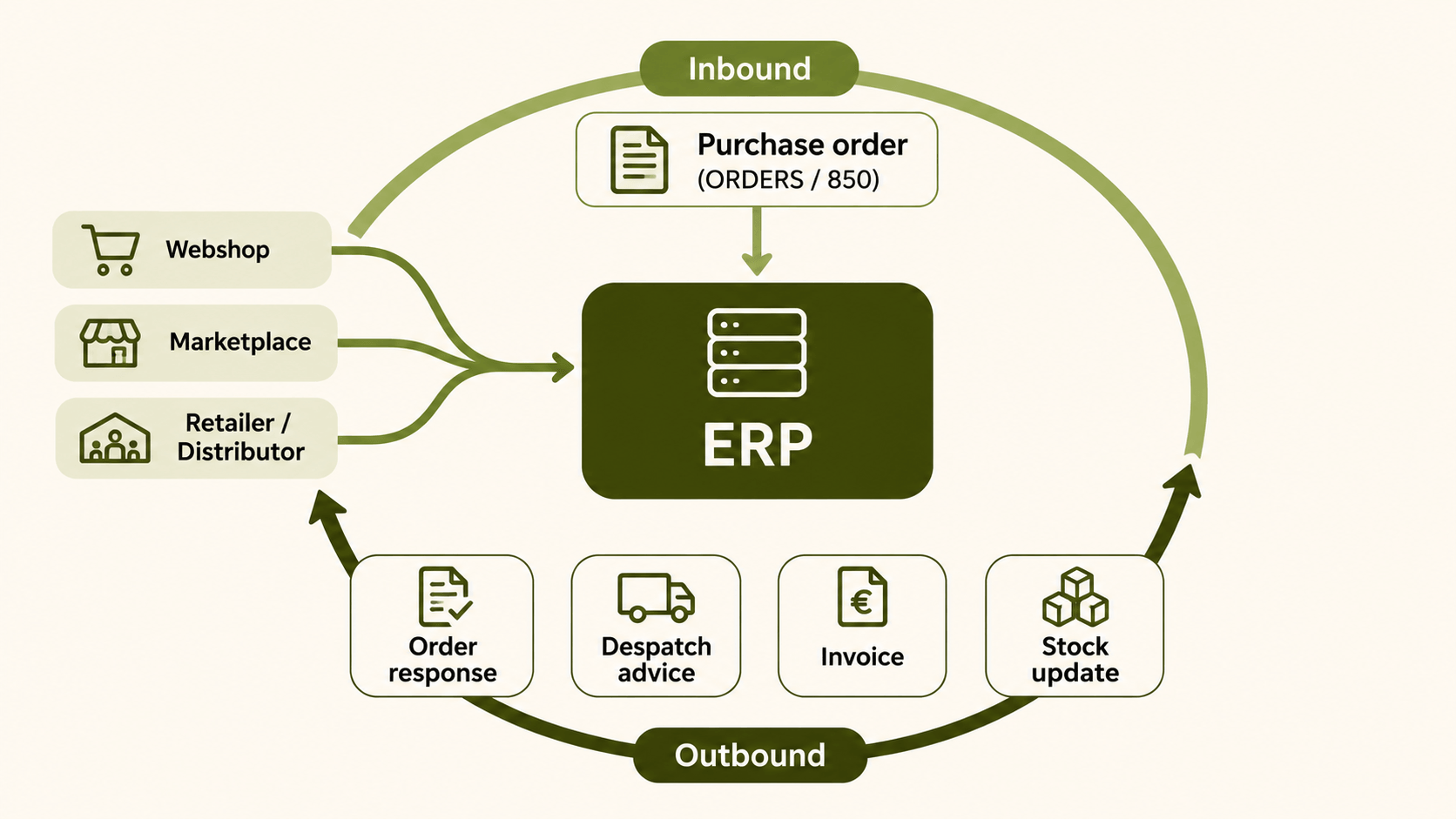
E-commerce EDI integration connects your webshop, marketplaces and retail trading partners to your ERP. Orders, stock levels, shipping notices and invoices then move automatically, in the format each party expects.
It is the point where direct-to-consumer selling and wholesale EDI integration meet in one controlled flow.
EDI vs API: Two Ways Orders Reach Your ERP
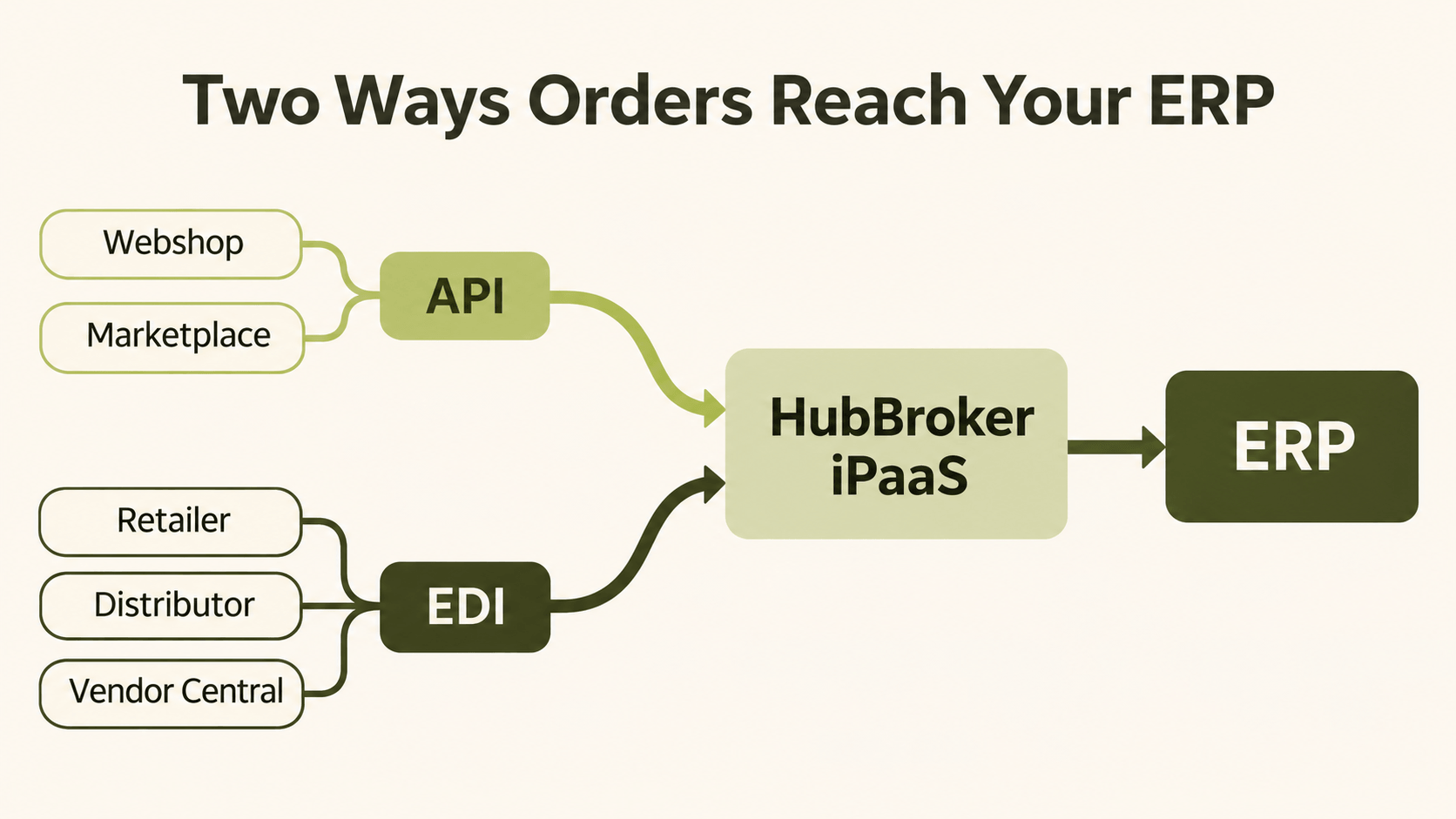
Webshops and marketplaces such as Shopify, BigCommerce and Amazon Seller Central mostly exchange data through APIs.
Retailers, distributors and Amazon Vendor Central typically use EDI: standardised business documents in formats such as UN/EDIFACT or ANSI X12, sent over agreed channels such as AS2 or SFTP.
Most growing brands need both. The problem starts when each one is handled by a different tool, or by a person.
The Documents That Move
Direction is shown from your ERP's point of view.
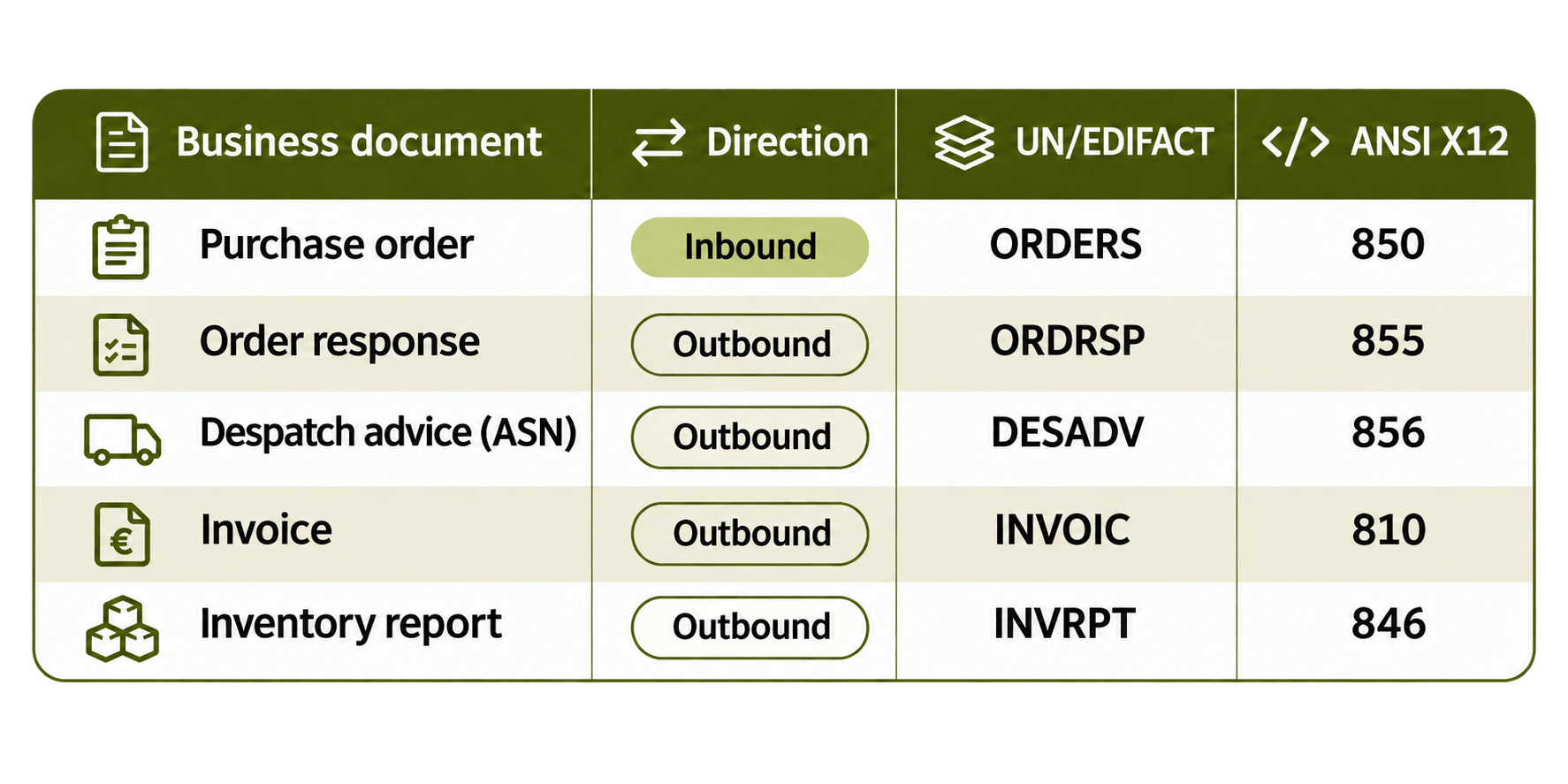
Which documents apply to you is set by each trading partner's specification, not by a generic list.
Why Online Sellers End Up Needing EDI
Retailers and Distributors That Only Accept EDI
When a brand moves from selling direct to supplying retailers, the buyer sets the rules. Larger retailers and distributors usually require orders, despatch advice and invoices as EDI, built to their own specification.
Many also apply deductions when documents arrive late or don't match the delivery. Emailing a PDF is rarely an option.
Amazon Vendor Central vs Seller Central
Amazon is two different relationships. In Seller Central you sell on the marketplace yourself, and the integration runs mainly on Amazon's Selling Partner API (SP-API). In Vendor Central, Amazon buys from you wholesale, and the flow looks like classic retail EDI.
Scope the wrong model and you build the wrong integration. Our Amazon integration covers both, and we've written about the Amazon EDI requirements vendors most often get wrong.
E-invoicing Mandates Add a Second Obligation
More EU countries now require structured e-invoices between businesses. A retailer's EDI requirements are contractual. A national e-invoicing mandate is legal. Meeting one does not satisfy the other, and both can apply to the same invoice, including invoices to Amazon Business buyers.
Check the rules for each country you invoice into. This section is general information, not tax advice.
What Breaks Without Integration
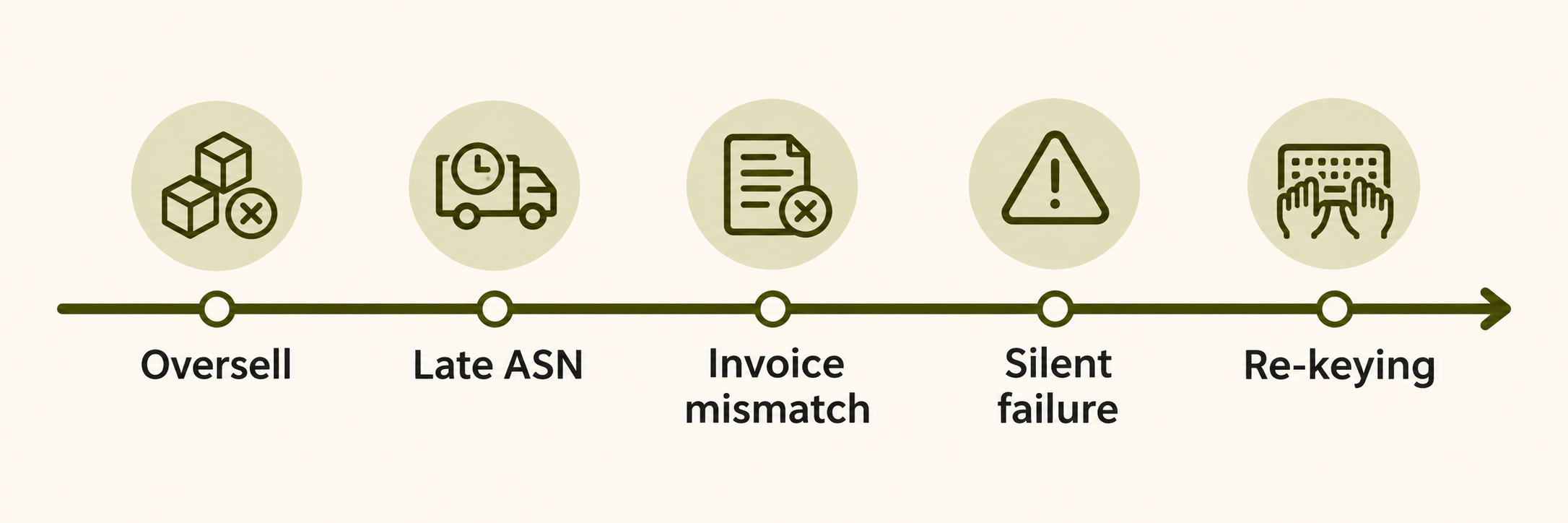
Overselling: stock updated by hand lags behind sales across channels, so the same unit is sold twice.
Inaccurate shipping notices: an ASN created after packing, from data that has drifted, triggers receiving discrepancies and deductions.
Invoice mismatches: a different unit of measure, price, quantity or item number than the purchase order leads to disputes and later payment.
Silent failures: without acknowledgement tracking, nobody notices an unprocessed order until the delivery window has passed.
Hidden workload: re-keying grows with every new channel, and errors peak exactly when volumes do.
How an E-commerce EDI Integration Works
Direction is shown from your ERP's point of view.
Inbound Flow: From Order to ERP
Orders arrive from Shopify through its API, from Amazon through SP-API or EDI, and from retailers through EDI. The integration layer validates each document, maps partner SKUs to your item numbers and creates the sales order in your ERP.
Documents that fail validation are held as exceptions for your team. Valid orders keep moving.
Outbound Flow: Confirmation, Despatch Advice and Invoice
Your ERP produces the order response, despatch advice and invoice. Each one is converted to the format the receiving partner expects and sent over the agreed channel. Stock levels flow back to your webshops and marketplaces, and acknowledgements show what each partner received.
An Integration Layer on Top of Your ERP, Not a Replacement
Your ERP stays the source of truth for items, stock and prices. HubBroker iPaaS sits between the ERP and your channels and handles mapping, validation, routing and monitoring.
That works with ERPs such as Microsoft Dynamics 365 Business Central, Microsoft Dynamics 365 Finance & Operations, SAP Business One, Visma e-conomic, Uniconta and Rackbeat, and with channels such as Shopify, BigCommerce, OpenCart and Amazon. See how this looks for a Shopify integration or a Business Central integration.
Five Questions to Ask Before You Choose an Approach
Channels: which webshops, marketplaces and retailers send you orders today, and which will in the next year?
Partner requirements: which formats, documents and transport channels does each trading partner require? Get their specifications in writing.
Source of truth: which system owns items, stock and prices?
Exceptions: who sees a failed document, and how quickly?
Reuse: can the next trading partner be onboarded by reusing existing mappings, or does each one start from scratch?
FAQ
Do I need EDI if my webshop already has an API?
Often, yes. APIs cover your webshop and marketplace accounts. Retailers, distributors and Amazon Vendor Central usually require EDI. The two are complementary, and one integration layer can handle both.
Does Shopify support EDI natively?
Shopify's core platform exchanges data through APIs. EDI with retail partners is typically handled by an app or an integration layer that converts Shopify data into each partner's format.
Do I need EDI to sell on Amazon?
Not always. Vendor Central relationships typically require EDI. Seller Central integrations usually run on SP-API instead.
How long does an e-commerce EDI integration take?
It depends on the number of trading partners and documents, your ERP, and each partner's testing process. Partner testing is often the longest step, so scope the project before setting a go-live date.
Can EDI and Peppol e-invoicing run through the same integration?
Yes. HubBroker iPaaS handles EDI and Peppol e-invoicing on the same platform, so order flows and structured invoices share one setup and one monitoring view.
Not sure where your order flow loses time? Tell us which channels and trading partners you work with, and our integration team will show you which flows to automate first. Book a demo
