
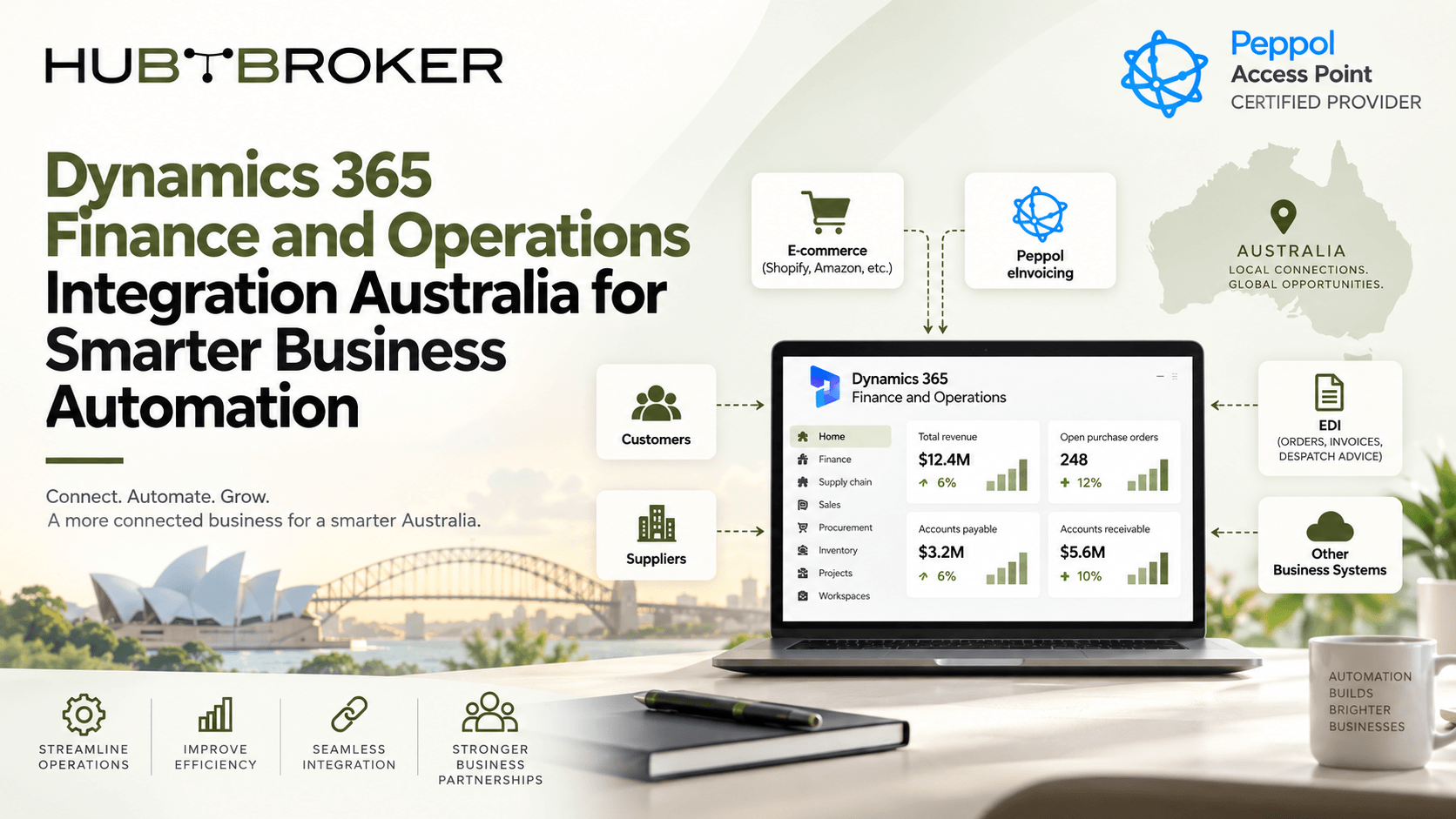
Dynamics 365 Finance and Operations Integration Australia for Smarter Business Automation
A Melbourne distributor uses Dynamics 365 Finance and Operations for finance, stock and sales. Retail orders come through EDI, web orders arrive from an online store, while the warehouse uses another system. Staff are still downloading files, entering orders again and checking shipment updates in different screens. Nothing is really wrong with the ERP itself. The problem is all the systems working around it.
This is where dynamics 365 finance and operations integration starts becoming important. External systems need one reliable way to send and receive data with Dynamics 365 F&O.
Our Dynamics 365 F&O Works Fine, So Why Are People Entering the Same Data Twice?
Integration removes much of the manual hand-off between different systems. Instead of staff copying sales orders, supplier details, stock levels, prices, invoices or tracking numbers, an integration layer can move and translate this data automatically.
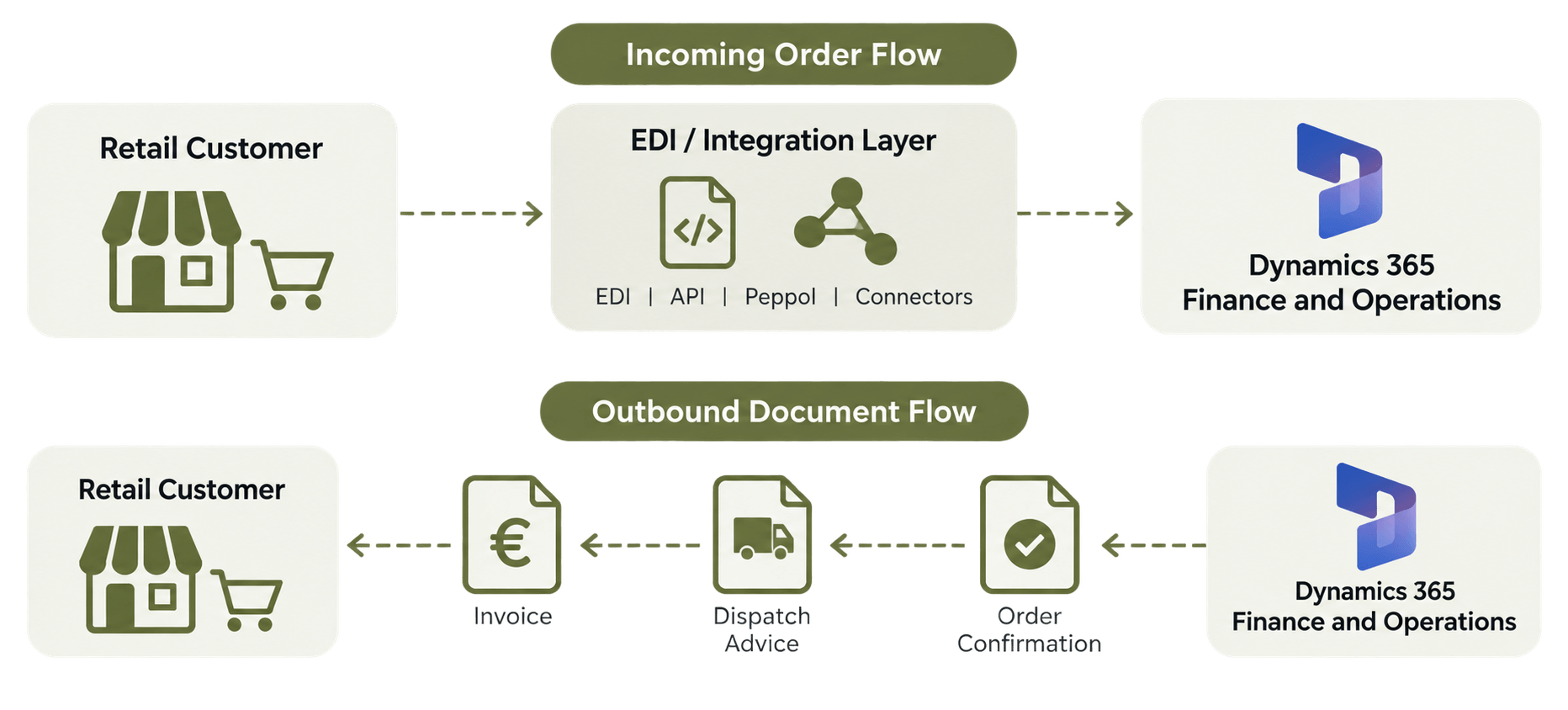
The outbound flow works in the other direction:
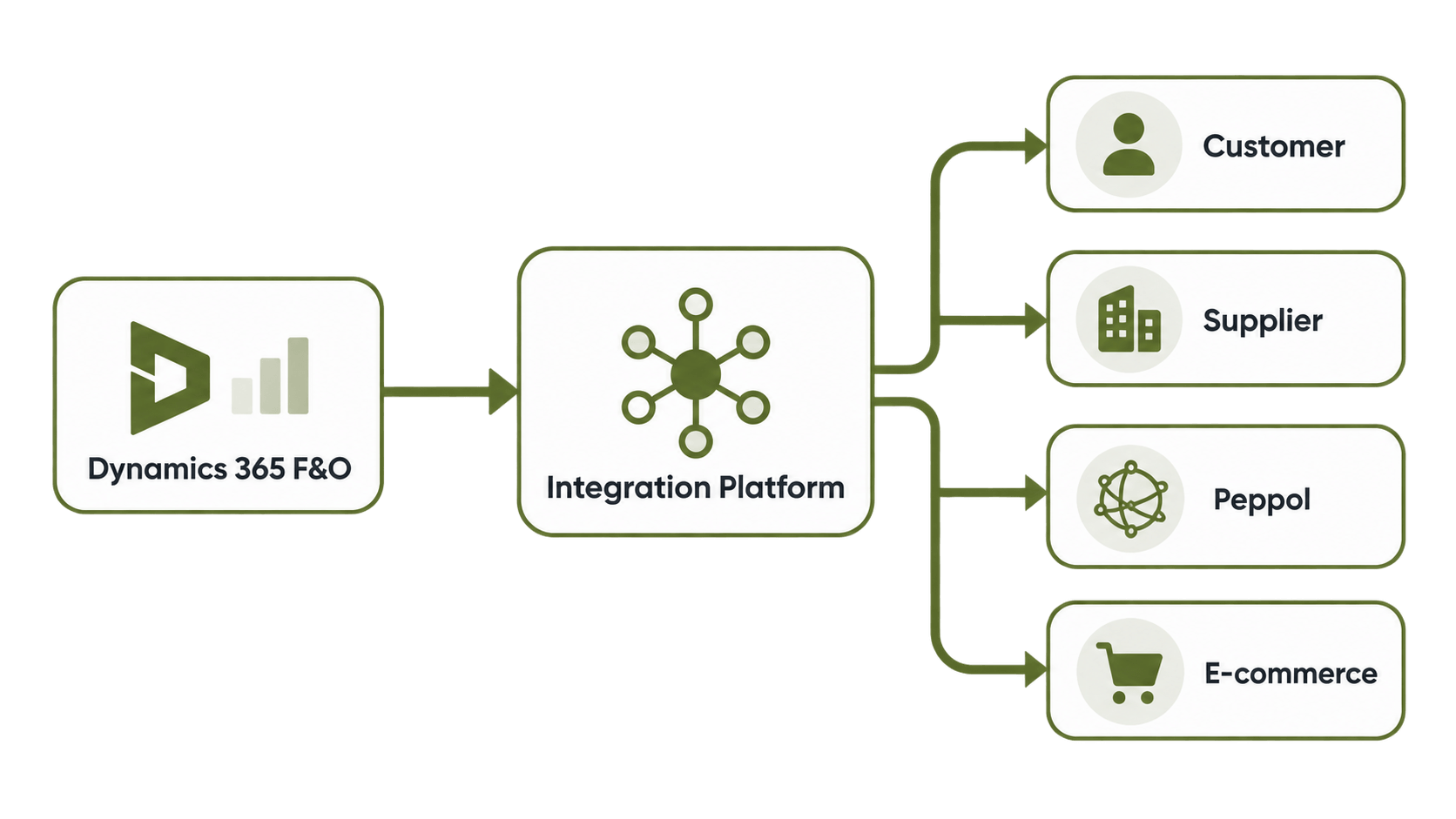
The integration layer handles mapping, validation, routing, retries and monitoring between the systems. If one SKU is missing, a customer code is wrong or an API request fails, it should be visible and manageable instead of quietly stopping the complete process.
A Retailer Sends EDI Orders — What Happens Next?
Scenario 1: an Australian supplier receives hundreds of purchase orders from a major retail customer.
The incoming flow may look like:
At low transaction volume, manual entry may still work. Once document numbers start growing, duplicate entry, wrong quantities and delayed confirmations becomes much bigger issue.
Scenario 2 is ecommerce.
A company selling through Shopify, Amazon or BigCommerce may use:
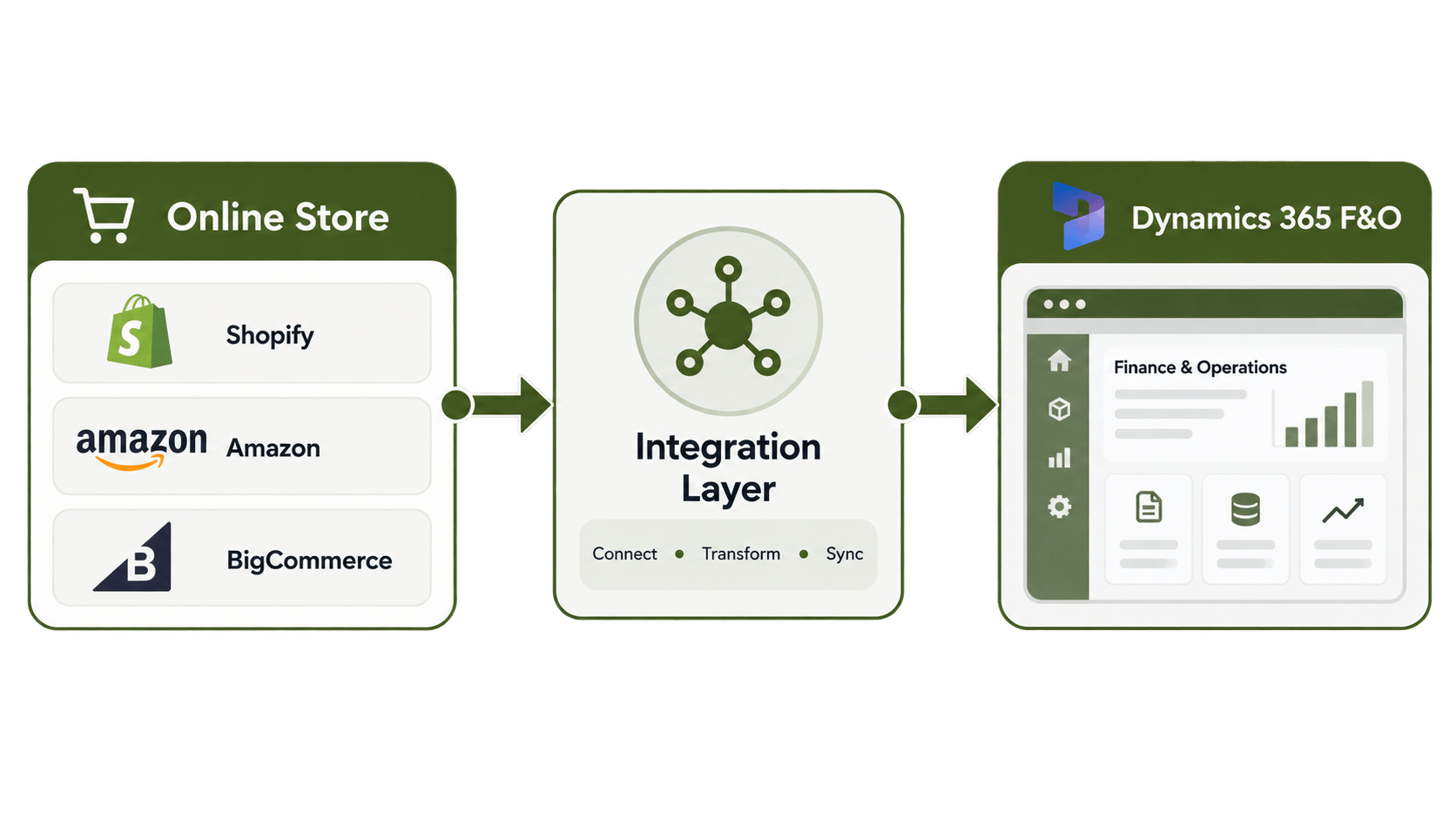
Orders can move into Dynamics automatically, while inventory, shipment, tracking and invoice updates are sent back to the online store. This means sales and warehouse teams do not need to maintain same order information in two different systems.
Can Dynamics 365 F&O Connect With Peppol in Australia?
Yes. Australia has adopted Peppol, and the ATO acts as the Australian Peppol Authority.
Businesses connect through approved service providers. Private-sector Peppol eInvoicing is available in Australia, although it is not generally mandatory for all private businesses. The Australian Government also uses Peppol, with eligible agreed eInvoices supporting maximum 5-day payment terms for Commonwealth suppliers.
Scenario 3 may look like:
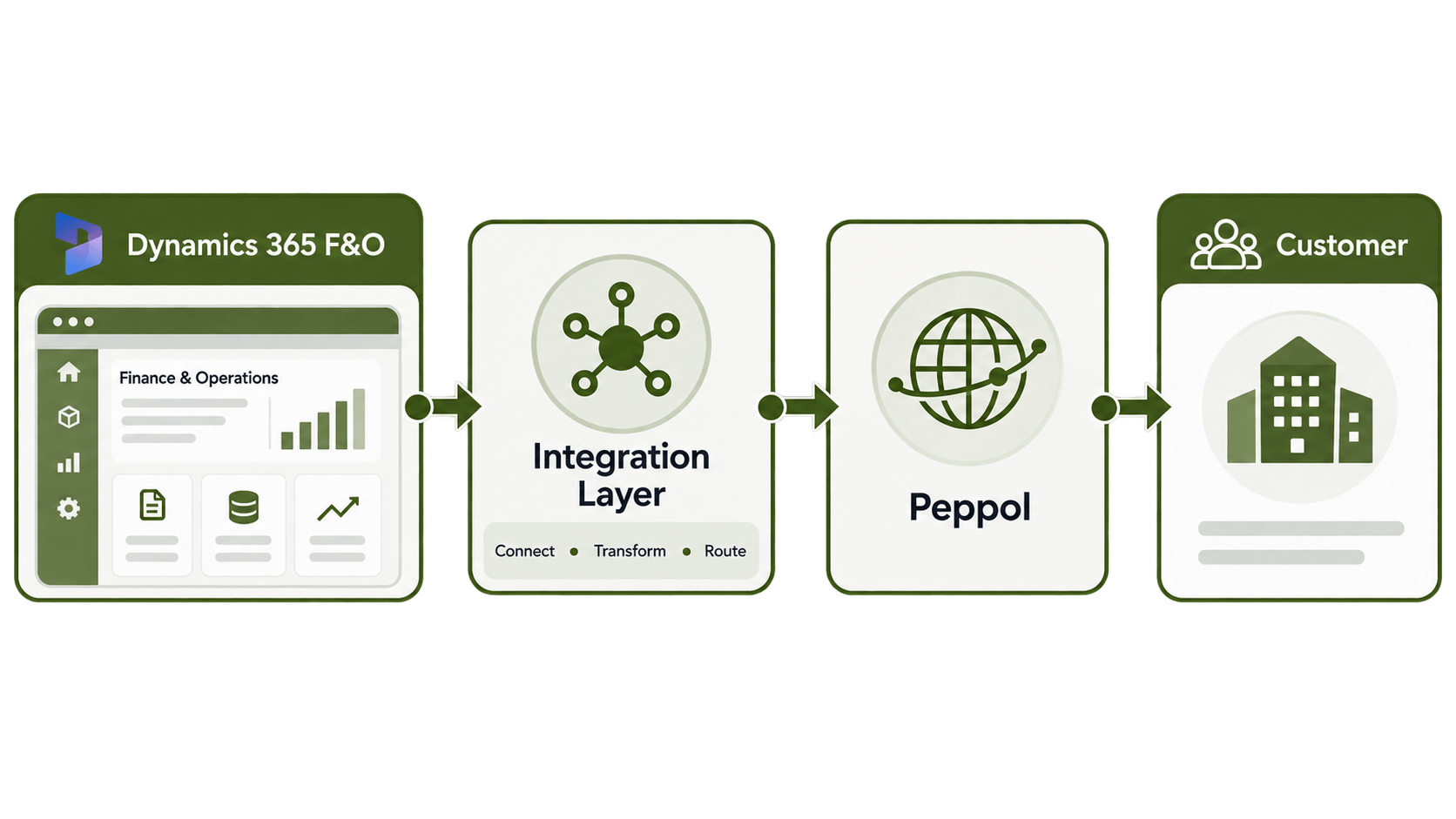
Invoice data may need to be mapped into the Australian and New Zealand Peppol format. GST tax-invoice validation, ABN details, participant identifiers and delivery status also needs to be handled correctly. A PDF created from Dynamics is not same as a structured eInvoice. The structured document needs to contain the right data in a format that another system can read automatically.
What Does Australian Business Data Tell Us?
Latest ABS 2024–25 data shows that Australian businesses are already working in highly digital and changing environments.
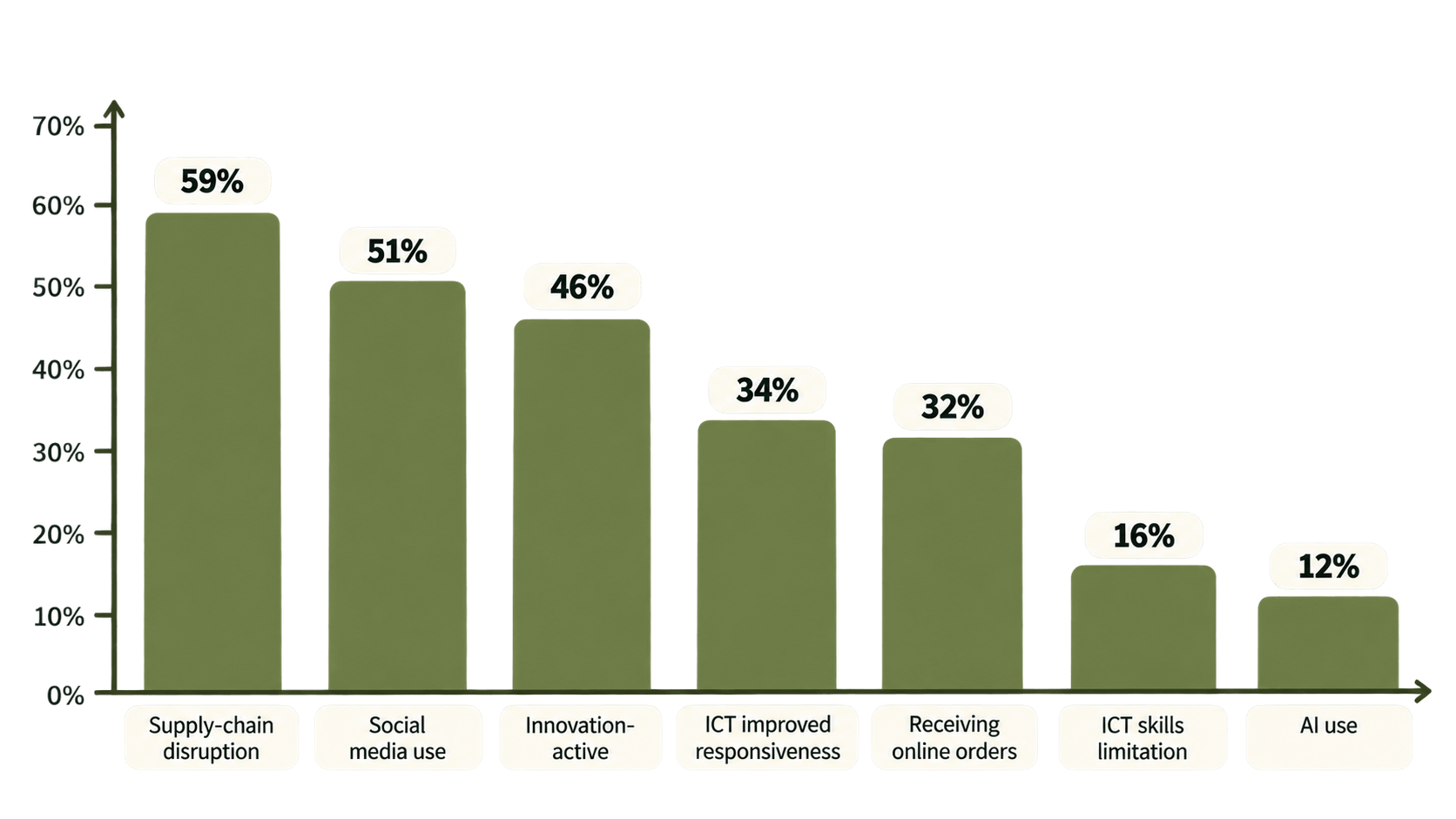
These numbers are not directly measuring system integration. But together they show why ERP cannot always work as isolated system when more sales channels, warehouses and digital tools are being added.
Which Dynamics 365 Data Usually Causes Integration Failures?
The difficult part is often not the connection. It is the data moving through it. Sales orders may contain wrong customer codes. Retailers and ERP can use different product SKUs. Warehouse locations may not match, or GST information may be incomplete. For eInvoicing, ABN, invoice references, tax values and customer identifiers needs to be correct before sending.
Monitoring should also show failed API calls, rejected EDI documents, missing shipment updates, duplicate orders and unsuccessful scheduled jobs. Staff should be able to see what failed, why it failed and whether the transaction was retried. Otherwise, automation can simply hide the old manual problem behind another system screen.
When Do Point-to-Point Connections Become Hard to Maintain?
One API connecting one system with Dynamics can work perfectly fine. The problem starts when Sydney customers need EDI, Melbourne warehouses need inventory feeds, online stores need stock updates and finance also needs Peppol.
Requirement | Point-to-Point | Integration Platform |
|---|---|---|
One system | Simple | Also suitable |
Many partners | More links to maintain | Central management |
EDI / Peppol | Separate work | Can share one layer |
Monitoring | Interface by interface | Central view |
New channels | More development | Easier to extend |
Australian businesses should ask some practical questions before building more integrations.
✔ Who maintains the mappings?
✔Who manages GST and ABN information?
✔ What happens when a message fails?
✔ Who checks scheduled jobs?
✔ And who updates the integration when Microsoft, customers or trading partners change their requirements?
HubBroker can support dynamics 365 finance and operations integration across EDI, Peppol, APIs, ecommerce, warehouse and logistics systems. Dynamics 365 F&O stays as the main ERP, while the integration layer manages communication with systems around it.
The better buying question is not only, “Can this connect?” It is also, “Who will monitor, maintain and fix the connection after it goes live?”