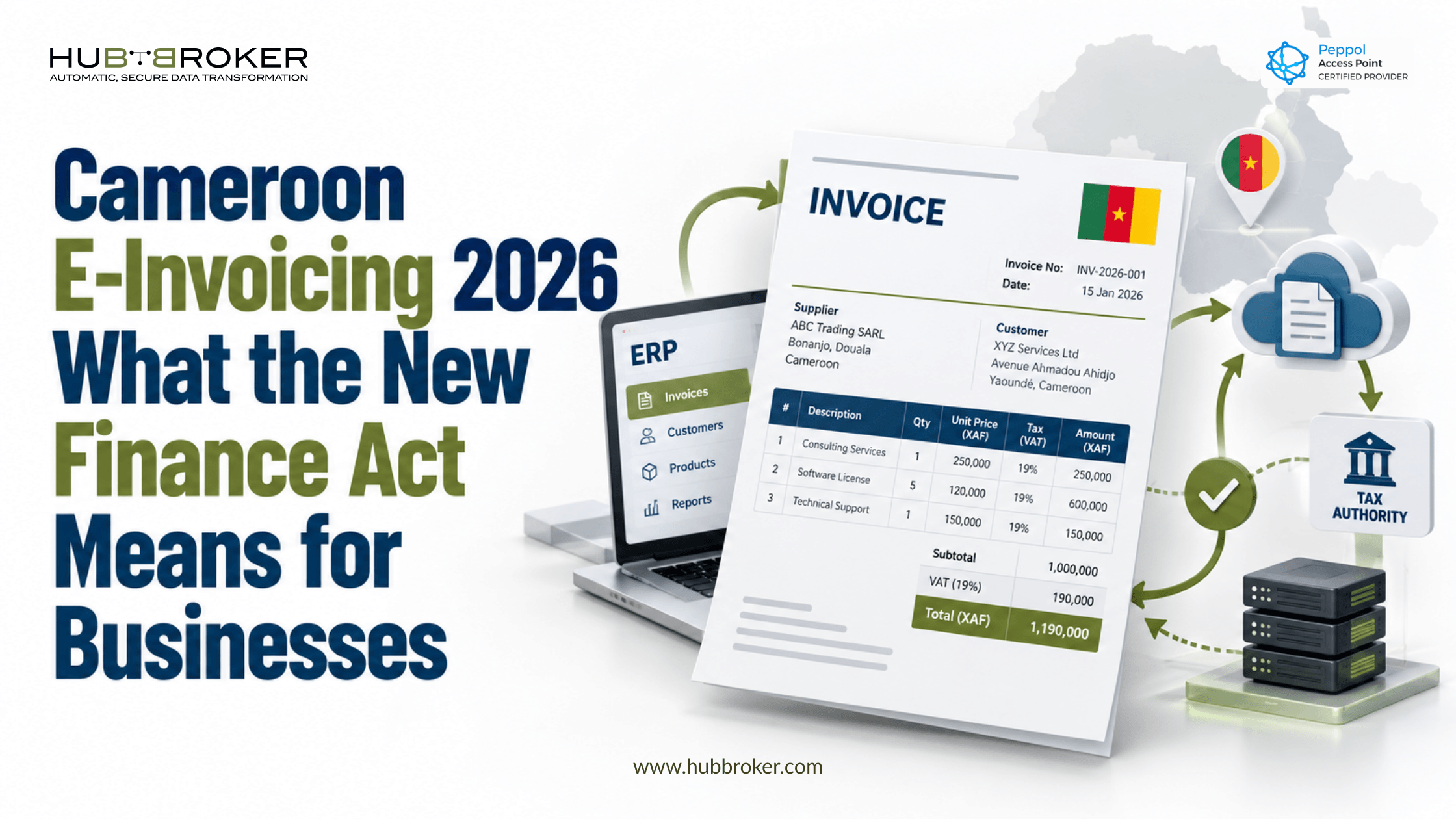
Cameroon E-Invoicing 2026 What the New Finance Act Means for Businesses
➡ Maybe you prepare invoices in Excel.
➡ Maybe your accounts team uses software, then emails the finished file to customers.
➡ Either way, new tax rules can raise an awkward question: will that process still work?
Cameroon e-invoicing 2026 is getting attention as the country moves towards closer digital checks on sales and tax payments. For businesses in Douala or Yaoundé, the sensible starting point is finding out what applies before paying for another system.
What Does Cameroon's 2026 Finance Act Change for Invoicing?
Cameroon's 2026 Finance Act was signed on 17 December 2025. It introduces real-time taxation for certain transactions, with automatic tax collection through electronic devices. The law also sets out duties for taxpayers covered by that regime. These include using approved electronic tools, putting required details on invoices, sending transaction information promptly, and keeping records secure. That doesn't mean every business must switch to the same platform today.
The scope matters, as do the instructions for putting the rules into practice. Check notices from the Directorate General of Taxation (DGI), especially before purchasing software described as mandatory.
Do All Businesses in Cameroon Need E-Invoicing Software Now?
Not necessarily. A small shop issuing a few invoices and a factory handling hundreds won't have identical needs. More importantly, the real-time taxation provisions concern taxpayers who fall under that regime. Each business needs to establish whether it is covered and when its duties begin. Cameroon already has rules allowing electronic monitoring of business billing.
But the existence of a legal rule doesn't answer every practical question about registration, reporting, or approved tools. Ask a tax adviser to review your circumstances. For dates and instructions, use official DGI notices rather than a vendor's sales page.
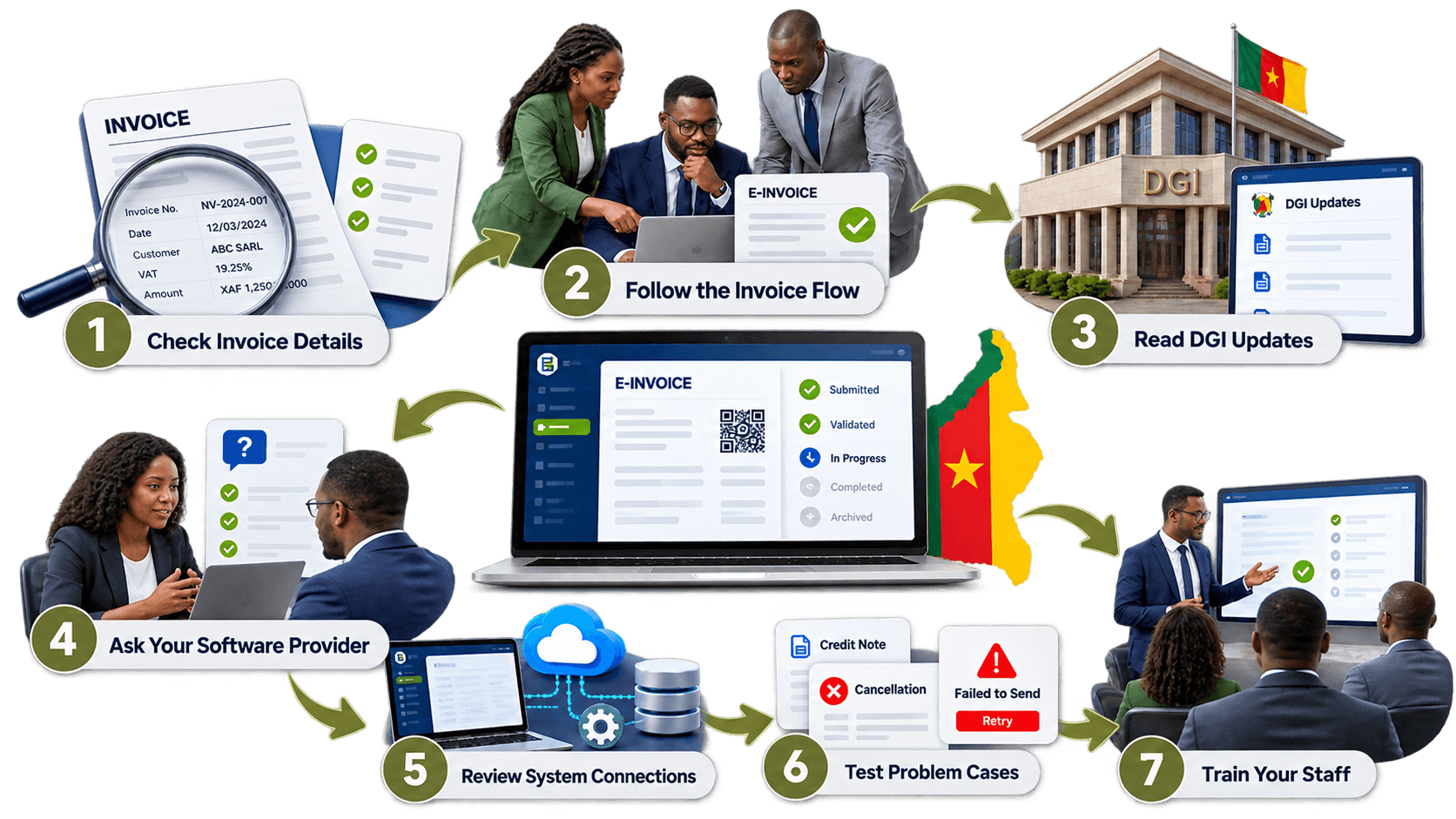
How Can Businesses Prepare for Cameroon E-Invoicing in Seven Steps?
You can do useful work now without replacing your billing system. Begin with the parts of the process your team already finds troublesome. Keep a note of who owns each task, so problems don't sit unnoticed for weeks.
Step 1: Check invoice details. Look at customer names, tax information, numbers, dates, and amounts. Find the fields staff often leave blank.
Step 2: Follow an invoice through the office. Who creates it, who approves it, and who corrects it when something changes?
Step 3: Read DGI updates. Look for clear instructions about covered taxpayers, approved tools, reporting, and dates.
Step 4: Question your software provider. Which Cameroon requirements work today? Which features have been tested, and which are still being built?
Step 5: Review connections. Can your ERP or accounting software send and receive invoice data securely?
Step 6: Try problem cases. Test credit notes, cancellations, failed sends, and ordinary invoices, not only a perfect example.
Step 7: Show staff what to do. Explain how to spot errors, check status, and save proper records.
What Should You Look for in Cameroon E-Invoicing Software?
A product can look impressive in a demonstration and still be wrong for your business. Ask for written details of supported requirements, any official approval needed, and features that have actually been tested. The words “fully compliant” aren't enough.
Feature | Why it helps | Ask the provider |
|---|---|---|
Field checks | Catches missing details | Which fields? |
ERP connection | Avoids copying data | Which systems connect? |
Invoice tracking | Shows document progress | Can we see failures? |
Secure storage | Protects saved records | How are files secured? |
Clear errors | Makes fixes easier | Can staff understand them? |
Rule updates | Handles later changes | Are updates charged? |
Customer support | Helps when things fail | Who can we contact? |
Before signing, discuss training, moving old records, data ownership, and exporting files if you leave. Ask for a test using your own sample invoices. A useful provider will explain its limits rather than promise unreleased functions.
How Can E-Invoicing Help Businesses Beyond Compliance?
Less typing is an obvious benefit. When invoice details pass from an ERP to another system automatically, employees don't need to enter the same numbers twice. Tracking can also make missing or rejected documents easier to notice. Still, software won't repair incorrect customer records or a confusing approval process. Sort those out first. If you sell overseas, ask about exchanging different document formats too, while keeping integration services separate from claims of Cameroon tax approval.
A trial should uncover everyday costs: moving previous invoices, fixing broken connections, and helping finance staff use the system without constant technical assistance.
What Should Your Business Do Next?
Cameroon e-invoicing 2026 deserves a place on your planning list, not an immediate software order. Check your invoice records, follow DGI guidance, and compare providers using cases your team actually handles. If billing, accounting, and ERP tools need to communicate, discuss that work early. Then choose a setup that helps now and can change when official instructions become clearer.
