
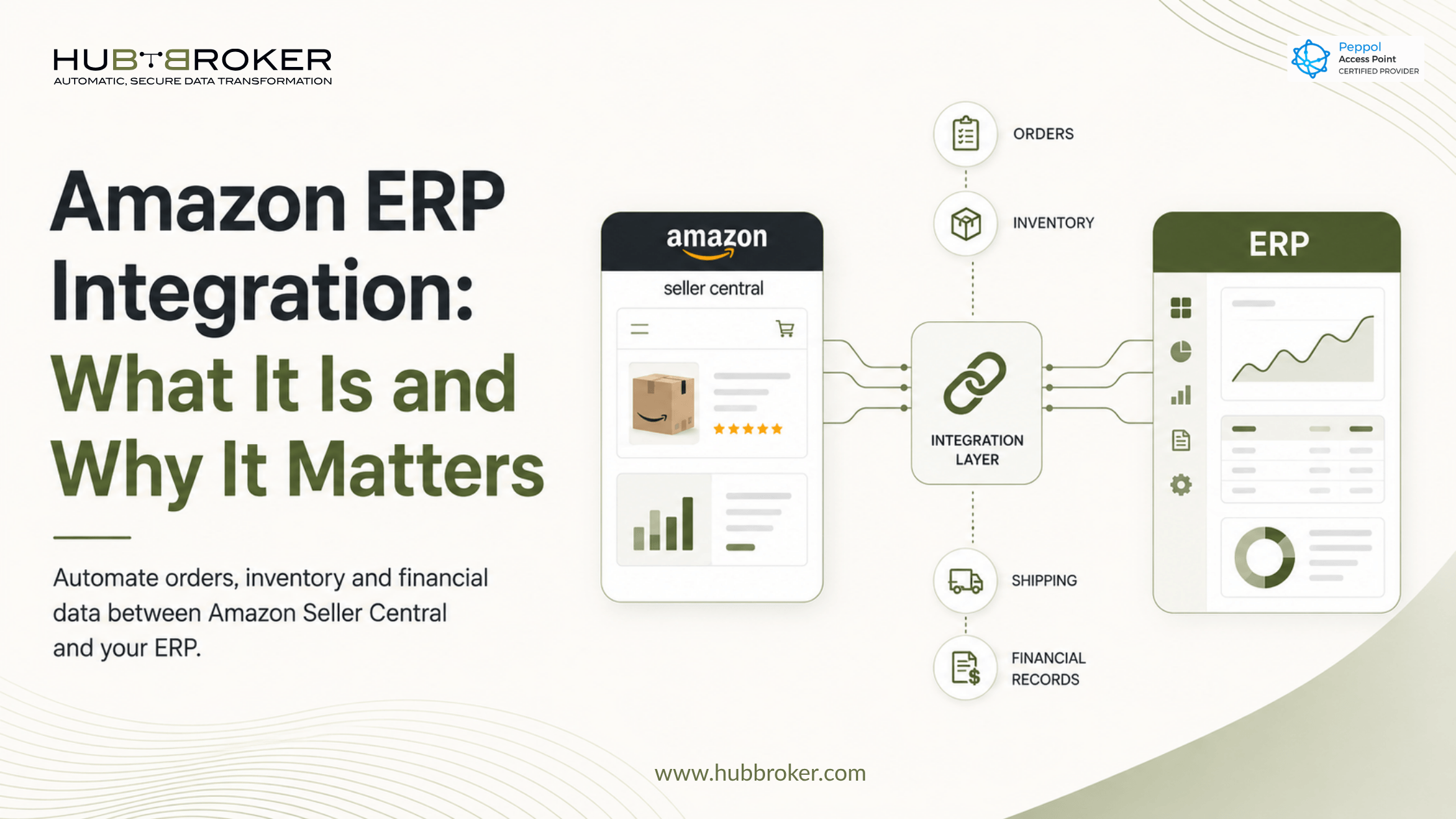
Amazon ERP Integration: What It Is and Why It Matters
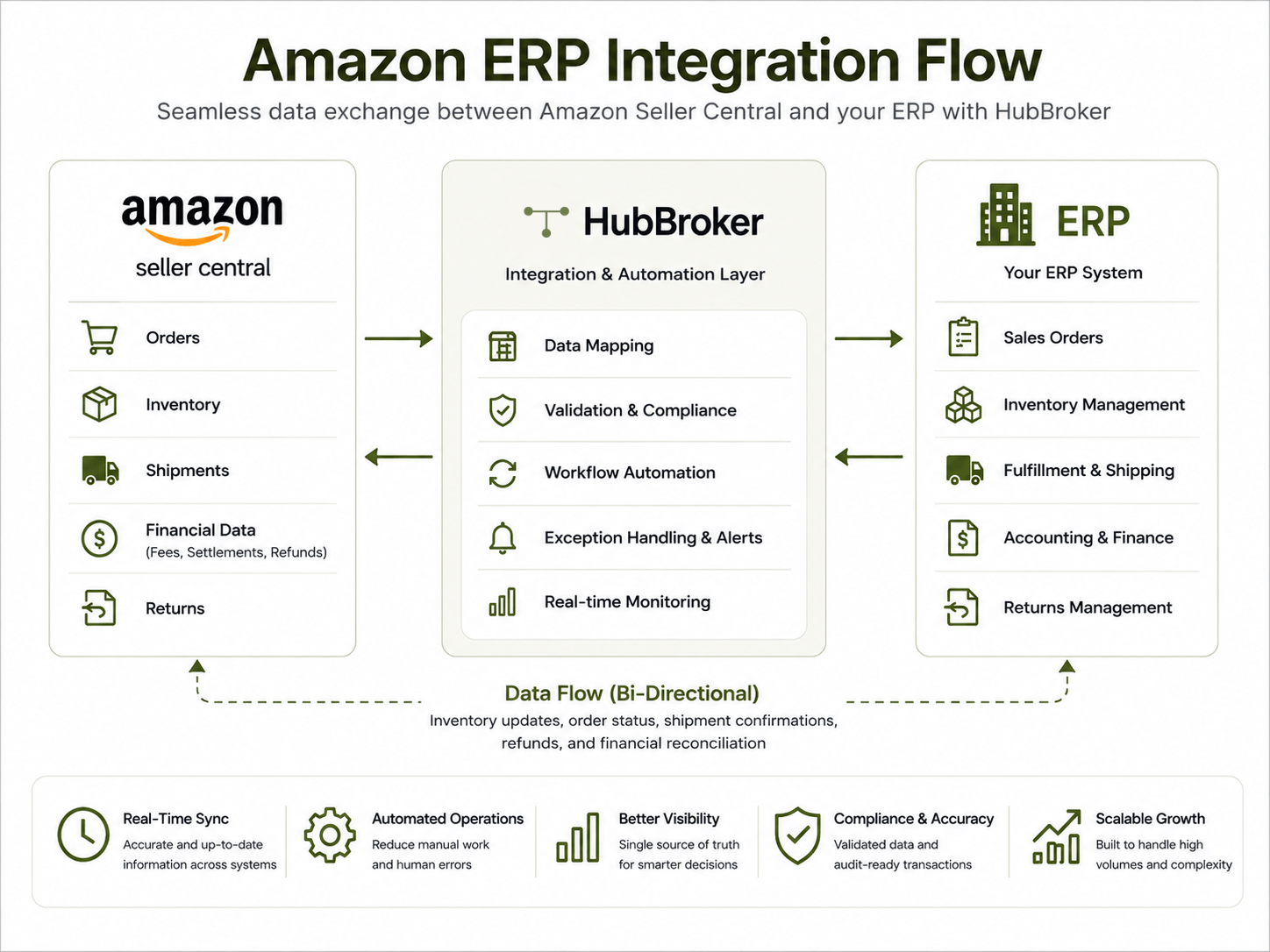
Amazon ERP integration connects your Amazon Seller Central account directly to your ERP system, automating the flow of orders, inventory, and financial data. This removes manual data entry, reduces fulfillment errors, and gives sellers a single, accurate view of their operations. HubBroker provides the EDI and API infrastructure that makes this connection work reliably.
Selling at volume on Amazon creates a data problem. Orders arrive continuously. Inventory levels shift across warehouses and fulfillment centers. Invoices, shipping confirmations, and return records accumulate faster than any back-office team can process them manually. When your Amazon Seller Central account operates separately from your ERP, staff spend hours re-entering information that already exists in another system. Errors follow. Decisions get made on stale data.
Amazon ERP integration solves this by establishing a direct, automated connection between your storefront and your core business systems. The result is not just convenience it is a more stable operational foundation for sellers who want to grow without proportionally growing their administrative overhead.
What Are the Core Benefits of Connecting Amazon Seller Central to Your ERP?
Real-Time Inventory Syncing Prevents Overselling and Stockouts
When inventory levels update automatically between Amazon and your ERP, your available stock figures stay current. Overselling a common problem for high-volume sellers running disconnected systems can drop significantly. Stockouts, which damage your seller metrics and customer trust, become easier to anticipate because your ERP sees the same demand signals that Amazon does.
Manual stock updates introduce lag. That lag, even measured in hours, creates risk during peak periods. A synchronized system removes that gap.
Automated Order Processing Accelerates Fulfillment and Reduces Human Error
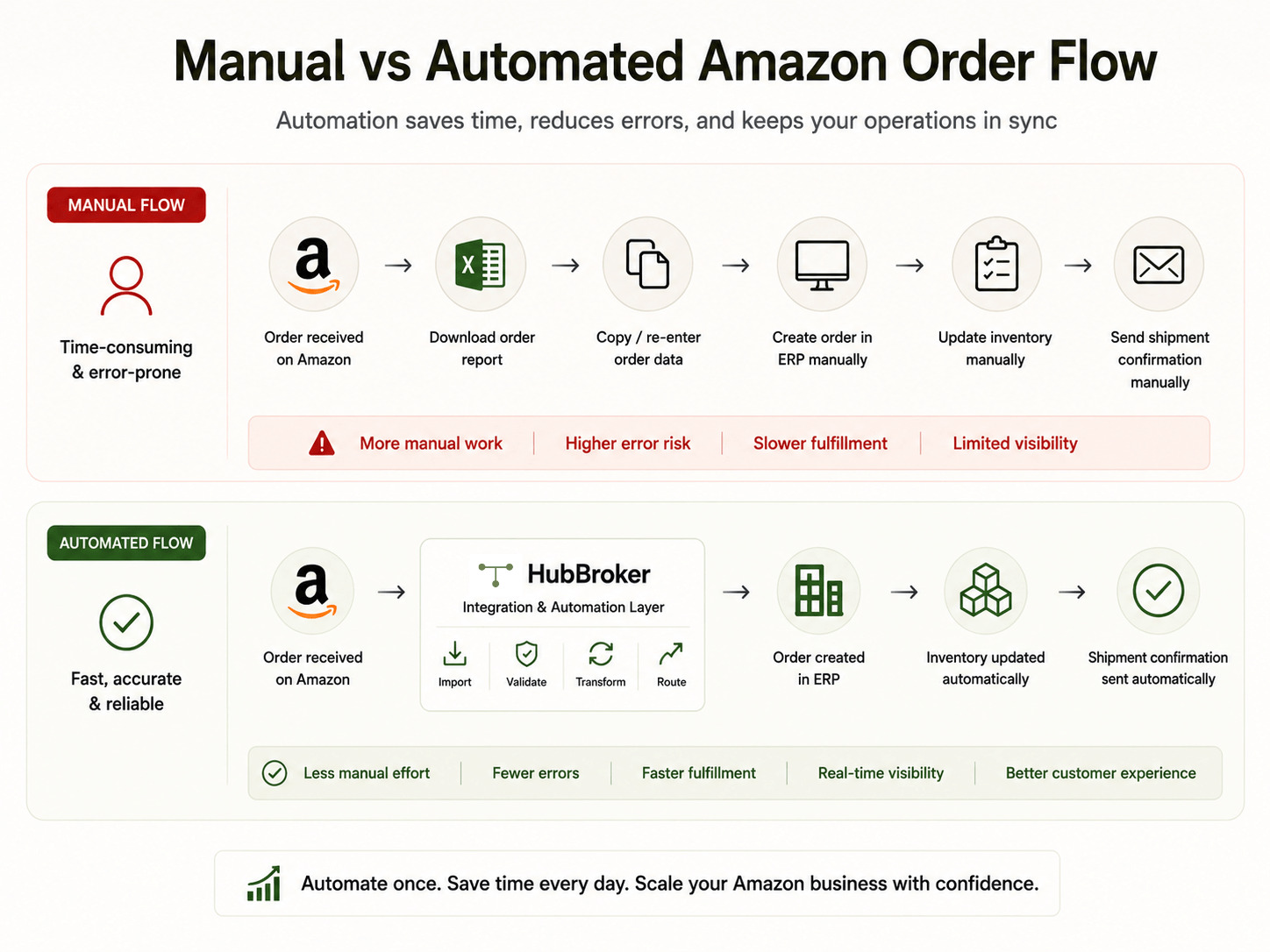
Each order that flows automatically from Amazon into your ERP is one fewer record that requires manual creation. Your warehouse team receives pick-and-pack instructions faster. Your logistics partners get accurate shipment data without waiting for someone to export and re-import a spreadsheet. Confirmation messages and advance ship notices (ASNs) can be sent back to Amazon automatically once fulfillment occurs.
The reduction in manual touchpoints also reduces the category of errors that come from transcription mistakes wrong quantities, mismatched SKUs, incorrect shipping addresses. These errors carry real costs: chargebacks, returns, and account penalties.
Centralized Financial Data Improves Reporting and Profit Margin Visibility
Amazon transactions generate a wide range of financial records: sale amounts, platform fees, FBA fulfillment costs, refunds, advertising charges, and settlement payments. When these flow into your ERP's accounting module automatically, your finance team works from complete and current data rather than downloading and reconciling periodic Amazon settlement reports.
This visibility matters for margin analysis. Sellers who can see the full cost picture including all Amazon-specific fees make better decisions about pricing, product mix, and advertising spend.
How Does HubBroker Enable Amazon ERP Integration?
HubBroker functions as the integration layer between Amazon Seller Central and your ERP. Rather than requiring you to build and maintain a direct point-to-point connection which demands ongoing technical attention as both platforms change HubBroker manages the data exchange infrastructure on your behalf.
The platform supports both EDI integration and API-based connectivity, which means it can handle the structured document formats Amazon uses for high-volume B2B transactions as well as the real-time API calls needed for marketplace order management. Automated workflows handle document mapping, validation, and routing, so orders, inventory updates, and financial records move between systems without manual intervention.
HubBroker's ERP EDI integration services are built to support a wide range of ERP platforms, including Microsoft Dynamics 365 Business Central, SAP Business One, and others. This means the integration approach can be configured around your existing systems rather than requiring you to replace or reconfigure them.
For sellers managing high order volumes, the platform also supports exception handling flagging records that fail validation rather than letting errors pass silently into your ERP.
Is Amazon ERP Integration Right for Your Business?
The case for integration strengthens as order volume increases. Sellers processing dozens of orders per day may manage adequately with manual processes. Sellers processing hundreds or operating across multiple Amazon marketplaces carry meaningful risk from disconnected systems, both in operational cost and data accuracy.
If your team spends regular time moving data between Amazon and your back-office systems, or if inventory discrepancies and fulfillment delays are recurring issues, an automated integration layer can support a more stable workflow.
Take the Next Step
If you want to understand what Amazon ERP integration would involve for your specific systems and order volumes, HubBroker can walk you through the options. Book a consultation at HubBroker and describe your current setup the platforms you use, the data flows you need to automate, and the problems you're trying to solve.
